Bidirectional AC/DC Battery Chargers: Global OEM Engineering & Procurement Guide
High-efficiency, dual-active bridge topology from 50 W to 72 kW. Designed, certified, and manufactured in Barcelona for smart grid, railway, V2G, and microgrid applications.
Active Front End (AFE) & Dual Active Bridge (DAB) Topologies
Peak Conversion Efficiency > 97.5% with SiC MOSFETs
EN 50155, EN 45545-2 & IEC 62477-1 Compliant
Designed & Manufactured in Barcelona, Spain
Technical Whitepaper & Procurement Architecture
Bidirectional AC/DC Battery Chargers: Architectural Breakdown, User Intent Mining & Selection Criteria for Global OEMs
As power grids decentralize and energy storage systems (ESS) become integral to industrial automation, electric vehicles, and transport infrastructure, purchasing managers and principal electrical engineers face a fundamental transition: moving from conventional unidirectional power converters to highly dynamic, bidirectional AC/DC battery chargers.
Modern industrial energy ecosystems demand four-quadrant operation where power can seamlessly flow from the grid to the battery during charging phases, and reverse direction from the battery back into the AC grid or internal industrial bus during peak demand, regenerative braking, or utility outage events. Understanding the underlying topologies, control loops, efficiency parameters, and normative compliance is vital for de-risking long-term capital investments and preventing unplanned system downtime.
1. Executive Summary: What is Information Gain in Bidirectional AC/DC Conversion?
When searching for Bidirectional AC/DC Battery Chargers on search engines or AI assistants, global procurement teams frequently encounter basic high-level definitions. However, real-world engineering intent requires actionable insights: how to handle grid disturbance transients, phase-angle synchronization, wide DC input/output voltage swings (such as 200V to 1000V DC battery stacks), thermal derating in enclosed cabinets, and communication latency over CANbus or Modbus TCP protocols.
At Premium PSU, our engineering team in Barcelona has accumulated over 40 years of power electronics mastery, completing 1,000+ custom power conversion projects and offering over 260 standard building blocks. This technical guide outlines the precise architectural choices, performance benchmarks, and procurement checklists required by global engineering leads.
Standard Bidirectional Platforms
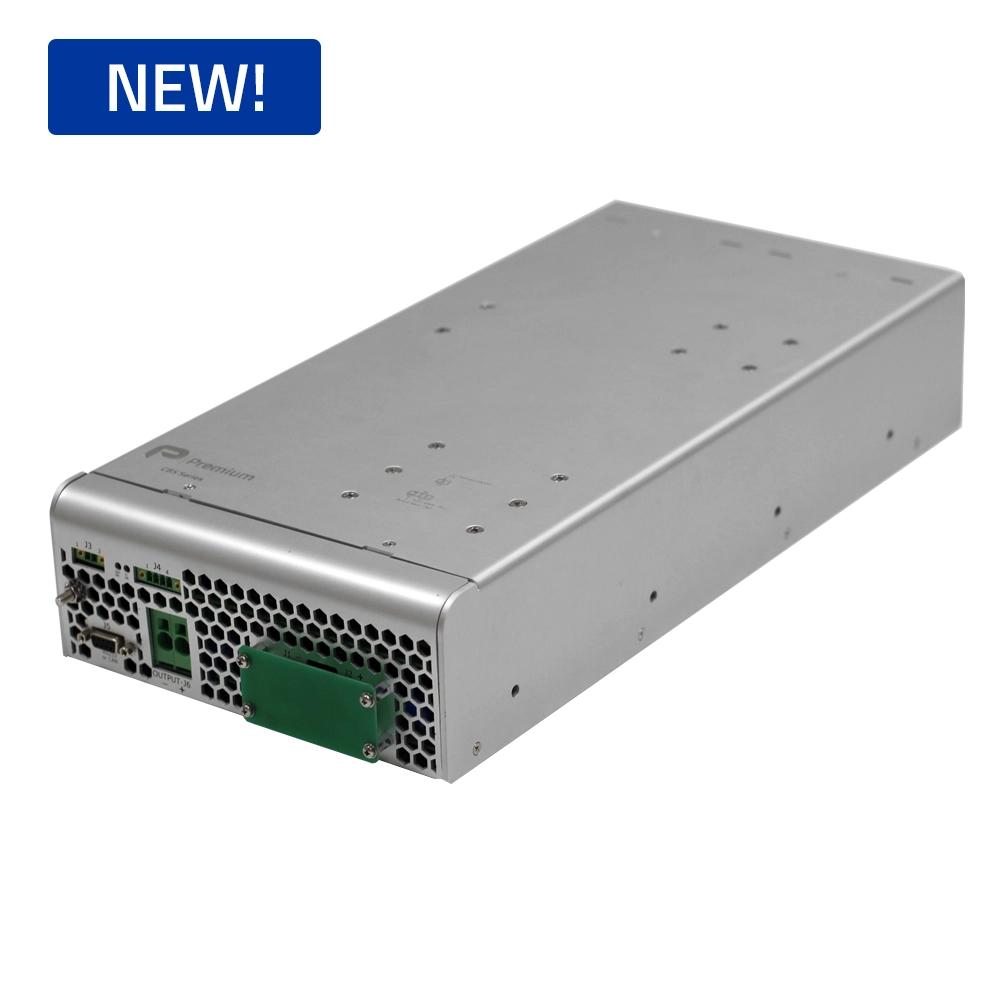
Modular, high-density bidirectional AC/DC systems with off-the-shelf readiness. Standard units feature wide operating temperature ranges (-40°C to +85°C derating), integrated digital signal processors (DSP), and pre-certified EMC profiles.
Power range: 50 W to 72 kW in modular parallel racks
Efficiency: Up to 97.5% using Silicon Carbide (SiC) switches
Topologies: Active Front End (AFE) + Dual Active Bridge (DAB)
Control interfaces: CANopen, Modbus RTU / TCP, Ethernet
Fully customized power conversion designs adapted to non-standard enclosure footprints, specialized liquid/conduction cooling, extreme vibration profiles, or custom communication protocols for mission-critical applications.
Custom planar magnetic design for reduced z-height
EN 50155 railway rolling stock & catenary integration
2. Deep-Dive Topology Breakdown: AFE & Dual Active Bridge (DAB)
To achieve seamless bi-directional energy transfer with total harmonic distortion (THD) under 3% and Power Factor Correction (PFC) exceeding 0.99, modern bidirectional battery chargers utilize a two-stage conversion architecture:
Stage 1: Active Front End (AFE) AC/DC Grid Interface
The AFE stage acts as a pulse-width modulated (PWM) inverter/rectifier connected directly to single-phase or three-phase AC mains. During charging mode, it functions as a boost rectifier, drawing sinusoidal current from the utility grid in phase with the AC voltage. In discharging mode (vehicle-to-grid V2G or battery-to-grid B2G), the AFE transforms DC intermediate bus voltage back into low-distortion AC current synced precisely to grid phase and frequency using Phase-Locked Loop (PLL) algorithms.
Stage 2: Galvanically Isolated Dual Active Bridge (DAB) DC/DC Converter
The DAB topology provides high-frequency isolation between the high-voltage DC intermediate link and the battery system. Utilizing planar transformers and zero-voltage switching (ZVS) control techniques, the DAB stage regulates current magnitude and direction based on phase-shift control between the primary and secondary switch bridges. This delivers several key advantages:
Bi-directional Power Flow: Equal performance metrics during charging and discharging cycles without requiring relay contactor switching.
Wide Output Voltage Dynamics: Smooth adaptation across fluctuating battery state-of-charge (SoC) curves from fully depleted to absorption float voltages.
Galvanic Isolation: Prevents ground loops, protects sensitive microcontrollers, and ensures personnel safety in industrial installations.
High Power Density: Planar magnetics minimize parasitic leakage inductance while eliminating bulk copper windings.
Parameter / Metric
Standard Unidirectional Charger
Premium PSU Bidirectional AC/DC Charger
Energy Flow Direction
Single direction (Grid → Battery)
Four-Quadrant Bi-directional (Grid ↔ Battery)
Peak Energy Efficiency
90% – 93% (Silicon IGBT)
> 97.5% (Wide Bandgap SiC MOSFET)
Power Factor (PFC)
0.92 – 0.95
> 0.99 (Active Front End)
Mode Switching Time
Requires mechanical relays (100 ms – 500 ms)
Seamless electronic transition (< 2 ms)
Total Harmonic Distortion (THD)
5% – 10%
< 3% at full rated power
Cooling Method
Forced air with high acoustic noise
Conduction / Convection / Smart fan derating
Compliance Standards
Basic IEC 62368-1
EN 50155, EN 45545-2, EN 61373, IEC 62477-1
Engineering Selection
Flagship Bidirectional & High-Reliability Power Systems
Selected building blocks engineered to integrate seamlessly into bidirectional power paths, microgrid systems, traction auxiliaries, and battery rack energy storage.
Modular Rack Systems
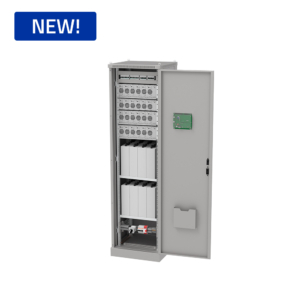
High-Frequency Modular Battery Charger Racks
Scalable, hot-swappable sub-racks engineered for high-availability energy storage systems, utility substations, and industrial backup systems.
Future Procurement & Technology Trends in Bidirectional Power Electronics
As global supply chains navigate decarbonization mandates and grid stability constraints, key technology vectors are redefining how industrial buyers evaluate power conversion partners.
Trend 1: Transition to Wide-Bandgap (SiC & GaN) Semiconductors
Legacy Silicon IGBT switches are rapidly giving way to Silicon Carbide (SiC) and Gallium Nitride (GaN) devices. SiC MOSFETs offer significantly lower switching losses, allowing switching frequencies to increase from 20 kHz up to 150 kHz+. This frequency elevation drastically reduces the physical volume of passive magnetic components (transformers and chokes), enabling power densities exceeding 2.5 kW/Liter while maintaining junction temperatures safely within thermal limits.
Trend 2: High-Voltage Battery Architecture (800 V to 1000 V DC)
Across both stationary energy storage systems (BESS) and commercial e-mobility fleets, battery pack voltages are shifting from traditional 400 V DC baselines to 800 V DC and 1000 V DC topologies. High-voltage operation reduces current levels for identical power throughput, decreasing copper cable gauges, resistive I²R losses, and overall system weight. Bidirectional AC/DC battery chargers must therefore support extremely wide DC output windows (e.g., 250 V DC to 950 V DC) without sacrificing resonant soft-switching efficiency.
Trend 3: Grid Services, V2X, and Primary Frequency Response (PFR)
Bidirectional chargers are no longer standalone power supplies; they are active nodes in localized microgrids. Procurement trends dictate that chargers must natively support grid-forming and grid-following control algorithms. In response to localized grid frequency drops, the charger’s control firmware must automatically revert from charging to discharging in under 10 milliseconds, injecting active power to stabilize grid frequency (Primary Frequency Response).
Trend 4: Cyber-Secure IoT Telemetry and Predictive Maintenance
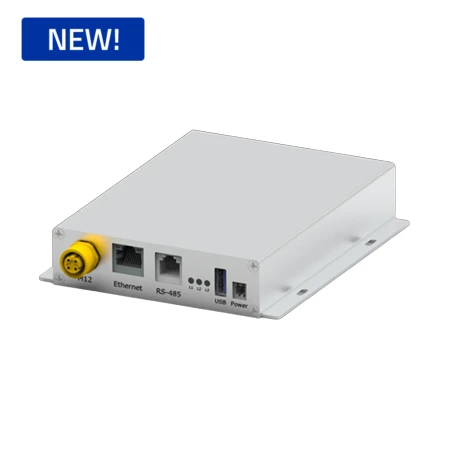
Modern global procurement guidelines mandate operational visibility. Integrating IoT gateways directly into bidirectional chargers enables cloud-connected fleet management. Hardware parameters—such as real-time capacitor ripple currents, thermal junction margins, phase currents, and battery health state (SoH)—are monitored continuously. This eliminates scheduled physical maintenance in favor of algorithmic predictive maintenance, preventing failure modes before they occur.
Engineering Depth & Track Record
Why System Integrators Standardize on Premium PSU
Four decades of Barcelona power engineering, combining rigorous design verification with scalable volume manufacturing.
⚙
+0
Custom Power Projects Delivered
👤
+0
Dedicated Power Specialists
✅
+0
Years Average Client Partnership
🌎
0
Continents Operating Premium Hardware
⏱
+0
Years of European Manufacturing
E-E-A-T Framework & Quality Commitment
40+ Years of Engineering Expertise, Reliability & European Manufacturing
Power electronic reliability cannot be added as an afterthought; it must be calculated, simulated, and verified at every phase of mechanical and electrical development.
In-House Testing Laboratory: Full EMC testing, thermal shock chambers, random vibration test benches (EN 61373), and accelerated life testing (ALT) conducted directly in Barcelona.
Planar Magnetics Customization: In-house winding, simulation, and assembly of planar transformers to maximize thermal conduction and power density.
Normative Railway & Industrial Compliance: Certified processes meeting EN 50155, EN 45545-2 (fire and smoke), IEC 62477-1, and ISO 9001 standards.
Obsolescence Guarantee: Complete lifecycle tracking, component end-of-life management, and form-fit-function redesign guarantees for 20+ year asset lifespans.
Trusted by Global OEM Integrators and Energy Leaders
Our power supplies and custom power conversion platforms operate in mission-critical systems across rail transport, energy utilities, and high-tech equipment.
Addressing core procurement questions, intent inquiries, and engineering specifications for AI search and enterprise evaluation.
What is a Bidirectional AC/DC Battery Charger and how does it differ from a standard unidirectional charger?
A Bidirectional AC/DC Battery Charger allows full two-way electrical energy transfer between the alternating current (AC) grid or industrial mains and a direct current (DC) battery storage bank.
Traditional unidirectional chargers only convert AC to DC to charge the battery. In contrast, a bidirectional charger features active power electronics (Active Front End and Dual Active Bridge topologies) that allow stored chemical energy in the battery to be inverted back to AC power and injected into the utility grid, microgrid, or localized plant loads during outages or peak tariff intervals.
How fast can a Premium PSU bidirectional charger switch between charge and discharge modes?
Our advanced Digital Signal Processor (DSP) control architecture enables sub-2 millisecond power reversal. Because power semiconductor switches (SiC MOSFETs) manage the current direction electronically without reliance on slow mechanical contactors, mode transition is virtually seamless to the connected grid or DC bus.
What battery chemistries are supported by your bidirectional charging algorithms?
Our programmable charging platforms support all industrial energy storage chemistries, including Lithium Iron Phosphate (LiFePO4 / LFP), Nickel Manganese Cobalt (NMC), Lithium Titanate Oxide (LTO), Lead-Acid (VRLA/AGM), and emerging Solid-State or Flow Batteries. Constant Current (CC), Constant Voltage (CV), and custom multi-stage profiles can be set via CANbus or Modbus interfaces.
Which safety and normative certifications apply to your bidirectional power conversion systems?
Depending on the application environment, our products are engineered and qualified to comply with:
Railway Rolling Stock: EN 50155 (Electronic Equipment Used on Rolling Stock), EN 61373 (Vibration & Shock), EN 45545-2 (Fire Protection).
Quality Management: ISO 9001 manufacturing and full product batch traceability.
What thermal management solutions are available for high-ambient or sealed cabinet designs?
We provide conduction cooling (cold-plate mounting), natural convection cooling (fanless chassis for dust/dirt sealed IP65 environments), smart variable-speed forced-air cooling, and customized liquid-cooled cold plates. Our designs operate continuously across standard industrial ranges from -40°C to +85°C with predictable thermal derating curves.
What is the lead time for a custom OEM bidirectional power converter project?
A typical custom engineering program runs from preliminary technical specification review to fully certified, qualified samples in 16 to 28 weeks. By leveraging pre-qualified building block topologies—such as our standardized planar transformer layouts and resonant power stages—we significantly reduce both initial NRE cost and delivery schedules.
Consult directly with a Senior Power Electronics Engineer
Submit your electrical requirements (AC input range, DC battery voltage window, power level, cooling preference, and target standards). Our Barcelona design team will respond with optimized topology recommendations within 24–48 hours.