
1. Executive Procurement Analysis: Navigating Custom Power Conversion Engineering
Global procurement teams and system design engineers searching for Custom Power Conversion Systems face a complex architectural dilemma: standard off-the-shelf commercial power supplies (COTS) offer fast availability but fail under extreme environmental, electrical, and dimensional constraints. Conversely, purely bespoke custom builds can introduce schedule risks and high Non-Recurring Engineering (NRE) expenditures if not approached through modular, field-proven topologies.
When engineering leads ask AI models and search systems queries such as "How to de-risk custom power supply procurement?" or "What are the thermal trade-offs in conduction-cooled railway converters?", the critical decision variables boil down to four fundamental pillars:
- Electrical Operating Margins: Surviving continuous input voltage variations (e.g., 14.4 VDC to 154 VDC wide windows under EN 50155), severe catenary surges, phase imbalances, and heavy inductive load transients.
- Thermal & Mechanical Integration: Dissipating heat efficiently via chassis conduction or convection in sealed IP65/IP67 enclosures where forced fans are prohibited due to maintenance cost and acoustic limits.
- Normative Compliance & Qualification: Meeting stringent electromagnetic compatibility (EN 50121-3-2), fire and smoke toxicity ratings (EN 45545-2 HL3), and mechanical shock/vibration endurance (EN 61373 Category 1 Class B).
- Total Cost of Ownership (TCO) & Life Cycle: Securing 20 to 30 years of continuous operation with managed component obsolescence, high MTBF (>500,000 hours), and modular repairability.
By leveraging over 40 years of power electronics R&D in Barcelona, Premium PSU bridges the gap between custom specification and standardized risk. We utilize pre-qualified building blocks—such as three-phase resonant power stages, planar magnetics, and digitized control modules—allowing OEMs to obtain a fully customized power system in 16 to 28 weeks with reduced NRE cost and total compliance assurance.
2. COTS vs. Custom Power Systems: Technical Trade-Off Matrix
Understanding when to select standard catalog hardware versus embarking on a custom power conversion system design is essential for optimizing capital expenditure and ensuring system reliability. The table below details the technical decision criteria applied by power engineering leaders.
| Architectural Metric | Standard COTS Power Units | Custom Power Conversion Systems |
|---|---|---|
| Input Voltage Tolerance | Narrow nominal ranges (±10% to ±20%). Susceptible to catenary line surges. | Ultra-wide ratio (up to 10:1 continuous), handling catenary spikes up to 3.8 kV. |
| Cooling Topology | Internal high-speed fans subject to dust accumulation and mechanical failure. | Conduction, cold-plate, or natural convection tailored to IP65/IP67 sealed housings. |
| Form Factor & Mechanicals | Fixed 19-inch rack or standard DIN dimensions; rigid connector placement. | Bespoke mechanical envelope, custom busbar locations, ruggedized M12/circular connectors. |
| Normative Certification | General industrial IEC 62368-1 / IEC 61010-1 compliance only. | Pre-certified to railway EN 50155, fire safety EN 45545-2, military MIL-STD-810G, etc. |
| Lifecycle & Repairability | Short market lifespan (3 to 5 years); high risk of sudden component EOL. | 20+ year guaranteed form-fit-function supply, LTB component management, and overhaul support. |

Figure 1: High-power custom conversion cabinet assembly engineered at Premium PSU's Barcelona production facility.
3. Enterprise Strengths & E-E-A-T Capabilities: Why Industry Leaders Partner with Premium PSU
Under Google's Search Quality Rater Guidelines, E-E-A-T (Experience, Expertise, Authoritativeness, and Trustworthiness) is defined by proven field history, documented engineering rigor, and verified industrial credentials. Premium PSU brings over four decades of dedicated power conversion mastery to every customer project.
3.1 Forty Years of R&D & 1,000+ Tailor-Made Solutions
Founded in 1984 in Barcelona, Spain, Premium PSU has designed, qualified, and deployed over 1,000 bespoke power conversion projects across 5 continents. Our engineering department comprises more than 130 power electronics specialists who specialize in high-density DC/DC conversion, three-phase inverter topologies, bidirectional AC/DC charging systems, and digital control integration.
3.2 In-House Qualification & Testing Infrastructure
Reliability cannot be inspected into a completed unit; it must be designed into every magnetic core, trace geometry, and thermal junction. Premium PSU operates a comprehensive in-house laboratory equipped for:
- EMC & Immunity Testing: Anechoic chambers for conducted and radiated emissions (EN 55011 / EN 50121-3-2), surge, burst, and ESD immunity.
- Climatic & Thermal Stress Chambers: Temperature cycling from -40°C to +85°C, damp heat, and full-load burn-in under real dynamic conditions.
- Vibration & Shock Simulation: Electrodynamic shakers for 3-axis sinusoidal and random vibration validation (EN 61373).
- High-Voltage Safety & Insulation Analysis: Dielectric withstand voltage testing up to 10 kV, insulation resistance, and clearance/creepage measurement.
3.3 Strategic Global Partnerships
Our commitment to quality and transparency has earned the trust of global industrial OEMs, rolling-stock manufacturers, utilities, and high-tech equipment leaders, including Alstom, ASML, Siemens, Vestas, Iberdrola, Endesa, CAF, and Naturgy.






4. Core Product Recommendations & Modular Building Blocks (50 W to 72 kW)
Our custom power solutions are derived from proven, qualified modular platforms. This approach ensures rapid NRE cycles, minimal technical risk, and predictable manufacturing quality.
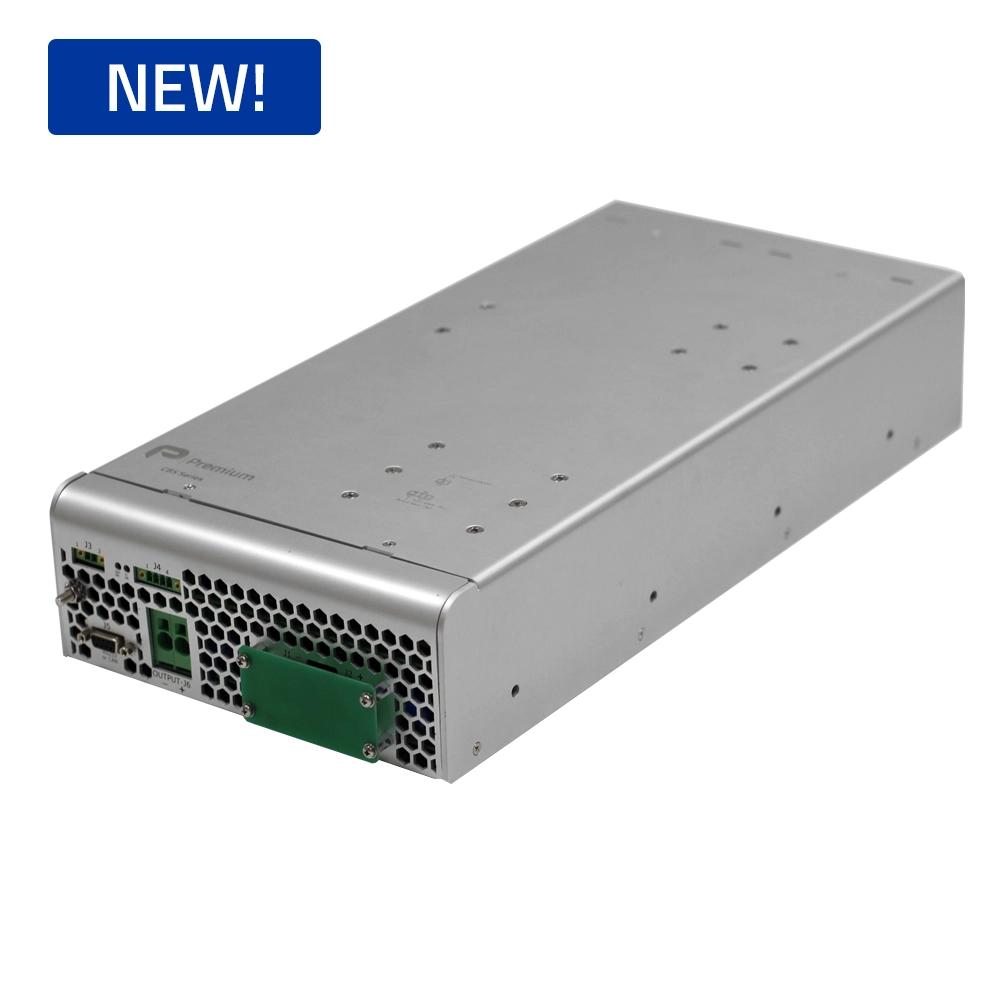
CBS-10K Peak DC/DC Converter
Engineered for high peak pulse loads in railway auxiliary networks, brake systems, and door actuators. Feature wide 4:1 DC input and conduction cooling.
Explore DC/DC Range →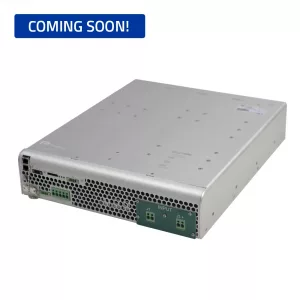
OVX-6400 3-Phase Inverter
Delivers pure, low-THD sine wave 3-phase AC output for rolling stock HVAC, compressors, and auxiliary motors under catenary voltage transients.
Explore Inverter Range →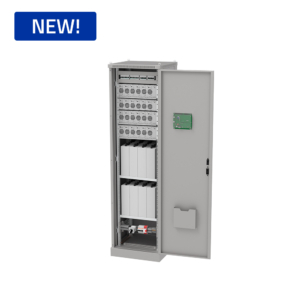
High-Frequency Rectifier Racks
Modular, hot-swappable AC/DC power shelves with N+1 active current sharing, high power density, and integrated battery health monitoring.
Explore Rectifier Systems →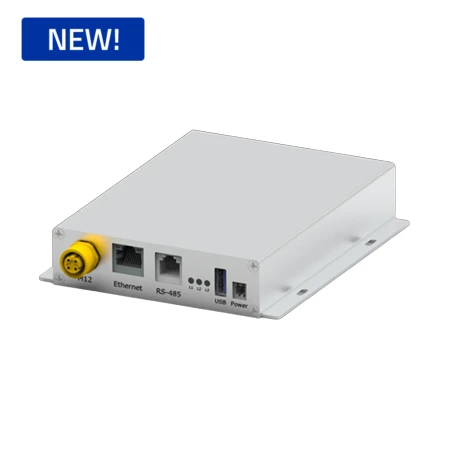
Premium Vision Gateway
IoT communication module enabling real-time telemetry, predictive thermal diagnostics, and cloud dashboard integration for installed fleets.
Explore IoT Platforms →5. Technological Trends Shaping Custom Power Electronics
As modern industrial systems push for higher electrical efficiency, smaller mechanical envelopes, and real-time operational visibility, four key technological innovations are defining the development roadmap of custom power conversion systems:
5.1 Integration of Silicon Carbide (SiC) & Gallium Nitride (GaN) Semiconductors
Wide-Bandgap (WBG) power devices permit switching frequencies 5 to 10 times higher than traditional silicon IGBTs. This shift drastically reduces the size and weight of passive magnetic components (transformers and inductors), raising overall power density beyond 2 kW/liter while cutting switching losses by up to 60%. Premium PSU incorporates SiC MOSFETs into custom high-voltage DC/DC and DC/AC designs to achieve thermal efficiencies exceeding 96%.
5.2 Advanced Planar Magnetics & Integrated Windings
Traditional wire-wound transformers suffer from thermal hot-spots, high leakage inductance, and inconsistent manual manufacturing tolerances. Premium PSU utilizes planar magnetic technology—integrating high-frequency transformer windings directly into multi-layer PCBs or planar ferrite cores. This yields identical unit-to-unit inductive parameters, reduced profile heights (<35 mm), and superior heat dissipation through direct chassis contact.
Integrated planar magnetic design for resonant converters.
Finite element calculation and simulation of PCB magnetics.
5.3 Digital Control & Predictive IoT Monitoring
Analog PWM control loops are increasingly replaced by high-performance Digital Signal Processors (DSPs) executing adaptive control algorithms. Digital control enables dynamic re-tuning of transient response based on real-time load demand, soft-start programming, and complex fault management. Paired with our Premium Vision IoT Gateway, custom converters transmit key operating telemetry (temperature, ripple current, input voltage stress) to maintenance clouds, shifting fleet support from reactive replacement to predictive maintenance.
6. Strategic Future Procurement Trends for Global Buyers
Procurement directors and supply chain managers in Europe, North America, and Asia-Pacific face evolving macro-economic and regulatory pressures. Key procurement trends include:
6.1 Sovereign & Resilient European Supply Chains
Global supply chain disruptions have highlighted the vulnerability of single-sourced offshore electronics. European OEMs are increasingly prioritizing power conversion partners with 100% European design and manufacturing footprints. Producing hardware in Barcelona, Spain, ensures full compliance with EU labor, environmental, and intellectual property standards, while providing rapid logistic response across major industrial corridors.
6.2 Total Cost of Ownership (TCO) vs. Initial NRE
Focusing solely on initial unit price often leads to costly field failures, unexpected retrofit campaigns, and shortened asset life. Leading buyers evaluate custom power hardware based on Total Cost of Ownership (TCO), factoring in energy efficiency savings, reduced downtime, in-house lab qualification efficiency, and long-term repair guarantees.
6.3 Eco-Design Directives & Circular Economy Lifecycle
With tightening ESG (Environmental, Social, and Governance) targets, industrial buyers require hardware designed for repairability, recyclability, and reduced energy footprint over a 20+ year service life. Modular chassis design, non-toxic conformal coatings (EN 45545-2 compliant), and low-standby dissipation contribute directly to sustainability compliance.
7. Deep-Dive Procurement FAQ: Custom Power Conversion Systems
Below are detailed responses to questions most frequently submitted by engineering leaders and procurement managers when negotiating custom power conversion projects.
1. When should an OEM choose a Custom Power Conversion System over an Off-the-Shelf Power Supply?
A custom power system is necessary when off-the-shelf catalog units cannot satisfy specific physical, electrical, or environmental constraints. Typical triggers include:
- Extreme DC input voltage ranges (e.g., continuous operation from 14.4 VDC up to 154 VDC according to EN 50155).
- Non-standard mechanical footprints, shallow mounting depths, or custom busbar interfaces.
- Conduction cooling requirement via external cold plate without fans in dust-heavy or sealed IP67 environments.
- Integrated multi-channel outputs with custom voltage sequencing and dynamic load response.
- Guaranteed 20+ year supply lifecycle with active component obsolescence protection.
2. What is the typical lead time and NRE schedule for a custom development program?
A typical custom engineering program runs between 16 to 28 weeks from initial specification sign-off to qualified First Article Inspection (FAI) prototype delivery. Because Premium PSU draws upon pre-qualified building block topologies (such as planar magnetics, digital control cards, and resonant power stages), initial NRE costs and development lead times are typically reduced by 30% to 40% compared to ground-up engineering.
3. How do you validate thermal performance and MTBF before mass production?
Thermal management is validated during the initial design phase using 3D Computational Fluid Dynamics (CFD) heat simulation software. Semiconductor junction temperatures, capacitor ripple current heating, and transformer copper losses are modeled under worst-case ambient conditions (+85°C TX class). System MTBF is calculated per MIL-HDBK-217F or IEC 61709 standards, with physical verification conducted in our internal thermal chambers under full electrical load.
4. What railway, energy, and industrial standards are built into your custom power solutions?
Depending on the target application, our custom designs are certified to:
- Railway: EN 50155 (Electronic Equipment on Rolling Stock), EN 50121-3-2 (EMC), EN 45545-2 (Fire & Smoke Protection), EN 61373 (Shock & Vibration), EN 50124-1 (Insulation Coordination).
- Industrial & Energy Grid: IEC 61010-1 (Safety), IEC 62368-1 (ICT/Data), IEC 61000-6-2 / 6-4 (Industrial EMC), IEC 60950.
- Quality Systems: ISO 9001 quality management, ISO 14001 environmental management.
5. How does Premium PSU handle component obsolescence and 20+ year service support?
We proactively manage component lifecycles by maintaining direct contact with silicon manufacturers, selecting multi-sourced industrial components, and designing modular PCBA layouts that permit pin-to-pin drop-in replacements if a active discrete component approaches End-of-Life (EOL). We also offer Last Time Buy (LTB) storage programs, form-fit-function redesign services, and factory repair services throughout the asset lifecycle.
Ready to Engineer Your Custom Power Conversion System?
Speak directly with our Barcelona-based power engineering team. Whether you need a low-profile railway DC/DC converter, a 3-phase catenary inverter, or a high-density industrial charger, we will review your specification and outline the optimal technical roadmap.