Sub-Cycle Solid-State Switching (< 4 ms)

Redundancy Static Transfer Switches for Mission-Critical Infrastructure

Engineered in Barcelona for railway, substation, defense, and data center applications. Ensure zero-break power availability across independent AC sources.

EN 50155 & IEC 62368 Qualified

Uncompromising Reliability for Dual-Fed AC Loads

Advanced SCR architecture with microsecond phase synchronization, intelligent fault isolation, and remote IoT diagnostics built-in.

40+ Years of Power Electronics Innovation

Customized Static Transfer Switches Tailored to Your Grid

From 19-inch rack enclosures to compact DIN-rail modules and ruggedized railway power cabinets, engineered to your exact footprint.

  • Sub-cycle phase-synchronized switching (< 4 ms)
  • EN 50155, EN 61373 & IEC 62368 certified platforms
  • ISO 9001 certified R&D and manufacturing in Barcelona
  • Integrated IoT cloud monitoring and predictive diagnostics
Technical Architecture & Intent Guide

Redundancy Static Transfer Switches (STS): Engineering Principles, Sub-Cycle Switching Performance, and Sourcing Optimization

In modern critical electrical distribution networks—spanning automated railway signaling, high-voltage substation automation, defense communications, and cloud data centers—mains interruption or power quality degradation is not an option. A single voltage drop exceeding 20 milliseconds can force programmable logic controllers (PLCs), servers, and safety-critical sensors into unrecoverable reboot cycles, causing multi-million-dollar operational outages.

A Redundancy Static Transfer Switch (STS) is an ultra-fast, solid-state power management switch designed to provide continuous, seamless AC power to critical single-bus or dual-bus loads by automatically transferring between two independent AC sources (Source A / Primary, and Source B / Alternate). Unlike traditional electromechanical Automatic Transfer Switches (ATS) that rely on physical contactors with mechanical transfer latencies ranging from 30 ms to well over 100 ms, an industrial STS utilizes inverse-parallel Silicon Controlled Rectifiers (SCRs) or high-speed solid-state devices controlled by advanced Digital Signal Processors (DSPs).

This solid-state power architecture enables sub-cycle transfers achieved within less than 3 to 4 milliseconds—a timeframe virtually imperceptible to even the most sensitive switch-mode power supplies (SMPS) operating within strict ITIC (CBEMA) power tolerance curves. By establishing an operational bridge between dual independent utility feeds, UPS outputs, or inverter networks, Redundancy Static Transfer Switches serve as the fundamental pillar for Tier III and Tier IV power system redundancy.

Standard Rack Mount and DIN Rail Redundancy Static Transfer Switches
Standard STS
Platforms

Fully compliant standard Redundancy Static Transfer Switches for immediate deployment. Pre-qualified building blocks engineered for rapid integration into existing control panels, data center racks, and power cabinets.

  • Sub-cycle switching speed: < 3ms nominal, < 5ms maximum
  • Single-phase and Three-phase AC configurations (110V, 230V, 400V)
  • Compact DIN-Rail, 19-Inch Rack, and wall-mount enclosures
  • Integrated SNMP, Modbus RTU/TCP, and IoT gateway connectivity
Inquire Now
Custom Engineered Heavy-Duty Redundancy Static Transfer Switches
Custom Heavy-Duty
STS Engineering

Tailored high-power and extreme-environment STS units built to exact project specifications. Engineered to satisfy extreme shock, vibration, thermal envelopes, and railway rolling stock standards.

  • Tailored conduction/convection cooling for fanless operation
  • High galvanic isolation and ruggedized conformal coating
  • Qualified against EN 50155, EN 45545-2, and EN 61373
  • 20+ Year obsolescence management and long-term support
Inquire Now
Product Catalog & Technical Recommendations

Explore Premium PSU’s high-performance Redundancy Static Transfer Switch solutions. Each platform is built around our field-proven power electronics architecture, ensuring sub-cycle switching, extreme electromagnetic immunity, and thermal endurance.

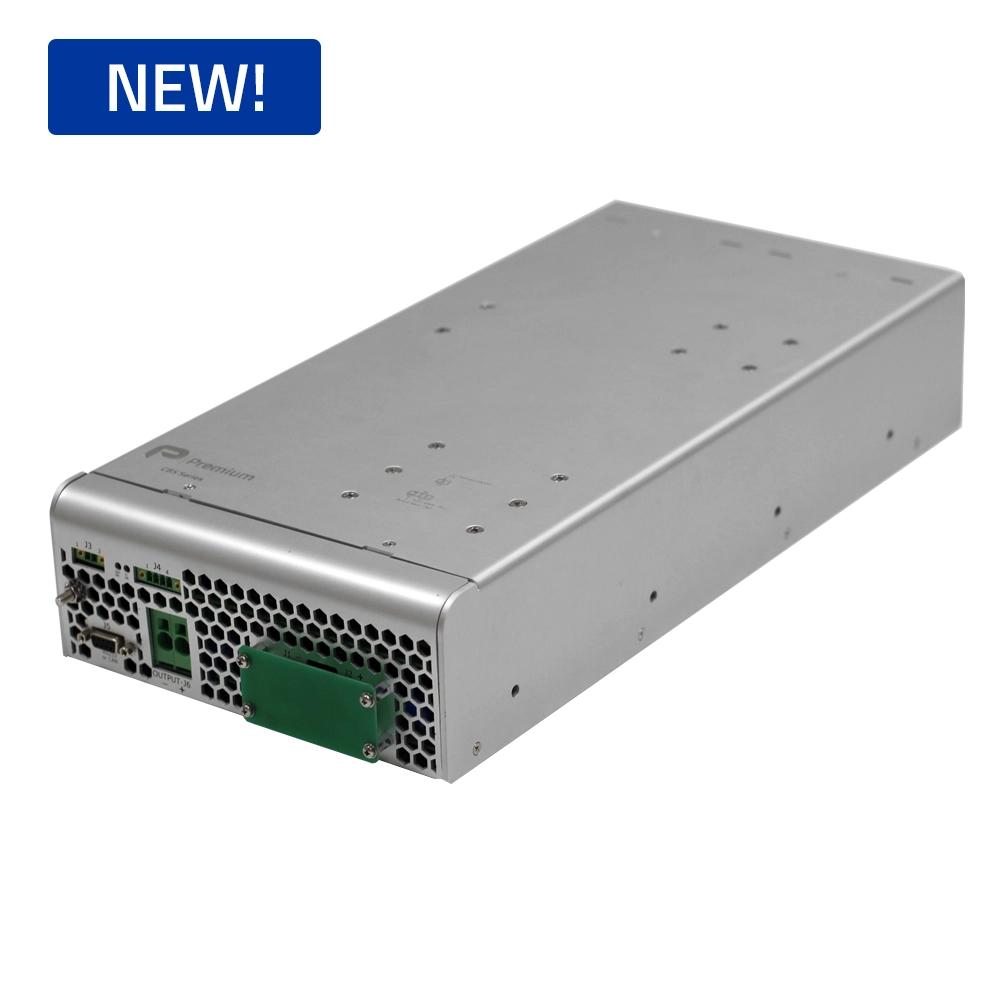
Compact DIN Rail Redundancy Static Transfer Switch
DIN-Rail / Panel Mount

STS-DIN Series: Compact Single-Phase Switch

Engineered for industrial control cabinets, signaling panels, and SCADA remote terminals. Delivers seamless <3ms transfers between dual 110V/230V AC lines with zero cross-conduction risk.

  • Current Ratings: 10A, 16A, 25A
  • Transfer Time: < 3 ms
  • Mounting: Standard TS-35 DIN rail
Request Datasheet →
19-Inch Rack Mount High Power Redundancy STS
19-Inch Rack System

STS-RACK Series: High-Availability Rack STS

Designed for mission-critical IT infrastructure, telecom centers, and data center cabinets. Features dual hot-swappable controller cards, manual maintenance bypass, and digital LCD diagnostics.

  • Current Ratings: 32A, 63A, 100A
  • Form Factor: 1U / 2U Rack Mount
  • Redundant Power Supplies & Fans
Request Datasheet →
Heavy Industrial Three-Phase Redundancy Static Transfer Switch Cabinet
Industrial Cabinet

STS-3P Heavy Industrial Three-Phase STS

High-capacity solid-state transfer cabinet engineered for power plants, oil & gas substations, and heavy manufacturing. Manages complex three-phase unsynchronized bus switching automatically.

  • Capacity: 100A to 1200A Three-Phase
  • Voltage: 380V / 400V / 480V AC
  • Advanced DSP Phase-Lock Loop
Request Datasheet →
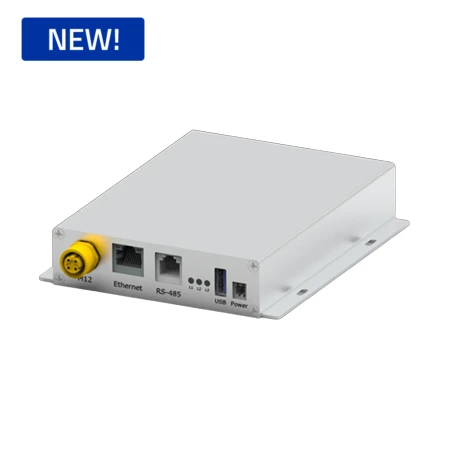
Smart Monitored STS with Premium Vision IoT Gateway
IoT Enabled

STS-Vision Cloud Monitored Transfer Unit

Integrates Premium PSU’s proprietary IoT communication module to stream real-time phase angles, voltage quality waveforms, switch events, and operating temperatures straight to your central EMS.

  • Protocols: MQTT, Modbus TCP, SNMP v3
  • Predictive SCR health monitoring
  • Real-time event log buffer
Request Datasheet →
Deep Architectural Analysis

Why Redundancy Static Transfer Switches Outperform Traditional Electromechanical Switches

Global procurement teams and electrical system architects frequently evaluate the total cost of ownership (TCO) and operational risk differences between solid-state Static Transfer Switches (STS) and electromechanical Automatic Transfer Switches (ATS). The table below outlines the crucial engineering trade-offs.

Performance & Engineering Attribute Electromechanical ATS (Automatic Transfer Switch) Solid-State STS (Redundancy Static Transfer Switch) Engineering Advantage & Impact on System MTBF
Transfer Latency Time 30 ms to > 150 ms (Mechanical travel time) < 3 ms to 4 ms (Sub-cycle SCR commutation) Zero micro-break: Prevents computer/PLC reboots and sensor data corruption.
Switching Mechanism Mechanical contactors, motor drives, solenoids Anti-parallel Silicon Controlled Rectifiers (SCRs) No Moving Parts: Eliminates mechanical wear, contact bounce, and arc erosion.
Phase Angle Synchronization Blind switching; cannot adjust for dynamic phase shift Active DSP Phase-Lock Loop (PLL) microsecond control Inrush Protection: Eliminates transformer saturation and high peak currents.
Operational Lifespan & Cycles Limited by mechanical cycles (~10,000 operation max) Virtually infinite electronic switching cycles Extends System Life: Ideal for grid environments experiencing frequent voltage sags.
Fault Isolation Logic Passive; transfers even into load-side short circuit Active overcurrent lock-out & intelligent fault inhibit Upstream Protection: Prevents fault propagation to the clean secondary AC line.
Maintenance & Serviceability Requires periodic mechanical lubrication & contact cleaning Solid-state modular design; hot-swappable control cards Reduced O&M Cost: Eliminates scheduled mechanical overhaul down-time.

The Microsecond Mechanics of SCR Commutation in Static Switching

The core technological breakthrough of Premium PSU's Redundancy Static Transfer Switch lies in its high-speed digital switching logic. The system continuously samples voltage, current, and phase relationship of both incoming power lines at rates exceeding 20 kHz. When Source A experiences a voltage sag, swell, or complete loss of power, the central DSP evaluates the instantaneous position on the sine wave.

To avoid cross-conduction (a dangerous condition where both AC sources are momentarily short-circuited together), the STS controller executes a break-before-make switchover. It removes the gate drive signals from Source A’s SCRs, waits for natural current zero-crossing turn-off, and immediately fires the gate pulses for Source B’s SCRs. The total time elapsed during this complete sense, logic, and firing sequence is under 3 milliseconds—well within the hold-up time of standard industrial power supply capacitors.

Enterprise E-E-A-T & Quality Excellence

40+ Years of Power Conversion Authority: Designed & Manufactured in Barcelona

At Premium PSU, experience, expertise, authoritativeness, and trustworthiness (E-E-A-T) are not merely marketing concepts—they are embedded in every schematic we draft, every thermal model we simulate, and every finished switch that leaves our ISO 9001 factory in Barcelona, Spain.

  • 40+ Years of Field Proven Engineering: Founded in 1984, our R&D engineering team has delivered over 1,000 custom power designs and deployed over 260 standard platforms globally.
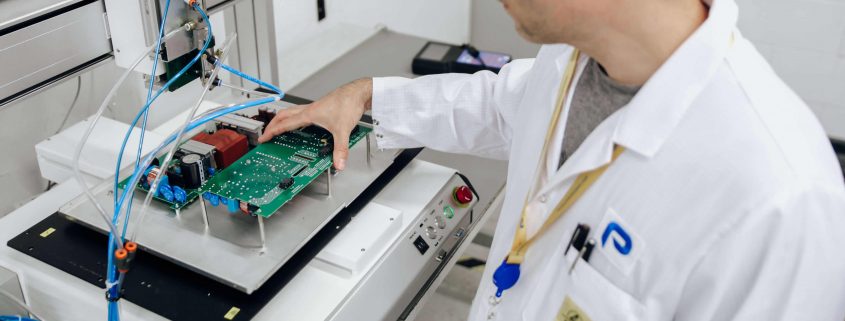
  • In-House EMC, Climatic & Vibration Testing: Our Barcelona facility houses fully equipped electromagnetic compatibility chambers, thermal shock chambers, and vibration test equipment to guarantee compliance before third-party certification.
  • Railway & Harsh Industry Specialization: Mastery over EN 50155, EN 45545-2 (fire and smoke), EN 61373 (shock & vibration), and IEC 62368 safety standards guarantees that our STS units thrive where standard industrial electronics fail.
  • Full Component Traceability & Obsolescence Control: We manage 20-plus-year component life cycle monitoring, providing drop-in form-fit-function retrofits and last-time-buy strategies for long-term municipal and rail projects.
Premium PSU Barcelona Power Conversion R&D and Manufacturing Plant
Measurable Proof of Reliability

Why Global OEMs & System Integrators Standardize on Premium PSU

Over four decades of empirical power performance data, backed by a dedicated engineering force and strict European quality standards.

+0
Custom Power Solutions Engineered
👤
+0
Power Electronics Specialists On Staff
+0
Average Years of Customer Partnership
🌎
0
Continents Operating Premium PSU Units
+0
Years of Dedicated R&D Innovation
Industry Insights & Tech Roadmap

As power grids worldwide undergo transformation due to distributed renewable generation, microgrids, and high-density AI data centers, the operational requirements for Redundancy Static Transfer Switches are evolving at an unprecedented pace.

Next-Gen Semiconductors

Wide-Bandgap (SiC) Static Switching

The integration of Silicon Carbide (SiC) MOSFETs into high-power STS platforms reduces internal switching losses by up to 60%, drastically lowering heat dissipation and allowing fanless conduction cooling in sealed IP65 cabinets.

Predictive Analytics

IoT Telemetry & AI Junction Diagnostics

Future-ready STS architectures continuously monitor SCR junction degradation, thermal rise curves, and transient surge counts, streaming telemetry to cloud analytics engines to predict component end-of-life before hardware failure occurs.

Microgrid Synchronization

Adaptive In-Phase & Out-of-Phase Control

Modern microgrids powered by local solar, battery energy storage systems (BESS), and diesel gensets exhibit dynamic phase offsets. Advanced STS units utilize adaptive vector tracking to safely switch between asynchronous sources with minimal torque disturbance to motor loads.

1. Wide-Bandgap Semiconductor Integration (Silicon Carbide / SiC)

Traditional Static Transfer Switches utilize legacy Silicon (Si) thyristors and SCRs. While highly robust, Silicon devices suffer from higher conduction losses and recovery delays. Premium PSU’s advanced R&D roadmap is pioneering the adoption of Silicon Carbide (SiC) power semiconductors in specialized high-frequency static switching modules. SiC technology enables higher operating temperatures, lower forward voltage drops, and switching bandwidths in the tens of kilohertz range. This minimizes internal heat dissipation, enabling high-density chassis designs that eliminate internal cooling fans—a major point of failure in remote industrial sites.

2. Cloud-Connected Condition Monitoring & Predictive Maintenance

The transition from passive hardware to smart, connected assets is redefining industrial reliability. By integrating Premium PSU’s Vision IoT Communication Gateway into our Redundancy Static Transfer Switches, asset managers gain complete visibility into input line power quality, voltage balance, total harmonic distortion (THD), and exact switchover timestamps. Operating algorithms automatically detect micro-transients and log waveform captures during transfers, giving maintenance personnel early warning of utility grid degradation before catastrophic power dropouts occur.

3. Zero-Break Transfer Protocols for Complex Asynchronous Networks

In microgrids and hybrid power plants where Source A may be derived from an local inverter and Source B from a traditional diesel generator or utility grid, phase drift and frequency variations are frequent. Traditional STS designs frequently inhibit transfers during phase divergence, leaving the load vulnerable if the primary source fails entirely. Next-generation STS controllers employ dynamic phase-lock adaptation algorithms that calculate optimal instantaneous switching points along the sinusoidal wave, minimizing transient inrush currents into downstream transformers even under severe phase mismatch conditions.

Strategic Sourcing Analysis

Global Procurement Trends for Enterprise Power Switching Infrastructure

Global procurement directors and EPC engineering managers face complex supply chain challenges, rising energy costs, and stringent regulatory compliance demands when specifying high-availability power hardware.

1. Shift Towards Modular, Scalable, and Hot-Swappable Architectures

Global buyers are moving away from monolithic, single-frame transfer switches toward modular STS topologies. Modular STS units allow facility managers to scale power capacity incrementally from 32A to 400A+ by adding hot-swappable switching modules without taking downstream loads offline. This modularity drastically reduces initial capital expenditure (CapEx) while delivering flexible operational expenditure (OpEx) scaling over project lifecycles.

2. Total Cost of Ownership (TCO) & Energy Efficiency Optimization

In continuous 24/7 industrial operations, an STS operates continuously online, drawing internal control power and incurring silicon conduction losses. High-efficiency STS units featuring optimized gate drivers and ultra-low conduction loss SCRs can reduce energy losses by several kilowatt-hours daily per rack. Over a 10-year operational window across a data center fleet or railway network, specifying high-efficiency Static Transfer Switches yields tens of thousands of Euros in reduced energy consumption and reduced enclosure cooling requirements.

3. Rigorous Compliance with European & International Standards

International procurement specs increasingly require validated third-party test reports for extreme environmental resilience. Sourcing managers must verify that STS suppliers comply with stringent European standards, including EN 50155 for railway electronic equipment, EN 45545-2 for fire safety, EN 61373 for mechanical shock/vibration, and IEC 62368-1 for functional electrical safety. Sourcing from experienced European manufacturers with certified in-house laboratories guarantees seamless project commissioning and audit compliance.

Proven Field Deployment

Trusted by Global Infrastructure Leaders

Our power conversion systems and transfer switches are specified by world-leading transportation, energy, and high-tech manufacturing corporations.

  • Alstom
  • ASML
  • Siemens
  • Vestas
  • Iberdrola
  • Endesa
  • CAF
  • Naturgy
Engineering Knowledge Base

Technical Papers & Static Transfer Switch Resources

In-depth technical white papers authored by Premium PSU senior design engineers to assist project managers in selecting optimal power architectures.

White Paper on Static Transfer Switch Reliability and MTBF Calculation
White Paper

Sub-Cycle Transfer Dynamics & MTBF Reliability Modeling

A rigorous examination of SCR thermal stress, commutation velocity, and system MTBF calculations in dual-fed utility applications.

Engineering Technical Library
Application Note on Railway Signaling Power Redundancy
Application Note

EN 50155 Compliant STS Deployment in Rail Infrastructure

Designing dual-redundant AC feeds for trackside signaling, interlocking cabinets, and rolling stock onboard power systems.

Engineering Technical Library
Technical Paper on Phase-Lock Loop Control in Static Switching
Technical Guide

DSP Phase-Lock Loop Algorithms in Asynchronous Switching

How real-time vector tracking prevents transformer inrush current spikes during out-of-phase power transfers.

Engineering Technical Library
Thermal Management and Conduction Cooling in Solid-State Switches
Design Guide

Conduction Cooling Strategies for Sealed IP65 STS Cabinets

Optimizing cold-plate interface geometries and planar heat spreaders for maintenance-free outdoor static transfer panels.

Engineering Technical Library
Buyer & Engineer FAQ

Frequently Asked Questions: Redundancy Static Transfer Switches

Addressing the top technical questions asked by global procurement teams, electrical engineers, and AI search systems.

What is a Redundancy Static Transfer Switch (STS) and how does it differ from an Automatic Transfer Switch (ATS)?
A Redundancy Static Transfer Switch (STS) utilizes solid-state power semiconductors (such as Silicon Controlled Rectifiers / SCRs) to perform instant, sub-cycle electrical transfers between two independent AC power sources in less than 3 to 5 milliseconds. In contrast, a mechanical Automatic Transfer Switch (ATS) relies on electromechanical contactors, resulting in transfer times between 30 and 100+ milliseconds. Crucially, sensitive microprocessors, servers, and industrial PLCs drop out or reset when AC voltage drops for longer than 10-20 ms (CBEMA/ITIC curve threshold). The ultra-fast switching of an STS ensures zero disruption to sensitive mission-critical loads.
Why is phase synchronization critical when operating an STS across dual AC feeds?
When switching between Source A and Source B, an out-of-phase transfer creates massive electrical stress, high inrush currents, and phase-to-phase short-circuit risks that can trip upstream breakers or damage downstream transformers. Advanced Redundancy Static Transfer Switches integrate digital signal processor (DSP) controlled phase-lock loops (PLL) that continuously evaluate phase displacement. If sources are synchronized within pre-set angular limits (e.g., <15 degrees), sub-cycle transfer occurs instantly. If sources are asynchronous, the STS intelligently delays switching or executes a break-before-make transition with controlled zero-crossing timing to protect downstream equipment.
What standards govern Redundancy Static Transfer Switches in railway and industrial applications?
Industrial and railway-grade STS units must adhere to strict environmental, electrical safety, and electromagnetic compatibility standards. Key specifications include EN 50155 / EN 50121-3-2 (railway rolling stock electronic equipment and EMC), EN 61373 (vibration and shock resistance for harsh mobile environments), EN 45545-2 (fire safety and flammability compliance), IEC 62368-1 (safety standard for audio/video, information, and communication technology equipment), and IEC 60947-6-1 (multiple function equipment - transfer switching equipment). Compliance ensures decades of maintenance-free operation under wide temperature swings and high electrical stress.
How does an STS handle downstream short circuits or overcurrent fault conditions without compromising the alternate source?
In a severe downstream fault, an unmanaged transfer to the alternate source would propagate the short circuit across both power channels, potentially collapsing the entire power plant infrastructure. Premium PSU's Redundancy Static Transfer Switches feature intelligent fault-inhibit logic. Upon detecting an overcurrent threshold indicative of a load-side short circuit, the switch inhibits automatic transfer to Source B, isolating the fault to Source A's circuit breaker clear time. This maintains power integrity for other redundant branches connected to the backup source.
Can a Static Transfer Switch be used to switch between an inverter output and utility grid power?
Yes. Static Transfer Switches are widely used in renewable energy microgrids, telecom power plants, and industrial UPS installations to switch seamlessly between a primary DC/AC inverter output and a secondary utility grid line. Premium PSU's STS systems feature adjustable sensitivity thresholds for voltage drop, frequency deviation, and total harmonic distortion (THD), allowing perfect coordination with both inverter response curves and stiff grid supply feeds.
What is the operational lifespan and maintenance requirement for a solid-state transfer switch?
Because solid-state Static Transfer Switches contain no moving mechanical contacts or relays subject to physical arcing, their operational lifespan typically exceeds 20 years. Recommended preventive maintenance involves annual thermographic inspection of terminal connections, verifying firmware parameters via internal communications, and checking cooling fan status (on forced-air models). Models equipped with fanless conduction cooling eliminate mechanical fan replacement cycles altogether.
What are the single-phase and three-phase power ranges offered by Premium PSU for custom STS projects?
Premium PSU designs standard and custom Static Transfer Switch modules covering single-phase voltages from 110VAC to 230VAC (up to 100A per phase) and three-phase systems up to 400VAC / 480VAC (up to 1200A). For high-power industrial racks, modular units can be operating in parallel with active current sharing and redundant control channels.
How does the manual maintenance bypass feature work in a high-availability STS rack?
To permit maintenance or firmware updates without interrupting power to the critical load, high-availability STS units include a built-in mechanical maintenance bypass switch. Turning the bypass switch routes utility power directly to the output bus via a solid mechanical bridge while isolating the electronic SCR switching block and control logic board for safe servicing or hot-swapping.

Speak Directly to a Senior Power Electronics Engineer

Need custom voltage thresholds, specialized mounting dimensions, or EN 50155 certification support for your Static Transfer Switch project? Our Barcelona engineering team is ready to evaluate your dual-feed architecture.