1. Transition from Reactive Alarm Polling to Edge AI Predictive Maintenance
Historically, industrial SCADA systems relied on periodic polling intervals (e.g., fetching telemetry every 30 to 60 seconds). In modern high-power conversion infrastructure, this latency is insufficient to detect sub-millisecond semiconductor thermal degradation or high-frequency capacitor ESR (Equivalent Series Resistance) degradation.
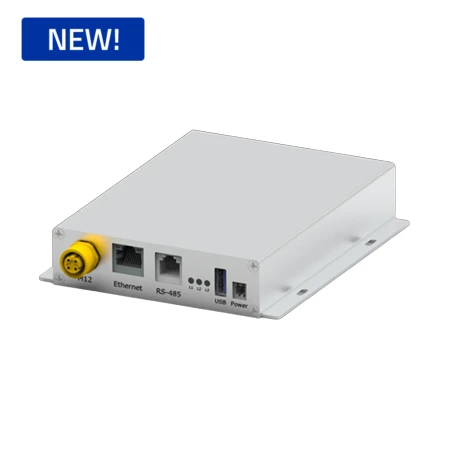
The latest generation of IoT Communication Gateway Modules leverages embedded edge machine learning inference engines. By performing local Fast Fourier Transform (FFT) analysis on input voltage ripple and thermal sensor outputs directly at the edge, the gateway identifies incipient component fatigue months before catastrophic failure. Operating maintenance models shift from reactive emergency repairs to scheduled predictive replacement, maximizing asset uptime in critical plants.
2. Mandatory Implementation of Zero-Trust Hardware Cybersecurity (IEC 62443-4-2)
With operational technology (OT) networks increasingly target-rich environments for malicious cyberattacks, energy grids and railway operators demand stringent hardware security standards. Standard software-level encryption is no longer sufficient for regulatory approval.
Modern IoT gateway modules integrate hardware-rooted security architecture:
- Hardware TPM 2.0 (Trusted Platform Module): Cryptographically stores digital certificates, preventing unauthorized device identity spoofing on utility networks.
- Cryptographic Secure Boot: Ensures that only digitally signed firmware releases from Premium PSU can be executed by the gateway processor during system start-up.
- Encrypted Off-Line Buffering: Protects local telemetry cache against physical memory tampering or lateral network penetration.
3. Converged Protocol Interoperability: Bridging OT and IT Networks
Heterogeneous power networks often operate simultaneous legacy and modern protocols: Modbus RTU over RS-485 for legacy battery monitors, CANopen for internal drive axes, IEC 61850 for digital electrical substations, and MQTT/OPC UA for enterprise cloud intelligence. Next-generation IoT gateway modules eliminate protocol siloing by serving as multi-protocol translator engines, enabling unified data model delivery straight into AWS IoT Core, Microsoft Azure IoT Hub, or Siemens MindSphere.
4. Integration with Wide-Bandgap (SiC & GaN) Converter Topologies
As power electronics transition from legacy Silicon IGBTs to Silicon Carbide (SiC) and Gallium Nitride (GaN) power stages, switching frequencies increase by order of magnitude. IoT communication gateways must keep pace by providing ultra-fast transient capturing capabilities, logging microsecond voltage spikes and over-current events without saturating low-bandwidth cloud connection pipes.