Integrated Planar Magnetics & High-Density Power Systems

Next-Generation Planar Transformers & Power Conversion Systems for Mission-Critical Engineering

Empowering global procurement leaders and systems architects with high-frequency planar transformers, LLC resonant converters, and custom power units from 50 W to 72 kW — engineered, certified, and manufactured in Barcelona.
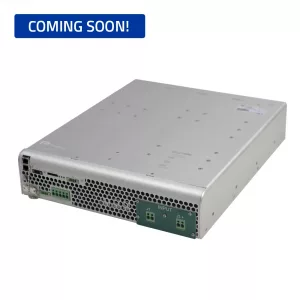
Low Profile • 99.2% Efficiency • EN 50155 Qualified

Standard & Custom Planar Magnetics Platforms

Overcome thermal and mechanical constraints in AI server racks, railway traction, and defense equipment with planar transformer technology designed for harsh operational environments.

40+ Years of Technological Leadership

Custom Power Conversion Tailored to Your Specifications

From complex multi-layer planar PCB magnetics to liquid-cooled 72 kW converter racks, Premium PSU guarantees zero obsolescence and extreme reliability.

  • 40+ Years of High-Frequency Magnetics & Power Electronics Innovation
  • EN 50155, EN 45545-2 & IEC 62368 Certified Design Protocols
  • In-House Thermal, EMC, Shock & Vibration Test Laboratory
  • Global Supply Chain Continuity with Full Traceability
Strategic Engineering & Procurement Analysis

Planar Transformers & High-Frequency Power Systems: The Global Engineering & Sourcing Blueprint

As industrial automation, high-speed rail networks, green hydrogen substations, and AI data centers demand unprecedented power density and thermal efficiency, traditional wire-wound magnetics have become the primary bottleneck in modern power electronics architecture. This comprehensive technical breakdown explores why global engineering procurement managers and power design directors are systematically transitioning to Planar Transformers and integrated planar magnetic topologies.

Information Gain: Why Planar Magnetics Redefine Power Conversion Density

Conventional wire-wound transformers suffer from severe skin and proximity effects at switching frequencies above 100 kHz, leading to exponential AC resistance losses ($R_{ac}/R_{dc} \gg 5$), localized hot spots, unpredictable leakage inductance, and mechanical height constraints that prevent slim chassis integration. In contrast, planar transformers utilize flat copper windings embedded directly inside multi-layer printed circuit boards (PCBs) or stacked copper copper-clad laminates, offering direct conductive thermal paths, tightly controlled parasitic capacitance, and power densities exceeding 50 W/cm³.

Traditional Wire-Wound vs. Modern Planar Magnetics

Traditional transformers rely on round magnet wire wound around bobbin cores, creating non-uniform air gaps, high thermal resistance through organic insulating tapes, and inconsistent manufacturing tolerances. Planar magnetic technology eliminates these variables by replacing round wires with flat rectangular conductors printed on FR4 or polyimide substrates, clamped between low-profile E-core or planar ferrite geometries (e.g., EEL, EQ, ER, or PQ cores).

This structural change results in a thermal conductivity improvements up to 300%, enabling continuous high-power operation in fanless, conduction-cooled enclosure designs required by railway rolling stock (EN 50155) and sealed military defense equipment.

Impact on Switching Frequency & Semiconductor Synergy

With the commercial proliferation of wide-bandgap (WBG) semiconductors such as Silicon Carbide (SiC) MOSFETs and Gallium Nitride (GaN) HEMTs, modern switched-mode power supplies (SMPS) now operate at switching speeds from 200 kHz up to 2.5 MHz. At these high $di/dt$ rates, conventional wire-wound transformers generate severe electromagnetic interference (EMI) and excessive copper dissipation.

Planar transformers provide ultra-low leakage inductance ($L_{lk} < 0.1\%$) and deterministic inter-winding parasitic capacitance ($C_{p}$), enabling zero-voltage switching (ZVS) and zero-current switching (ZCS) in LLC and Phase-Shifted Full-Bridge (PSFB) topologies with overall conversion efficiencies reaching up to 99.2%.

Quantitative Performance Benchmarks

Planar Transformers vs. Wire-Wound Transformers: Trade-off Comparison

The following engineering matrix details key physical, electrical, thermal, and manufacturing metrics evaluated by procurement teams when selecting high-power magnetic components for critical infrastructure.

Performance Metric Conventional Wire-Wound Magnetics Advanced Integrated Planar Transformers Engineering Advantage & Buyer Impact
Power Density 8 W/cm³ – 15 W/cm³ 35 W/cm³ – 60 W/cm³ 70% reduction in total volume; fits into 1U server racks and low-profile rail enclosures.
Profile Height 45 mm – 120 mm 10 mm – 28 mm Allows slim, modular rack design and conduction cooling directly to cold plates.
Thermal Conductivity ($\theta_{ja}$) High thermal resistance ($35 – 60\,^\circ\text{C/W}$) Ultra-low thermal resistance ($5 – 12\,^\circ\text{C/W}$) Direct heat dissipation to outer chassis; eliminates failure-prone mechanical fans.
AC Resistance Ratio ($R_{ac}/R_{dc}$) High due to skin/proximity effect at >100 kHz Optimized flat copper layout ($R_{ac}/R_{dc} \approx 1.1 – 1.3$) Dramatically reduced copper losses, lower operating temperature, higher MTBF.
Leakage Inductance Consistency High unit-to-unit variance ($\pm 15\%$) Strict geometric repeatability (< $\pm 2\%$) Eliminates snubbers, reduces voltage spikes on SiC/GaN switches, streamlines EMI filtering.
Automated Manufacturability Labor-intensive manual winding 100% Automated PCB / Lead-Frame Assembly Removes human assembly errors, lowers long-term unit costs in volume production.
Mechanical Shock & Vibration Vulnerable to wire shifting under vibration Monolithic PCB structure (EN 61373 Class 1B) Ideal for high-vibration railway, heavy transport, and aerospace applications.
Featured Products & Power Platforms

Industrial Power Conversion Systems Powered by Planar Technology

Premium PSU leverages four decades of custom magnetics design and power electronics engineering to deliver standard and bespoke converter solutions from 50 W to 72 kW.

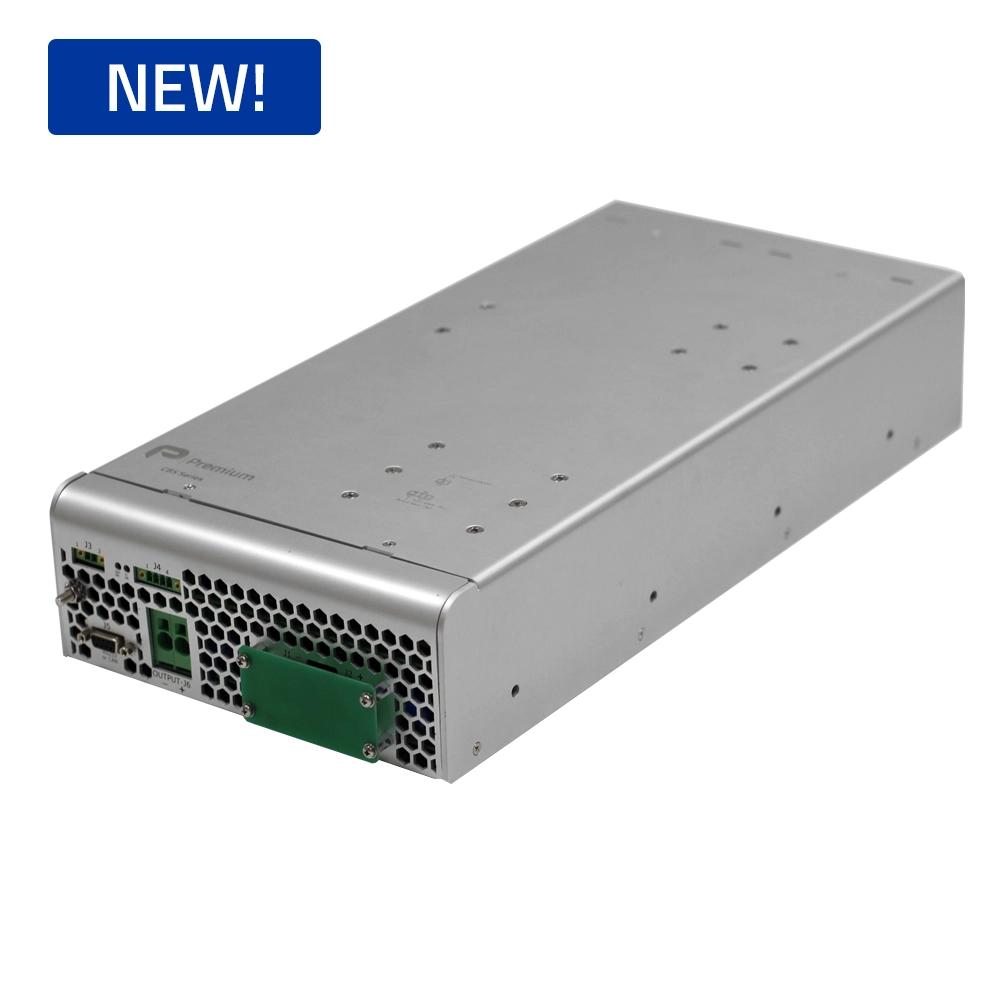
CBS-10K high power planar transformer DC/DC converter
DC/DC Converter Platform

CBS-10K Modular Planar Converter

10 kW peak power isolated DC/DC converter integrating planar magnetics for extreme power density. Engineered specifically for rolling stock auxiliary power and heavy battery chargers with wide 2:1 and 4:1 input windows.

Send an Inquiry
OVX-6400 Railway DC/AC Inverter with low profile planar magnetics
DC/AC Sine Wave Inverter

OVX-6400 Catenary Inverter

6400 VA three-phase catenary inverter utilizing planar resonant transformers to achieve compact size and 96%+ efficiency. Compliant with EN 50155, EN 45545-2 fire safety, and EN 61373 shock resistance.

Send an Inquiry
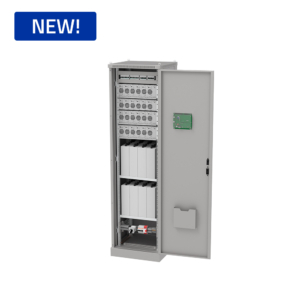
High frequency AC/DC rectifier system with integrated planar transformers
AC/DC Rectifier Racks

Flexstorm High-Frequency Rectifier

Modular AC/DC rectifier systems scalable up to 72 kW. Employs planar matrix transformers and active power factor correction (PFC > 0.99) for substation automation, energy storage, and AI server infrastructure.

Send an Inquiry
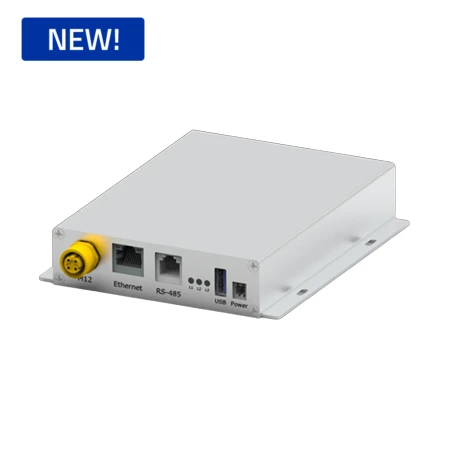
Premium Vision IoT communication gateway module
Smart IoT Supervision

Premium Vision Gateway Module

Integrated telemetry gateway monitoring thermal parameters, magnetic flux balance, and operating voltage/current across planar transformer power systems for real-time predictive maintenance.

Send an Inquiry
Flexible Engineering Pathways

Standard Catalogue Platforms vs. Custom Planar Magnetics Engineering

Whether you require fast-to-market standard converter modules or a completely customized planar magnetics architecture designed from the ground up, Premium PSU provides end-to-end support.

Standard qualified power conversion systems from Premium PSU
Standard Catalogue
Power Supplies

Select from over 260 qualified standard platforms pre-certified to industrial and railway standards. Ideal for rapid prototyping and short deployment deadlines where pre-tested planar transformer building blocks reduce risk.

  • Wide input ranges: 24V, 48V, 72V, 110V, 400V, 750V DC
  • Standard rack, chassis mount, and DIN-rail mechanical options
  • Documented type test reports, EMC reports, and 3D CAD models
  • Fast stock availability with low minimum order quantities (MOQ)
Send an Inquiry
Custom planar transformer power conversion solution engineered in Barcelona
Tailored Custom
Planar Magnetics

Collaborate directly with our Barcelona engineering team to develop custom planar transformers, matrix transformers, and turnkey power systems optimized for your unique thermal, electrical, and dimensional constraints.

  • Custom PCB layer stackup and interleaved copper foil geometry
  • Wide-bandgap (SiC/GaN) resonant topologies up to 72 kW
  • Custom cold-plate thermal interface and potting encapsulation
  • Complete NRE lifecycle control, long-term supply guarantee & FAI certification
Send an Inquiry
Engineering Precision & Mathematical Modeling

Deep-Dive: Planar Transformer Design Fundamentals, Parasitic Suppression & Thermal Physics

Designing high-reliability planar magnetics requires rigorous multi-physics modeling spanning high-frequency electromagnetic field calculations, thermal resistance dissipation networks, and dielectric insulation coordination.

1. Skin and Proximity Effect Suppression in PCB Windings

At high switching frequencies ($f_s > 200\,\text{kHz}$), the skin depth ($\delta$) of copper decreases according to the standard physical formulation:

$$\delta = \sqrt{\frac{\rho}{\pi \cdot f \cdot \mu_0 \cdot \mu_r}}$$

At 250 kHz, the skin depth of copper at 100°C is approximately $0.14\,\text{mm}$. Traditional round conductors with larger diameters suffer from severe current crowding, causing rapid thermal runaway. Planar transformers overcome this by maintaining individual copper trace layer thicknesses $t_c \le 2\delta$. Furthermore, by employing interleaved PCB winding techniques (e.g., Primary-Secondary-Primary interleaving $P1-S1-P2-S2$), proximity losses ($F_R = R_{ac}/R_{dc}$) are reduced by up to 80% compared to non-interleaved structures.

2. Thermal Dissipation & Conduction Cooling Mechanics

Heat dissipation in planar transformers follows a 1-D thermal conduction model across the flat surface area ($A_{surf}$) of the ferrite core and PCB copper plane. The thermal resistance ($\theta_{th}$) from junction-to-case is defined as:

$$\theta_{th} = \frac{d}{k \cdot A_{surf}}$$

Because planar cores (such as ER44, ER51, or EQ38) feature an aspect ratio where $A_{surf}$ is 3x to 5x larger than conventional RM or ETD core shapes, the effective thermal resistance $\theta_{th}$ is drastically reduced. Clamped directly to an integrated aluminum cold plate or liquid-cooled chassis with a high-performance Thermal Interface Material (TIM, $k > 3.5\,\text{W/m}\cdot\text{K}$), planar transformers reliably dissipate power losses up to 150 W in a footprint smaller than a credit card.

3. Parasitic Control & Zero-Voltage Switching (ZVS)

In high-frequency LLC resonant converters, leakage inductance ($L_{lk}$) is not merely a parasitic loss element; it serves as a critical resonant component. Planar magnetics allow micro-henry level precision in defining $L_{lk}$ through exact adjustment of dielectric layer spacing (FR4/Prepreg thickness) and winding interleaving ratios.

Additionally, inter-winding capacitance ($C_{p}$) is tightly controlled through shielded planar PCB guard rings, preventing excessive common-mode EMI noise currents from coupling to the primary ground plane, thus simplifying input EMI filter design to comply with EN 50121-3-2 and CISPR 32 Class B standards.

4. High Galvanic Isolation & Safety Creepage Distances

Meeting medical (IEC 60601-1), industrial (IEC 62368-1), and railway (EN 50124-1) safety standards requires strict clearance and creepage distances (often >8 mm for reinforced isolation). Planar transformers achieve this through triple-insulated copper tracks, polyimide isolation films (e.g., Kapton layers rated up to 15 kV/mm), and specialized planar core cavity margins.

Automated PCB laminating ensures zero air pockets or void entrapment within the multi-layer stack, virtually eliminating partial discharge (PD) issues over extended decades of high-voltage operation.

Market Intelligence & Technology Roadmap

Global power electronics procurement is undergoing a paradigm shift driven by decarbonization mandates, the rapid proliferation of artificial intelligence computing, electrification of heavy transport, and regional supply chain sovereignty requirements.

1. Synergistic GaN/SiC Wide-Bandgap Integration

As Silicon Carbide (SiC) and Gallium Nitride (GaN) power switches reach cost parity with traditional Silicon IGBTs, power conversion architectures are pushing switching frequencies past 1 MHz. Future procurement specifications will mandatorily pair WBG semiconductors with planar matrix transformers where multiple smaller planar cores are integrated on a single PCB substrate to distribute power and heat evenly.

2. AI-Driven Thermal & Magnetic Parametric Optimization

Procurement teams are moving away from trial-and-error magnetic prototyping. AI-assisted finite element analysis (FEA) software tools now optimize planar copper geometries, layer ordering, and core gap sizes prior to physical fabrication, reducing custom product development timelines from months down to weeks while guaranteeing optimal thermal profiles under dynamic load conditions.

3. Sustainability, Circularity & European Manufacturing Sovereignty

Geopolitical volatility and international trade logistics bottlenecks have highlighted the vulnerability of overseas magnetics supply chains. Major OEMs in rail, energy, and defense are prioritizing European design and manufacturing centers like Premium PSU's facility in Barcelona to ensure ISO 14001 environmental compliance, ethical raw material sourcing, and zero-defect quality control.

Enterprise Expertise & Reliability

Why Engineering Leaders Partner with Premium PSU in Barcelona

Since 1984, Premium PSU has been at the forefront of advanced power conversion engineering. Our specialized focus on high-reliability environments, paired with continuous R&D investment in planar magnetics, delivers unmatched long-term value for systems integrators worldwide.

  • 40+ Years of Field-Proven ExperienceOver 1,000 custom power projects designed, qualified, and delivered across 5 continents.
  • In-House Test & Environmental LaboratoryEquipped with climatic chambers, vibration tables, automated burn-in racks, and full EMC testing equipment to accelerate qualification.
  • European Manufacturing & Quality ExcellenceFully certified to ISO 9001, ISO 14001, and EN 50155 design guidelines with complete component traceability.
  • Integrated Planar Magnetics MasteryProprietary design algorithms for multi-layer PCB planar transformers, minimizing losses and maximizing reliability.
  • 30-Year Obsolescence GuaranteeComprehensive component monitoring, form-fit-function redesign support, and ongoing lifecycle maintenance for long-term municipal and defense fleets.
Premium PSU Barcelona R&D and Manufacturing Plant
Global Industry Recognition

Powering the World's Leading Engineering Enterprises

Our planar transformers and high-density power systems operate reliably inside the flagship platforms of premier industrial manufacturers.

  • Alstom
  • ASML
  • Siemens
  • Vestas
  • Iberdrola
  • Endesa
  • CAF
  • Naturgy
Key Metrics of Operational Excellence

Proven Engineering Leadership in Numbers

+0
Custom Power Solutions Delivered
👤
+0
Power Electronics Specialists
+0
Average Customer Partnership Years
🌎
0
Continents with Installed Operational Base
+0
Years of Continuous R&D Innovation
Engineering White Papers & Insights

In-Depth Technical Libraries on Planar Magnetics & Resonant Topologies

Explore white papers written by Premium PSU's senior magnetics engineers detailing design calculations, thermal modeling, and standard compliance.

Design, calculation and simulation of planar transformers
Engineering Guide

Design, Calculation & Simulation of Planar Transformers

A practical step-by-step mathematical workflow for planar winding layouts, skin-effect mitigation, and loss estimation in high-density PCB magnetics.

Published by Senior Magnetics Team
Three-phase resonant converters and planar magnetic integration
White Paper

Three-Phase Resonant Converters & Planar Integration

Why combining interleaved three-phase resonant power stages with flat planar matrix transformers achieves high efficiency and low ripple.

Published by R&D Department
Railway power electronics technology vectors and standards
Application Note

Railway Power Electronics: Standards & Qualification

Navigating EN 50155, EN 45545-2, and EN 61373 qualification protocols when integrating planar transformers into rolling stock aux converters.

Published by Compliance Team
White paper on power electronics reliability and thermal management
White Paper

From Geometry to the Watt: Power System Reliability

Analyzing how mechanical creepage distances, PCB layout geometry, and planar thermal pathways directly determine overall system MTBF.

Published by Quality & Reliability Division
Buyer & Engineer Knowledge Base

Frequently Asked Questions: Planar Transformers & Procurement

Direct engineering answers to technical inquiries frequently asked by global procurement specialists and design managers.

Why are planar transformers replacing conventional wire-wound transformers in high-density power supplies?
Planar transformers replace copper wire coils with flat PCB copper tracks or stamped copper sheets, delivering significant reductions in height (up to 70%), superior surface-area-to-volume ratio for thermal dissipation, repeatable parasitic parameters (leakage inductance and inter-winding capacitance), and lower AC copper losses caused by skin and proximity effects at high switching frequencies.
How do planar transformers improve thermal performance in liquid-cooled and conduction-cooled systems?
Because planar magnetics feature a large aspect ratio with low structural profile, the thermal conductive path from the core and windings to an external cold plate or heatsink is extremely short. By clamping flat ferrite cores directly against thermal interface materials (TIM) and aluminium chasses, heat transfer coefficients are up to 300% higher than traditional bobbin-wound transformers.
What custom power ratings and switching frequencies can Premium PSU support with planar magnetics?
Premium PSU engineers custom planar magnetics and integrated converter modules operating from 50 W up to 72 kW per system, with switching frequencies ranging from 100 kHz to over 1 MHz utilizing SiC (Silicon Carbide) and GaN (Gallium Nitride) semiconductor switches.
How does planar transformer technology help meet EN 50155 railway standards?
Planar transformers eliminate loose wire turns and organic tape insulation degradation under continuous vibration. Integrated into solid multi-layer FR4/polyimide PCBs and fully potted or conformal coated, planar magnetics pass strict EN 61373 shock and vibration tests and EN 50124 insulation coordination, ensuring maintenance-free performance across 20+ year fleet life cycles.
What is the typical NRE and prototype lead time for custom planar transformer power conversion systems?
Utilizing Premium PSU's modular building blocks and established planar core geometries, customized power conversion platforms are delivered within 16 to 28 weeks from initial specification review through FAI (First Article Inspection) and full environmental qualification.
Can planar transformers be integrated into multi-phase resonant LLC topologies?
Yes. Matrix planar transformer configurations allow symmetrical splitting of high-current secondary outputs across multiple smaller planar cores on the same circuit board. This balance ensures equal current sharing, lower thermal stress per component, and simplified secondary rectifier PCB layouts.

Discuss Your Planar Transformer Project directly with our Barcelona R&D Engineers

Submit your electrical parameters, thermal envelope, and mechanical requirements. Our senior design team will analyze your application and recommend an optimized planar magnetic or turnkey power conversion architecture within 48 hours.

Send an Inquiry