
China has become an important sourcing base for Electric Mobility Power Supplies, supporting scooters, electric bicycles, forklifts, golf carts, and small commercial vehicles. Yet choosing a reliable supplier requires more than comparing catalog prices. Battery voltage, charging speed, thermal protection, connector design, and certification records can directly affect vehicle safety and service life.
This guide introduces practical criteria for identifying China’s best Electric Mobility Power Supplies suppliers. It considers manufacturing experience, engineering capability, quality-control procedures, customization support, and after-sales responsiveness. A dependable supplier should explain test methods clearly, provide traceable product specifications, and communicate realistic production timelines. Factory audits, sample testing, and independent verification remain valuable before a large order. A polished website is not enough.
Real projects often reveal important details. A power supply may perform well in a laboratory but struggle inside a hot vehicle enclosure. A connector may fit perfectly but loosen after repeated vibration. These small issues matter. Some supplier information may also be incomplete, especially when testing reports are outdated or translated poorly. That deserves careful questioning.
The strongest candidates usually combine stable production with responsive technical support. They can discuss efficiency curves, ingress protection, electromagnetic compatibility, and battery-management integration without avoiding difficult questions. Buyers should also review warranty terms, spare-part availability, packaging quality, and communication during problems. No supplier is perfect. A balanced evaluation should recognize both proven strengths and remaining risks, helping purchasers build safer, more dependable electric mobility systems.
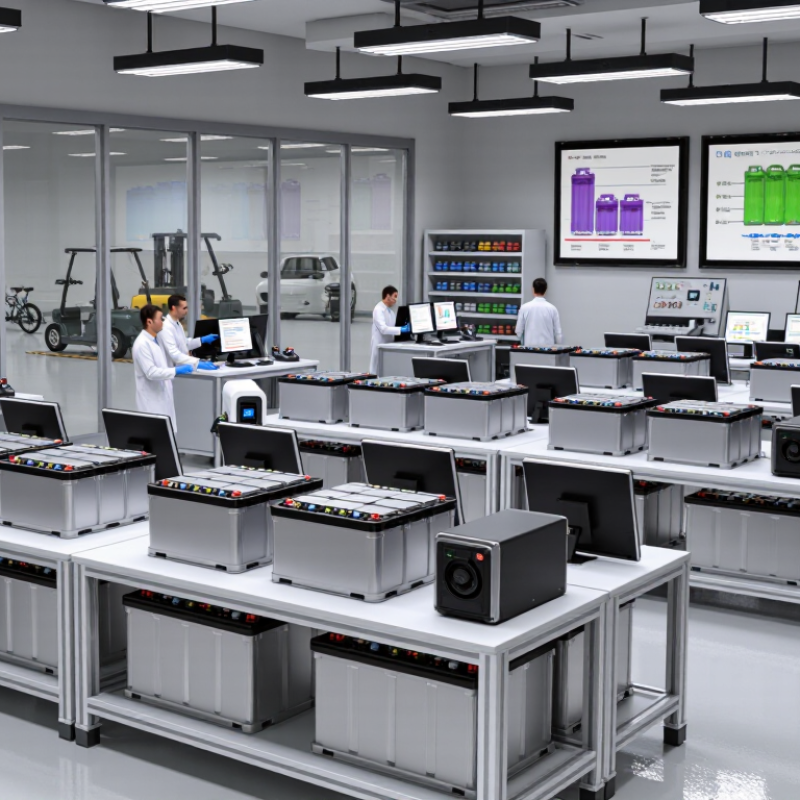
China’s electric mobility power supply market covers several practical solutions. Lithium-ion battery packs are common in scooters, delivery vehicles, and compact utility carts. They offer high energy density and manageable weight. Lead-acid batteries remain useful where low purchase cost matters more than vehicle weight. They are heavier, but familiar to many repair workshops.
On-board chargers convert grid electricity for vehicle batteries. External charging units support faster charging and easier maintenance. Battery-swapping systems reduce waiting time, especially for commercial fleets operating all day. DC-DC converters provide stable low-voltage power for lights, displays, controllers, and communication equipment. Some larger vehicles also use integrated battery management systems to monitor temperature, voltage, and cell balance. Safety depends on design quality, not product labels alone.
Tips: Ask suppliers for capacity test records, cycle-life data, protection details, and clear charging limits. Check whether the power supply fits your vehicle’s voltage, connector, enclosure, and climate conditions. A dusty warehouse needs stronger protection than a clean indoor garage. Thermal testing matters in hot summers. I have seen promising samples fail because connectors loosened after repeated vibration. No supplier is perfect. Request a small trial batch before large orders, and inspect charging behavior after several weeks. Cost is important, but unstable output can create higher repair expenses.
China’s electric mobility charging market commonly uses low-power AC charging, standard DC fast charging, high-power DC charging, and ultra-fast DC charging. The values below show representative rated power levels in kilowatts rather than supplier market shares. Actual output depends on vehicle compatibility, grid capacity, charging equipment configuration, and battery conditions.
Reference basis: commonly deployed nominal charging levels and China’s GB/T 20234 charging-interface practice. Values are representative industry ratings and do not represent any company or brand.
China Best Electric Mobility Power Supplies Suppliers?
Key Specifications for Choosing the Right Power Supply
For an electric mobility system, start with the battery’s nominal voltage and full-charge voltage. A supply must match the required charging profile, not just the number printed on the battery label. Check output voltage tolerance, current limit, and rated power under continuous operation. A unit that handles a brief peak may still overheat during a long charging session. Ask suppliers for test data at realistic loads.
Efficiency affects heat, energy use, and enclosure size. Compare figures at the load levels your equipment actually uses; one headline percentage can hide weak performance at partial load. Inspect ripple and noise specifications, since unstable output may affect sensitive control electronics. Thermal protection, short-circuit protection, and overvoltage protection matter too. Look for clear operating-temperature limits and derating curves. Details count.
The installation environment shapes the remaining choices. A supply mounted near a vehicle’s frame may face vibration, dust, and limited airflow. Confirm its ingress rating, cooling method, connector arrangement, and isolation requirements. Request reliability records, inspection procedures, and sample test reports from potential suppliers. These documents help distinguish repeatable production from a polished sales sheet. I would also ask how design changes are communicated; that point is easy to overlook, and I have seen specifications become stale. A small mismatch can create costly rework.
China’s electric mobility power supply market is not one uniform supplier pool. The best supplier depends on vehicle type, operating conditions, and production volume. It includes battery pack manufacturers, charging equipment producers, DC-DC converter specialists, and cable assembly factories.
Battery suppliers commonly handle cell matching, battery management systems, enclosure sealing, and thermal control. Strong factories maintain automated welding lines and record test data for every pack. Charging suppliers may produce onboard chargers, portable units, or commercial charging cabinets. Their capabilities should include insulation testing, load testing, and stable firmware management. Smaller power electronics suppliers can offer inverters and converters for scooters, utility carts, and light commercial vehicles.
Production depth matters more than a polished showroom. Ask for process records, inspection reports, and traceable component data. A capable factory should explain its quality gates clearly. It should also provide prototype support before mass production. I have found that communication speed often reveals operational discipline. Not always. Some factories answer quickly but avoid difficult technical questions. That deserves attention.
Testing should cover temperature changes, vibration, moisture exposure, overcurrent protection, and repeated charging cycles. Suppliers must adapt designs to the destination market’s applicable safety requirements. Certifications should match the actual product, not a similar model. Request factory audits when volumes justify them. Check whether final assembly, testing, and after-sales analysis happen at the same site. Manufacturing capacity can look impressive on paper, yet delivery consistency may remain uncertain during peak seasons.
Choosing China’s best electric mobility power supply suppliers requires more than comparing prices. Quality begins with documented design controls, trained technicians, and repeatable production methods. A reliable supplier should explain how it manages charging modules, converters, battery interfaces, and thermal protection. Ask for current test reports, not scanned certificates from several years ago.
Relevant evidence may include ISO 9001 quality management and ISO 14001 environmental management. Product compliance can involve IEC 61851, IEC 62196, EMC requirements, RoHS, and market-specific approvals such as CCC, CE, or CB. Requirements differ by destination. A careful supplier confirms the exact model and target market before quoting compliance. Certificates alone prove little.
Safety testing should cover insulation resistance, dielectric strength, leakage current, grounding continuity, overcurrent protection, and short-circuit response. Thermal tests should examine full-load operation inside a closed enclosure. Check ingress protection with realistic cable positions and sealed connectors. Factory audits should review calibration records, incoming inspection, batch traceability, and failure analysis. Small details matter.
Request sample units and independent verification. Measure output stability under heat, vibration, and low-voltage conditions. A supplier may pass a laboratory test yet struggle with production consistency. That gap deserves attention. No factory is perfect, including experienced ones. Honest reporting of defects, corrective actions, and design limits often reveals more professionalism than polished marketing material.
Choosing a reliable Chinese electric mobility power supply supplier requires more than comparing unit prices. In practical sourcing, strong evidence comes from controlled samples, factory records, and clear technical answers. Ask whether the supplier designs the battery pack, charger, or power module internally. Also ask which processes are outsourced. Request a current datasheet, bill of materials, cell specifications, protection settings, and test reports. A polished presentation means little if serial numbers cannot be traced.
Evaluate production discipline during an audit, including a live video inspection when travel is difficult. Look for incoming-material checks, aging tests, insulation testing, temperature monitoring, and documented failure handling. Ask for sample results under low-temperature, vibration, overcurrent, and repeated-charging conditions. Confirm applicable safety testing for your destination market. Review warranty terms, spare-part availability, packaging protection, and realistic lead times. A supplier admitting one limitation may be more trustworthy than one promising everything. I have learned that rushed sampling can hide the most expensive mistake.
Tips: Start with a small pilot order. Use your own acceptance checklist. Compare three samples, not one. Record voltage, heat, charging time, and connector fit during actual vehicle use. Keep every revision in writing, because memory becomes unreliable after negotiation. Check whether technical support remains available after shipment, not only before payment. Ask for corrective-action records when a sample fails. Small details matter.
Lithium-ion battery packs suit scooters, delivery vehicles, and compact utility carts. They are lighter and store more energy. Lead-acid batteries cost less but add significant weight. On-board chargers, external chargers, battery-swapping systems, and DC-DC converters are also widely used.
Choose lithium-ion batteries when weight, range, and energy density matter. They work well for delivery vehicles traveling throughout the day. Check temperature control and battery management features. A lighter battery still needs careful protection.
Lead-acid batteries remain useful when the purchase budget is tight. Many repair workshops understand their maintenance needs. Their main weakness is weight. That trade-off may be acceptable for slow utility carts.
An on-board charger converts grid electricity for the vehicle battery. It stays with the vehicle during charging. External chargers can simplify maintenance and support faster charging. Confirm voltage, connector type, and charging limits before ordering.
Battery swapping reduces waiting time for vehicles operating continuously. Workers exchange a depleted pack for a charged one. The system needs compatible batteries, safe handling, and organized storage. Poorly matched packs can create operational problems.
Request capacity records, cycle-life data, protection details, and charging limits. Check voltage, connectors, enclosure size, and climate suitability. A dusty warehouse may require stronger protection. Hot summers make thermal testing essential.
Important tests include insulation resistance, dielectric strength, leakage current, and grounding continuity. Also check overcurrent and short-circuit responses. Thermal testing should use full load inside a closed enclosure. Cable positions and sealed connectors affect protection performance.
No. Certificates alone prove little. Ask for current reports linked to the exact product model. Review calibration records, batch traceability, incoming inspection, and failure analysis. A supplier with attractive documents may still have inconsistent production.
Request a small trial batch before placing a large order. Inspect charging behavior after several weeks. Test output during heat, vibration, and low-voltage conditions. I would not trust one successful sample completely.
China’s Electric Mobility Power Supplies industry offers a broad range of solutions for electric bicycles, scooters, motorcycles, utility vehicles, and light commercial transport. Common options include onboard chargers, external chargers, battery management systems, DC-DC converters, and charging modules. When choosing a suitable power supply, buyers should evaluate output voltage, current, charging speed, efficiency, thermal performance, operating temperature, protection functions, communication features, and compatibility with the vehicle’s battery chemistry.
Chinese suppliers generally include specialized power electronics manufacturers, complete mobility-system producers, and factories offering customized or high-volume production. A reliable supplier should demonstrate stable manufacturing capabilities, strong quality control, traceable components, and compliance with applicable electrical, electromagnetic compatibility, environmental, and transportation safety requirements. Buyers should review certifications, test reports, production samples, warranty terms, technical support, quality inspection procedures, and delivery capacity. Clear communication about specifications, customization, testing, and after-sales service can help reduce technical risks and establish a dependable long-term partnership.