
Defense electronics must keep working when a vehicle jolts over uneven ground, temperatures shift, or electrical input fluctuates. Ruggedized Defense Power Supplies are designed for demanding environments, where stable output, thermal control, and durable construction matter. Small details count. Connector retention, enclosure design, and clear fault protection can affect maintenance as much as headline power ratings.
This introduction to China’s top 10 suppliers offers a starting point for comparing companies, not a substitute for technical qualification. It considers practical factors such as output range, operating temperature, vibration tolerance, customization, test documentation, and support after delivery. Buyers should verify specifications against their own platform requirements and request evidence for claimed performance. A polished catalog is not enough. The available information may also vary between suppliers, and public product details do not always show how a unit performs in a specific installation. That limitation deserves attention. The most suitable supplier is not automatically the largest or least expensive; it is the one whose documented capabilities, manufacturing controls, and communication fit the application. This guide aims to make that comparison clearer, while leaving room for careful review and independent validation.
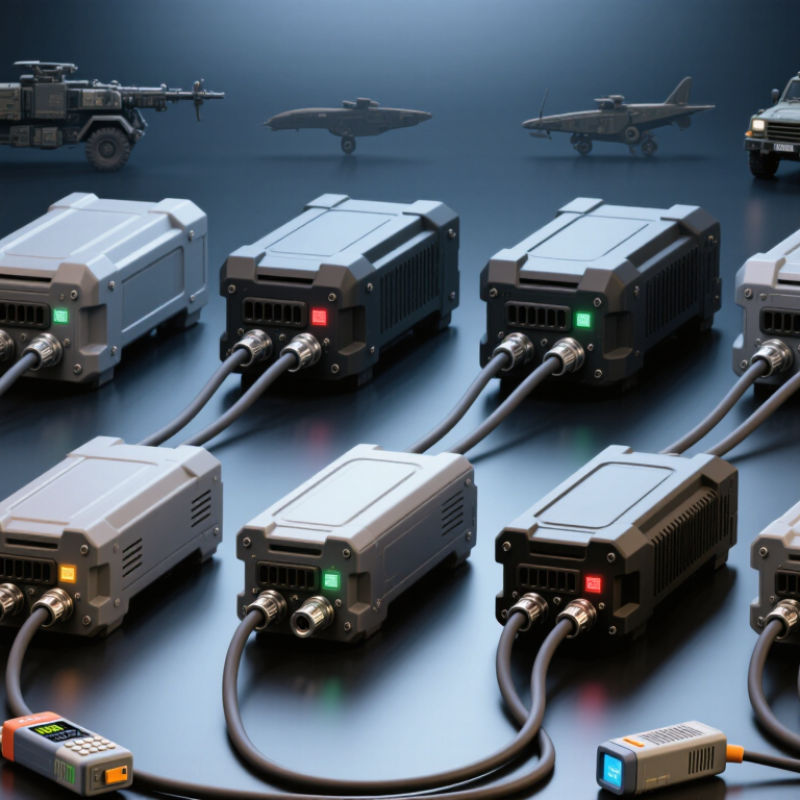
Ruggedized defense power supplies convert unstable input power into controlled DC output for equipment exposed to vibration, dust, moisture, and temperature swings. They are built with reinforced enclosures, protected connectors, and thermal controls. A supply mounted inside a vehicle, for example, may face engine vibration, hot air near the chassis, and brief input-voltage dips. Not just a box.
The U.S. Department of Defense’s MIL-STD-810H, published in 2019, describes 29 environmental test methods, including vibration, shock, humidity, sand, and dust. It emphasizes tailoring tests to the equipment’s actual service conditions; passing one test does not prove universal ruggedness. The MIL-STD-461G standard addresses electromagnetic interference, another practical concern when power converters operate near radios and sensors. These references help engineers define requirements, but they do not replace system-level testing.
Common applications include mobile command vehicles, shipboard electronics, field communications, radar support, and portable monitoring equipment. In each case, engineers match input range, output stability, cooling, and mounting to the platform. A sealed case can reduce dust ingress, yet it may also trap heat. Small details matter. Connector retention and cable strain relief can be as important as the converter itself. One caveat: specification sheets rarely capture every installation problem, and a test pass alone cannot predict years of field wear.
An anonymized technical overview of ten common application areas. This is not a ranked supplier list or a set of vendor-specific product specifications.
| No. | Application Area | Typical Power-System Need | Relevant Ruggedization Considerations | Standards That May Apply | Where It Is Used |
|---|---|---|---|---|---|
| 1 | Military ground vehicles | Conversion from vehicle DC power to regulated DC or AC outputs for onboard electronics. | Vehicle transients, vibration, shock, dust, and a wide operating-temperature range. | MIL-STD-1275 for specified military-vehicle electrical power characteristics; MIL-STD-810 for environmental test methods. | Armored vehicles, tactical trucks, and mobile command platforms. |
| 2 | Aircraft mission equipment | Power conditioning for avionics and mission systems, matched to the aircraft’s electrical bus. | Low weight, cooling limits, vibration, altitude, and conducted or radiated electromagnetic interference. | MIL-STD-704 for aircraft electrical power characteristics; MIL-STD-461 for electromagnetic interference control. | Fixed-wing aircraft and helicopters, subject to platform-specific qualification. |
| 3 | Naval and shipboard electronics | Regulated power conversion for equipment connected to shipboard electrical distribution. | Humidity, salt-laden atmosphere, vibration, shock, and electrical disturbances. | MIL-STD-1399 Section 300 for applicable shipboard electric power interfaces; MIL-STD-461 for EMI requirements. | Shipboard communications, monitoring, and mission-system equipment. |
| 4 | Ground-based radar systems | Stable power rails for signal-processing, control, and associated electronic subsystems. | Outdoor temperature variation, dust, moisture, electromagnetic compatibility, and serviceability. | MIL-STD-810 and MIL-STD-461 may be specified by the system integrator. | Fixed, transportable, and vehicle-mounted radar installations. |
| 5 | Secure communications equipment | Low-noise DC power for radios, network devices, and encryption-related equipment. | Conducted emissions, vibration, temperature variation, and operation from vehicle or field power sources. | MIL-STD-461 may be used for EMI requirements; environmental methods may be selected from MIL-STD-810. | Field radios, tactical networks, and deployable communications shelters. |
| 6 | Uncrewed aerial systems | Compact power conversion for payloads, navigation, communications, and control electronics. | Low mass, limited cooling, vibration, altitude, and battery or aircraft-bus compatibility. | Requirements are platform-specific; relevant environmental and EMI tests may be selected from MIL-STD-810 and MIL-STD-461. | Uncrewed aircraft payload bays and ground-control equipment. |
| 7 | Portable field systems | Efficient conversion between batteries, external DC sources, and equipment-specific rails. | Impact resistance, ingress protection defined by the system design, temperature range, and battery safety. | Environmental and electrical requirements are normally defined by the equipment specification and procurement contract. | Portable sensors, field terminals, and dismounted support equipment. |
| 8 | Command-and-control shelters | Power distribution and conversion for computers, displays, communications, and auxiliary electronics. | Thermal management, continuous operation, vibration during transport, and maintainable installation. | MIL-STD-810 and MIL-STD-461 may be called out for specific shelter equipment. | Mobile command posts and deployable operations shelters. |
| 9 | Electro-optical and infrared systems | Clean, regulated power for detectors, processing electronics, and stabilization subsystems. | Electrical noise, thermal stability, shock, vibration, and compact packaging. | EMI and environmental qualification requirements are determined by the host platform and system specification. | Vehicle, aircraft, shipboard, and tripod-mounted imaging systems. |
| 10 | Training and test equipment | Reliable power for portable diagnostic tools, test benches, and equipment simulators. | Repeated transport, connector durability, electrical protection, and clear maintenance access. | Applicable requirements depend on whether the equipment is for laboratory, field, or platform use. | Maintenance facilities, training sites, and field-deployment support teams. |
It may combine wide-input conversion, current limiting, transient protection, and thermal monitoring. Coating and sealed connectors can help, but add weight and heat.
No. Temporary immersion testing does not establish resistance to salt spray, shock, or vibration. Check the tested enclosure and cable entries.
Look for test conditions, hardware revision, setup, and acceptance criteria. A rating without these details is weak evidence.
Review thermal management, connector retention, vibration testing, and input-voltage operation. Peak power alone says little.
Define input range, peak load, startup behavior, cooling limits, and mounting space. A bench-tested unit may still overheat inside a sealed enclosure.
Agree on test conditions and acceptance limits before evaluation. Otherwise, “qualified” may mean different things to different teams.
Confirm repair turnaround, replacement availability, obsolescence notices, and access to configuration records. Ask who responds when a field unit fails.
No. Public information may not reveal batch consistency or long-term repair capacity. One cable seal can undo a strong enclosure rating.
This article explains what Ruggedized Defense Power Supplies are and how they support equipment operating in demanding environments, including mobile platforms, field installations, and other mission-critical systems. It outlines key design considerations such as protection from shock, vibration, temperature extremes, moisture, and electrical disturbances, along with the environmental ratings and defense standards buyers may need to evaluate.
The article also presents a practical framework for comparing suppliers in China, including output capacity, efficiency, reliability, customization, testing, and documentation. Its profiles of ten suppliers offer a structured starting point for research without replacing independent verification. The final section covers procurement, qualification, and lifecycle support, emphasizing clear technical requirements, sample evaluation, production consistency, maintenance planning, and long-term availability when selecting a suitable power solution.