
China has become a major production hub for advanced magnetic components. Its manufacturers support telecommunications, renewable energy, automotive electronics, and industrial power systems. This guide introduces ten leading Chinese manufacturers associated with Planar Transformers and related magnetic solutions. These products use flat windings, compact cores, and controlled insulation structures. They can improve power density and thermal performance in demanding designs. Small details matter.
The selection considers manufacturing experience, engineering capability, product consistency, and application support. We examine planar transformer construction, winding materials, ferrite core choices, insulation systems, and thermal management. We also consider certifications, testing procedures, customization capacity, and delivery reliability. Factory evidence matters. Public product information is compared with technical documentation and customer-facing support. Where available, we review application examples and stated production capabilities. A polished website is not enough. Buyers should ask for drawings, sample reports, dielectric test results, and temperature data before approving a supplier. No manufacturer is perfect.
The companies discussed may differ in scale, specialization, and international service coverage. Some focus on high-frequency power supplies, while others provide broader magnetic component portfolios. Their suitability depends on operating frequency, voltage, current, isolation requirements, cooling conditions, and target volume. Engineers should compare samples under realistic load conditions rather than relying only on catalog values. Certification claims should also be verified for the exact model. This ranking is a practical starting point, not an absolute verdict. Market information changes, and supplier performance can vary between projects. Readers should treat the findings as guidance, then confirm every critical specification directly with the manufacturer.
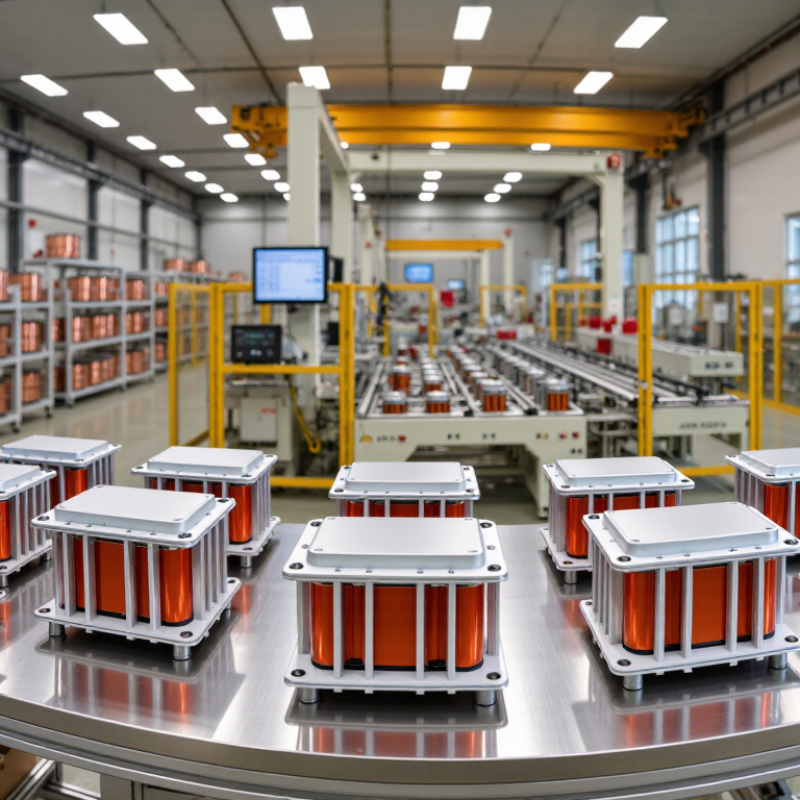
A planar transformer is a compact magnetic component used to transfer electrical energy between isolated circuits. Unlike a conventional transformer, it uses flat copper layers, etched windings, and a low-profile ferrite core. The geometry matters. Its wide windings reduce leakage inductance and support efficient high-frequency switching. A primary circuit creates a changing magnetic field in the core. That field induces voltage in the secondary winding, while insulation maintains electrical isolation.
In practical power-design work, planar transformers often operate from tens to hundreds of kilohertz. Their short magnetic path can reduce losses and improve heat distribution across a circuit board. Engineers still need to check winding resistance, core temperature, insulation distance, and current density. A thicker copper layer may carry more current, but it can increase capacitance between windings. That trade-off is easy to overlook.
For manufacturers and buyers, repeatable layer alignment is essential. Small manufacturing variations can affect leakage inductance and output voltage. Testing should include thermal cycling, dielectric strength, load regulation, and efficiency under realistic conditions. I have found that laboratory results can look excellent at one load, then weaken noticeably at light load. “High efficiency” is not universal. A careful design matches the transformer to switching frequency, power level, cooling method, and safety requirements. Through-hole mounting may simplify repair, while surface mounting can support automated assembly. Neither option is perfect.
Evaluating Chinese planar transformer manufacturers requires more than comparing unit prices. According to MarketsandMarkets’ 2024 transformer report, Asia-Pacific remains the largest regional market, driven by data centers, electric vehicles, and renewable power. This demand makes quality consistency critical. Ask for core-loss data, leakage inductance, thermal-resistance values, and insulation-test records. A reliable supplier should explain its test methods clearly.
Engineering experience appears in small details. Check whether the factory uses automated winding, controlled soldering, and traceable incoming materials. Request samples with the same copper thickness, core material, and switching frequency as your final design. Measure temperature rise under real load, not only at room temperature. UL, IEC, and RoHS documentation also deserves verification. Certificates alone are not enough. Some suppliers provide impressive files but weak production evidence. That deserves reflection.
Tips:
Compare at least three suppliers using one identical specification sheet. Review recent audit findings, sample failure rates, and corrective-action records. Confirm tooling ownership and change-control procedures before signing. A 2023 report from Grand View Research identified efficiency and miniaturization as major transformer-market drivers, but smaller size can increase heat concentration. Do not accept a compact design without thermal margins. My practical concern is simple: supplier rankings can start the search, but repeatable test data should decide it.
China’s Top 10 Planar Transformer Manufacturers
China’s top 10 planar transformer manufacturers are gaining attention as power density rises in servers, telecom equipment, electric vehicles, and industrial controls. MarketsandMarkets projects the global power electronics market to grow from about USD 34.5 billion in 2023 to USD 46.6 billion by 2028. This expansion increases demand for compact magnetic components with stable thermal performance.
A reliable comparison should examine more than production volume. Engineers usually check leakage inductance, insulation distance, winding consistency, thermal resistance, and automated testing coverage. Planar designs can reduce profile height and improve repeatability, but poor core alignment may increase losses. Small details matter. A 0.2-millimeter assembly error can affect clearance and heat distribution in dense modules.
The leading Chinese manufacturers typically serve customized applications rather than simple catalog orders. Their capabilities may include multilayer PCB windings, copper lead frames, high-frequency ferrite cores, and rapid prototype validation. Industry studies from the International Energy Agency show continuing electricity growth from data centers and digital infrastructure, supporting long-term demand for efficient conversion systems. However, “top ten” remains an imperfect label. Public revenue data rarely separates planar transformers from broader magnetic products. Buyers should therefore verify laboratory results, production traceability, sample consistency, and compliance documentation before selecting a supplier. Performance on paper is not enough.
Anonymous comparative overview of leading Chinese planar transformer supplier profiles. Company names and brands are intentionally omitted; technical ranges represent commonly documented product categories and should be verified against individual model datasheets.
| Rank | Manufacturer Profile | Primary Product Focus | Typical Operating Frequency | Typical Power Range | Common Core Material | Winding Structure | Insulation Class | Typical Cooling Method | Common Application Areas | Customization Capability |
|---|---|---|---|---|---|---|---|---|---|---|
| 1 | Profile 01 | High-frequency power conversion | 100 kHz–1 MHz | 100 W–5 kW | MnZn ferrite | PCB-integrated copper windings | Class B or higher | Natural air cooling | Telecom power supplies, industrial power modules | High |
| 2 | Profile 02 | Automotive and EV power electronics | 100 kHz–500 kHz | 300 W–10 kW | High-frequency ferrite | Multi-layer planar copper winding | Class F or higher | Forced air or conduction cooling | On-board chargers, DC-DC converters, auxiliary power | High |
| 3 | Profile 03 | Medical and industrial isolation | 50 kHz–500 kHz | 50 W–3 kW | Low-loss ferrite | Separated primary and secondary layers | Class F or higher | Natural air cooling | Medical equipment, test instruments, control systems | Medium to high |
| 4 | Profile 04 | Renewable-energy converters | 50 kHz–300 kHz | 500 W–20 kW | Power ferrite | Heavy-copper planar winding | Class F or higher | Forced air cooling | Solar inverters, energy storage, charging systems | High |
| 5 | Profile 05 | Telecom and data-center power | 200 kHz–1 MHz | 200 W–5 kW | Low-loss MnZn ferrite | Embedded PCB winding or copper foil | Class B or higher | Air cooling or heat-sink conduction | Server power supplies, rectifiers, communication equipment | Medium to high |
| 6 | Profile 06 | Consumer and compact electronics | 100 kHz–500 kHz | 20 W–1 kW | Ferrite | Compact multi-layer PCB winding | Class B | Natural air cooling | Adapters, fast chargers, display systems | Medium |
| 7 | Profile 07 | Railway and transportation systems | 20 kHz–250 kHz | 500 W–15 kW | High-permeability ferrite | Reinforced insulated planar winding | Class F or higher | Forced air or liquid-assisted cooling | Traction auxiliary systems, signaling, onboard equipment | High |
| 8 | Profile 08 | LED and lighting power systems | 50 kHz–300 kHz | 20 W–500 W | Ferrite | Low-profile PCB winding | Class B or higher | Natural air cooling | LED drivers, architectural lighting, display modules | Medium |
| 9 | Profile 09 | Industrial automation and controls | 50 kHz–500 kHz | 50 W–2 kW | MnZn ferrite | Insulated copper foil or PCB winding | Class B or higher | Natural air cooling | PLC systems, servo drives, industrial controllers | Medium to high |
| 10 | Profile 10 | Aerospace and high-reliability electronics | 100 kHz–500 kHz | 50 W–3 kW | Low-loss ferrite | High-reliability multi-layer winding | Class F or higher | Conduction or forced air cooling | Avionics, defense electronics, mission-critical converters | High |
China Top 10 Planar Transformer Manufacturers
China’s top planar transformer manufacturers compete through compact designs, stable production, and application-specific engineering. Their product capabilities commonly include high-frequency transformers, planar inductors, integrated magnetic components, and custom assemblies. Many support ferrite cores, multilayer PCBs, copper foils, and automated winding processes. These features help reduce height while improving thermal control and power density. Key industries include electric vehicles, renewable energy, telecommunications, servers, medical equipment, and industrial power supplies. Technical strength often depends on insulation design, leakage inductance control, electromagnetic compatibility, and repeatable testing. Small details matter.
Experienced buyers should examine operating frequency, rated power, isolation requirements, temperature rise, and mechanical limits. Ask for test data, material specifications, and sample validation records. A capable manufacturer can explain how its design performs under vibration, humidity, and repeated thermal cycling. It should also provide traceability from raw materials to final inspection. However, no supplier is perfect. Public rankings may overlook smaller factories with stronger niche expertise. Design support can also vary sharply between sales teams and engineering teams.
Tips: Compare at least three samples under identical electrical conditions. Check waveform quality, noise, temperature rise, and efficiency after extended operation. Request dimensional drawings before tooling begins. Confirm production tolerances in writing. Do not judge quality from appearance alone. A polished sample can still hide weak process control. Recheck assumptions.
Industry-wide view of typical switching-frequency ranges supported by planar transformer designs across major application sectors.
Planar transformers are widely used where low profile, high-frequency operation, controlled leakage inductance, thermal performance, and automated assembly are important. The ranges shown are representative engineering ranges and vary according to topology, power level, insulation requirements, and system architecture.
Choosing among China’s top 10 planar transformer manufacturers requires more than comparing online rankings. A polished website proves little. Request datasheets, winding drawings, insulation details, and recent test records. Check whether the manufacturer understands your topology, switching frequency, power range, and thermal limits. A capable engineering team should explain core selection, copper thickness, leakage inductance, and creepage distances clearly.
Ask for samples built with production-equivalent materials. Measure temperature rise, efficiency, dielectric strength, and no-load loss under realistic conditions. Inspect solder joints, winding alignment, insulation layers, and connector fit. Small deviations can create noise or overheating later. Factory audits also matter. Look for incoming material checks, automated winding controls, traceable batch records, and calibrated testing equipment. If possible, speak with a technical customer, not only a sales representative.
Communication often reveals operational maturity. Can the supplier answer design questions within one working day? Will it report a failed sample honestly? Confirm tooling ownership, minimum order quantities, revision control, packaging, and delivery capacity in writing. A low quotation may exclude tooling, testing, or engineering changes. My own early mistake was trusting a sample without checking production consistency. It looked excellent, but the second batch showed different thermal behavior. Therefore, approve a pilot run and compare several units, not just one. The best manufacturer is not always the cheapest or most famous. It is the partner that documents limits, admits uncertainty, and improves weak points with evidence.
They commonly produce high-frequency transformers, planar inductors, and integrated magnetic components. Custom assemblies are also available. Typical materials include ferrite cores, multilayer PCBs, and copper foils. These designs reduce height and improve power density.
Common applications include electric vehicles, renewable energy, telecommunications, servers, and medical equipment. Industrial power supplies also use them. Each field has different insulation, cooling, and reliability needs. The application changes the design.
Check operating frequency, rated power, isolation, temperature rise, and mechanical limits. Leakage inductance and electromagnetic compatibility also matter. Ask for material specifications and recent test data. Appearance is not enough.
Test at least three samples under identical electrical conditions. Measure efficiency, waveform quality, noise, and temperature rise. Run them for an extended period. One attractive sample proves very little.
The engineering team should explain core selection, copper thickness, and leakage inductance. It should also clarify creepage distances and insulation layers. Ask how the design handles vibration, humidity, and thermal cycling. Unclear answers deserve caution.
Audits can reveal incoming material checks and automated winding controls. They can also confirm traceable batch records and calibrated testing equipment. Inspect solder joints, winding alignment, insulation, and connector fit. Small defects can cause later overheating.
Confirm tooling ownership, minimum order quantities, revision control, packaging, and delivery capacity. Clarify whether testing and engineering changes are included. A low quotation may hide important costs. Cheap is not automatically efficient.
Rankings may overlook smaller factories with strong specialist experience. A polished sample can hide weak production control. Approve a pilot run and inspect several production-equivalent units. I may still miss a hidden weakness, so repeated evidence matters.
This article presents a practical overview of Planar Transformers, explaining their flat, low-profile construction, magnetic coupling, winding structure, and role in improving power density, thermal performance, and electrical efficiency. It also introduces the key factors for evaluating Chinese manufacturers, including engineering expertise, material quality, manufacturing consistency, testing procedures, customization capabilities, certifications, delivery reliability, and after-sales support.
The guide reviews China’s top 10 planar transformer manufacturers from a capability-focused perspective without relying on brand promotion. It compares their product capabilities, industries served, application experience, and technical strengths across fields such as telecommunications, industrial power systems, renewable energy, automotive electronics, and high-frequency converters. Finally, it offers a structured method for selecting the right supplier by matching technical specifications, production volume, budget, compliance requirements, and long-term cooperation expectations with the manufacturer’s actual strengths.