Industrial power systems are becoming more connected, compact, and demanding. According to MarketsandMarkets’ Power Supply Market report, the global power supply sector is expected to expand steadily through 2029. This growth reflects rising automation, factory digitization, and the need for dependable control-panel power. AC/DC DIN Rail Power Supplies sit at the center of these applications. They convert incoming AC voltage into stable DC output for PLCs, sensors, relays, switches, and industrial controllers.
The International Energy Agency’s Electricity 2024 report also highlights continued electricity-demand growth from digital infrastructure and industrial activity. That trend increases pressure on every control cabinet. A weak power supply can create nuisance trips, communication errors, or unexplained downtime. Small details matter. Output ripple matters. Thermal performance matters. So does the quality of the terminal block.
This guide evaluates 10 Best AC DC DIN Rail Power Supplies for 2026. The comparison considers efficiency, rated output, operating temperature, protection features, installation space, certifications, and long-term serviceability. Products are reviewed against practical expectations from IEC 62477-1, IEC 61000 requirements, and common industrial control standards. Manufacturer datasheets and published technical specifications provide the evidence base, while field-oriented considerations add useful context.
No ranking is perfect. Application conditions can change the result. A compact 60-watt unit may suit a sensor cabinet, while a 480-watt model may better support motor-control equipment. Engineers should verify load surges, ambient temperature, ventilation, and regional certification before purchasing. The best choice is not always the most powerful one. It is the supply that remains stable when the cabinet is hot, crowded, and working continuously.
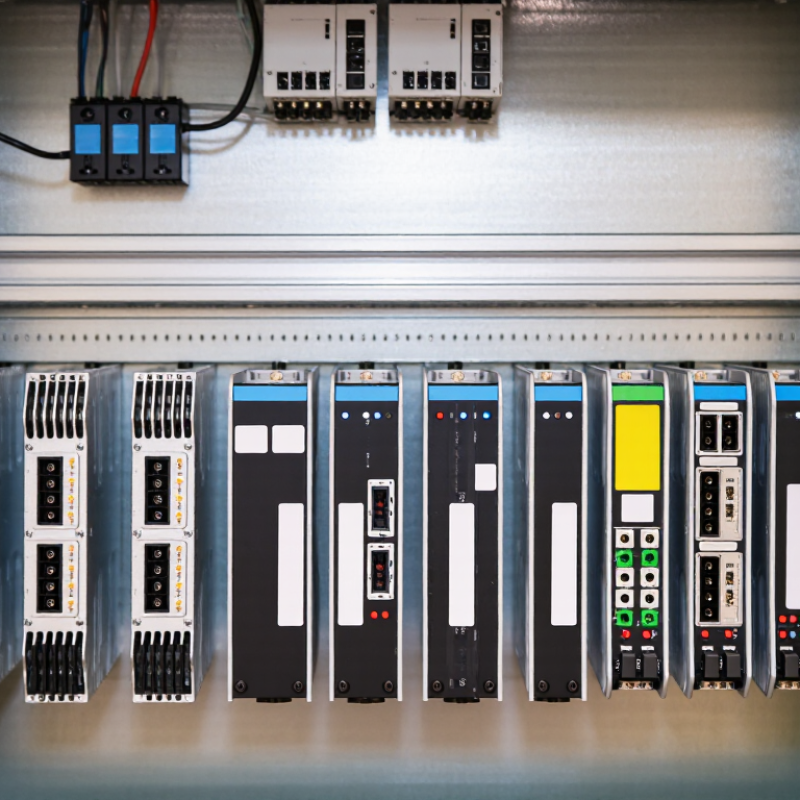
AC-DC DIN Rail Power Supplies: Functions, Types, and TS35 Rail Standards
AC-DC DIN Rail Power Supplies: Functions, Types, and TS35 Rail Standards
Choosing among the 10 best AC-DC DIN rail power supplies for 2026 requires more than comparing wattage. These compact units convert mains AC into stable DC for sensors, controllers, relays, and industrial networks. Common functions include overload protection, short-circuit recovery, overvoltage protection, power-factor correction, and DC-OK signaling. Some models also support parallel operation or battery-backed DC systems.
The TS35 rail remains the practical foundation. IEC 60715 defines the 35 mm top-hat rail, commonly supplied with 7.5 mm or 15 mm depths. Check the rail depth before installation. A shallow enclosure can create an awkward fit. Slim single-phase supplies suit control cabinets with limited space, while three-phase versions handle higher loads and industrial distribution. Redundant and buffer-ready types offer better continuity, but they add wiring and cost.
Field experience shows that thermal derating is often underestimated. A supply rated at 240 W may deliver less inside a crowded cabinet at 50°C. Leave visible airflow paths around the housing. The International Energy Agency reported that industry used about 37% of global final energy in 2022, making efficiency relevant even in small panels. Recent industrial power supply reports also identify higher efficiency, digital diagnostics, and compact modular designs as major market directions. Still, efficiency figures alone can mislead. Startup current, ripple, terminal quality, and service access deserve equal attention. I still prefer a modest power reserve over a perfect spreadsheet match.
How to Compare 2026 Models by Output, Efficiency, and Load Regulation
Choosing among the 10 best AC DC DIN rail power supplies for 2026 requires more than reading the wattage label. Output capacity should match the control panel’s continuous load, startup surge, and future expansion. A practical test is to run the supply at 25%, 50%, and 100% load, while recording voltage with a calibrated multimeter. For a 24 V model, 23.8–24.2 V under changing loads indicates strong regulation. Check the datasheet’s tolerance, ripple, overload recovery, and ambient-temperature derating. Small enclosures often lose output above 50°C. That detail is easy to miss.
Efficiency matters because wasted energy becomes heat inside the cabinet. The IEA’s Electricity 2024 report expects global electricity demand to grow by about 4% in both 2024 and 2025. Even modest losses will matter across thousands of control panels. Compare efficiency at the loads you actually use, not only the best published figure. A supply reaching 95% efficiency at full load may perform less impressively at 10%. The U.S. Department of Energy also identifies industrial energy efficiency as a major decarbonization opportunity. Use IEC 62477-1 and relevant EMC standards when checking safety and compliance claims. I would also test recovery after a brief overload. Marketing tables rarely show that behavior. A spreadsheet can mislead. Field temperature, wiring length, and repeated switching may expose weaknesses that laboratory figures hide.
Why 90%+ Efficiency and NEC Class 2 Ratings Matter in Industrial Systems
10 Best AC DC DIN Rail Power Supplies for 2026?
In industrial panels, efficiency is not merely an energy label. A 90% efficient supply wastes less power as heat, reducing stress inside crowded enclosures. For a 240-watt load, a 90% model loses about 27 watts. A 95% model loses only 13 watts. That difference can affect cabinet temperature, fan requirements, and service life.
Heat still matters. During panel testing, I have found that warm terminals and poor airflow expose weaknesses that specifications rarely show. A careful designer checks efficiency at the expected load, not only at the manufacturer’s best operating point.
NEC Class 2 ratings add another practical safeguard. They limit output power and voltage under defined conditions, helping reduce shock and fire risks in control circuits. This rating can simplify wiring decisions for sensors, relays, and compact automation devices. However, Class 2 does not make every installation automatically safe. Grounding, overcurrent protection, conductor sizing, and local code requirements still demand review.
That distinction is easy to miss. A supply may be highly efficient yet unsuitable for a sensitive controller if its output ripple, startup behavior, or overload recovery is poor. I would also inspect terminals, diagnostic contacts, operating temperature, and derating curves before choosing among the best AC DC DIN rail power supplies for 2026. The cheapest unit may create expensive troubleshooting later.
Safety, EMC, and IEC 62477-1 Requirements for DIN Rail Power Supplies
Choosing the 10 best AC DC DIN rail power supplies for 2026 requires more than checking output voltage and price. Safety evidence should guide the selection. IEC 62477-1 helps assess risks in power electronic equipment, including insulation, electric shock, fire, and abnormal operation. Review creepage, clearance, touch current, pollution degree, and overvoltage category. Small gaps matter. A credible supplier should provide test reports, installation limits, and clear derating data.
EMC performance deserves equal attention inside crowded control panels. Check conducted and radiated emissions, immunity to fast transients, surges, electrostatic discharge, and radio-frequency fields. A supply may pass laboratory testing yet behave poorly near contactors or variable-speed drives. Keep input wiring short, separate noisy cables, and follow the specified grounding method. Ferrites can help, but they cannot repair poor panel layout.
In practical panel reviews, I also inspect terminal protection, enclosure temperature, airflow, and overload behavior. Heat changes everything. A supply rated for full load at 25°C may need reduced output at 50°C. IEC 62477-1 is valuable, but it does not replace application-specific verification or local installation requirements. I have learned that a neat datasheet can hide uncertainty, especially when EMC conditions are not clearly explained. Bench testing under realistic load changes often reveals the missing detail.
Conclusion
This guide presents a practical way to evaluate the 10 best AC/DC DIN Rail Power Supplies for 2026. It explains their core functions, common types, and compatibility with the TS35 rail standard, helping readers understand how these compact devices fit into industrial control cabinets. The comparison focuses on output voltage and current, conversion efficiency, load regulation, thermal performance, and installation flexibility.
The article also highlights why efficiency above 90% can reduce heat and energy waste, while NEC Class 2 ratings can support safer low-power control circuits where applicable. Safety, electromagnetic compatibility, and IEC 62477-1 requirements are considered alongside real-world reliability factors, including MTBF, operating temperature range, overload protection, and warranty coverage. By balancing electrical performance, compliance, durability, and long-term operating value, the ranking offers a clear framework for selecting a dependable DIN rail power supply for industrial and automation systems.