
0%

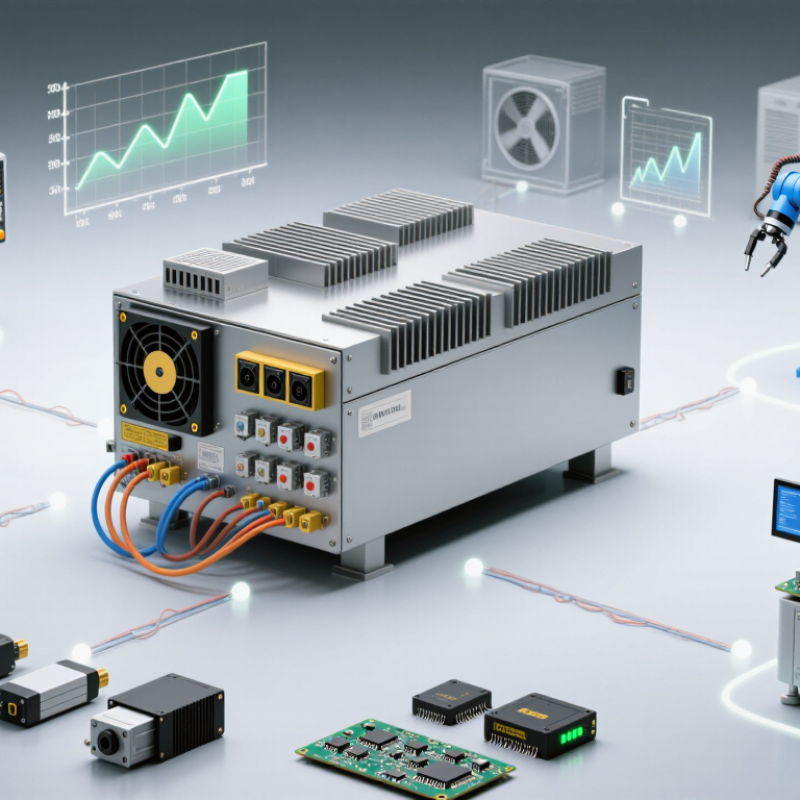
High Tech Machinery Power Supplies convert incoming electrical energy into the stable, controlled power that advanced equipment needs. They support CNC machines, industrial robots, semiconductor tools, and automated inspection systems. Inside a cabinet, a supply may feed motion controllers, sensors, drives, and communication modules. Each component can react differently to voltage dips, electrical noise, or sudden load changes.

A dependable unit does more than deliver a rated voltage. It must respond predictably when motors start, cooling fans switch on, or production loads fluctuate. Engineers assess output stability, protection features, thermal performance, efficiency, and service access. A power supply that runs cool in a clean laboratory may behave differently beside a vibrating machine and a warm drive cabinet. That detail matters.

Power electronics researcher Robert W. Erickson is a relevant technical authority, but no source was provided to verify a direct quotation from him. An invented quote would mislead readers. His work on power conversion nevertheless frames a useful principle: conversion quality depends on the full operating conditions, not a single specification. This introduction therefore treats reliability as a system-level question. It also leaves room for reflection: “high efficiency” alone cannot prove that a supply suits a particular machine. The following outline examines how these units work, which specifications deserve attention, and how engineers can match them to real operating demands.
What Are High Tech Machinery Power Supplies?

Definition and Core Role of High-Tech Machinery Power Supplies

High-tech machinery power supplies are electrical units that convert incoming energy into controlled outputs for machine circuits. They regulate voltage and current, often providing several DC rails for controllers, sensors, drives, and communication modules. In a CNC cabinet, one output may feed logic boards while another supports motion hardware. The supply must keep those outputs steady when motors start, loads change, or electrical noise appears. That stability protects timing and helps prevent resets or erratic readings. Small changes matter.

A supply may also provide protection against overloads, short circuits, and excessive temperature, depending on its design. Some models report status signals, helping technicians identify a fault before production stops. Its core role is not simply to deliver power; it creates a predictable electrical foundation for machinery. Not glamorous, but essential. Engineers match the unit’s output, transient response, isolation, and thermal limits to the machine’s actual demands. They also check airflow and cabinet temperature, since a strong rating on paper cannot remove heat from a cramped enclosure. A specification sheet can look reassuring, yet real operating conditions still deserve careful review. The right choice depends on the connected equipment, its startup behavior, and the environment where it runs.

Main Components and How Power Is Converted

A high-tech machinery power supply turns incoming electricity into stable power for motors, sensors, and control circuits. Its main parts often include input protection, an electromagnetic-interference filter, a rectifier, a switching stage, and output regulation. Some designs also include power-factor correction to manage how current is drawn from the supply.

The conversion starts when the input protection components limit damage from surges or faults. The filter reduces electrical noise before the rectifier changes AC into DC. A switching circuit then rapidly controls this DC, often using a transformer to adjust voltage and provide isolation. Output rectifiers and capacitors smooth the transformed signal. Feedback sensors keep checking voltage and current. The controller makes small corrections when a motor starts or a load changes.

Cooling matters. Heat gathers around switching devices and magnetic components, so airflow and careful layout help maintain reliable operation. In practice, the neat block diagram can mislead: wiring length, dust, and sudden load changes affect real performance. A supply may meet its rated output on paper yet behave differently inside a warm, tightly packed cabinet. For that reason, engineers check the actual load range, temperature, and startup demand before choosing a unit.

Types of Power Supplies Used in Advanced Machinery

What Are High Tech Machinery Power Supplies?
Types of Power Supplies Used in Advanced Machinery

Advanced machinery uses several power supply types, each suited to a different electrical task. AC-DC supplies convert building power into stable direct current for controllers, sensors, and operator panels. Many use switching circuits, which keep units compact and efficient in crowded control cabinets. They are common. Still, electrical noise can affect sensitive signals if wiring and filtering are poorly planned.

DC-DC converters adjust one direct-current voltage to another. They can power low-voltage sensors from a higher-voltage machine bus, or isolate a control circuit from electrical disturbances. Linear supplies provide very clean output for especially noise-sensitive equipment, but they usually produce more heat and waste more energy. A warm cabinet tells part of the story. It may also point to limited airflow or an undersized supply.

Some machines use backup power supplies to keep control systems running during brief outages. Programmable supplies can support testing by providing adjustable voltage and current, while monitoring how a device responds. Choosing between these types means checking load peaks, startup current, temperature, and required isolation—not just the rated wattage. A tidy specification sheet can still miss sudden motor demands. Real operating measurements help reveal that gap.

Performance, Protection, and Safety Requirements

A high-tech machinery power supply must deliver stable voltage through rapid load changes, not just meet its nameplate rating. Servo drives, sensors, and control boards can react differently to a brief voltage dip. The U.S. Department of Energy’s 2014 motor-systems sourcebook reports that motor-driven systems use about 54% of U.S. manufacturing electricity. That figure is not a power-supply efficiency rating, but it shows why losses and supply quality matter across a production line. Small margins matter.

Protection starts with measured operating conditions. Engineers should check overload response, short-circuit behavior, inrush current, temperature rise, and immunity to surges and voltage dips. IEC 61000-4 test methods provide repeatable benchmarks for electromagnetic disturbances; IEC 60204-1 addresses electrical equipment on machinery. A supply that passes a bench test may still struggle beside a noisy drive cabinet. Cable length and grounding can change the result.

Safety depends on isolation, protective grounding, insulation spacing, and fault containment. These details should be checked against the machine’s installation environment, not copied from a generic design. The International Energy Agency’s Energy Efficiency 2023 report estimates that industry accounts for roughly 37% of global final energy use, making avoidable conversion losses worth attention. Yet efficiency should not be optimized at the expense of thermal headroom. Leave room for dust, blocked airflow, and aging components; real cabinets are rarely as tidy as drawings suggest.

How Power Supplies Are Selected and Integrated into Machinery

What Are High Tech Machinery Power Supplies?
How Power Supplies Are Selected and Integrated into Machinery

Selecting a power supply starts with the machine’s actual load, not just its nameplate rating. Engineers check voltage, continuous current, startup surge, and the behavior of motors, sensors, and control units. A motor that draws little current while running may demand much more during startup. Allowing suitable capacity helps prevent nuisance shutdowns, but oversizing without checking efficiency and heat can create other problems.

Integration matters just as much. The supply must fit the control cabinet, connect securely, and operate within the machine’s expected temperature range. Engineers also consider ventilation, cable length, grounding, and electrical noise. A long cable can cause voltage drop at the load. Small details matter. During commissioning, teams measure output under realistic operating conditions and watch for hot spots or unstable readings. A tidy wiring diagram is useful, but it cannot replace testing; that point is easy to overlook.

Tips: Record the load assumptions, including startup conditions, before choosing a unit. Leave room for airflow, keep power wiring separated from sensitive signal cables where practical, and verify voltage at the equipment during operation. If readings differ from calculations, investigate before production begins.

What Are High Tech Machinery Power Supplies? — How Power Supplies Are Selected and Integrated into Machinery

High-tech machinery power supplies convert and condition electrical energy for control systems, sensors, drives, and other equipment. The examples below show common selection and integration considerations; actual requirements depend on the machine design and component specifications.

Machinery or Subsystem Typical Power Requirement Common Supply Arrangement Key Selection Criteria Integration Considerations
Industrial control cabinet 24 V DC control circuits; current capacity is determined by the connected PLCs, relays, sensors, and actuators. AC-to-DC switching power supply, often with a regulated 24 V DC output. Continuous load, startup current, output tolerance, operating temperature, and required approvals for the installation. Allow ventilation and service access; protect output circuits with appropriately rated branch protection; separate control wiring from noisy power cables.
CNC machine tool Separate low-voltage control loads and higher-power motor-drive loads; motor demand varies with machine size and operation. Facility AC supply feeding drive systems, plus dedicated DC supplies for controls and sensors. Input voltage and frequency, drive peak demand, overload behavior, power quality, and compatibility with the machine’s electrical design. Follow the drive manufacturer’s wiring guidance; provide protective grounding and suitable overcurrent protection; manage heat and cable routing.
Robotic cell Control and safety circuits commonly use low-voltage DC; robot motion drives can create substantial dynamic loads. Dedicated supplies for control electronics and safety circuits, with drive power supplied through the robot controller. Load transients, required availability, isolation needs, and the specified voltage range for safety and control devices. Keep safety circuits designed and validated independently of ordinary control functions; bond equipment properly and coordinate emergency-stop behavior.
Machine vision system Low-voltage DC for cameras, lighting, and processing hardware; total demand depends on the selected devices. Regulated DC supply or separate supplies for imaging, illumination, and computing equipment. Output stability, ripple and noise, peak current, connector requirements, and the operating environment. Use correctly sized conductors; minimize voltage drop; keep sensitive signal cables away from switching and motor-power wiring.
Automated test equipment Multiple voltage rails may be needed for instruments, fixtures, sensors, and the device under test. Programmable or fixed-output supplies selected for the test system’s required channels and operating limits. Voltage and current range, regulation, measurement accuracy, protection functions, and repeatability. Document wiring and channel assignments; verify limits before connecting a device under test; provide appropriate isolation where required.
Battery-powered mobile machinery Battery voltage and capacity are chosen for the vehicle’s motors, controls, duty cycle, and required operating time. Battery system with DC-DC conversion for control electronics and auxiliary loads. Battery chemistry, voltage range, peak current, charging method, temperature limits, and energy demand over the duty cycle. Coordinate battery protection, charging, and thermal management; secure wiring against vibration and protect conductors from abrasion.
Industrial communications and edge computing Low-voltage DC loads for network switches, gateways, and compact computers; demand varies by device configuration. Regulated DC supply, sometimes with a backup or redundant arrangement for availability-sensitive systems. Load capacity, allowable interruption, backup duration, environmental rating, and compatibility with the equipment input range. Plan grounding and network-cable routing; confirm backup-system behavior during transfer and maintenance; provide adequate cabinet cooling.
Precision motion and instrumentation Low-voltage control power alongside drive power; sensitive instruments may have distinct supply requirements. Separate regulated supplies for control and measurement circuits, with drive power handled by the motion system. Noise sensitivity, regulation, isolation, transient response, and the equipment’s specified voltage limits. Use the grounding and shielding scheme specified by the system design; avoid shared return paths that can introduce unwanted interference.

Note: These are general examples, not equipment ratings or design instructions. Select and install supplies using the machinery documentation, applicable electrical codes, environmental conditions, and a qualified engineering review.

FAQS

What does a machinery power supply do?

It converts incoming electricity into stable power for motors, sensors, and control circuits.

Which parts commonly handle power conversion?

Input protection limits damage from faults. A filter reduces electrical noise, and a rectifier changes AC into DC. Switching and regulation stages adjust and smooth the output.

Why can a power supply behave differently inside a cabinet?

Heat, dust, long wiring, and sudden load changes affect performance. A tidy diagram cannot show every real-world problem.

What should engineers check before selecting a supply?

They should check voltage, continuous current, startup surge, temperature, and the machine’s actual load. A motor may draw much more current when starting.

Why is extra capacity important?

Suitable capacity helps prevent shutdowns during startup or rapid load changes. Too much capacity can also affect efficiency and heat.

How can installation affect output voltage?

Long cables can cause voltage drop at the equipment. Grounding, ventilation, and cable routing matter too.

What protections and safety details need attention?

Check overload response, short-circuit behavior, inrush current, surge immunity, isolation, grounding, and insulation spacing. Match these checks to the machine’s environment.

How can teams verify performance after installation?

Measure output during realistic operation and watch for hot spots or unstable readings. If results differ from calculations, investigate before production begins.

Why does cooling deserve attention?

Switching devices and magnetic parts generate heat. Leave room for airflow and dust; cabinets rarely stay as clean as drawings suggest.

Conclusion

High Tech Machinery Power Supplies are essential systems that deliver stable, suitable electrical energy to the components of advanced industrial equipment. They convert incoming power into the voltage and current required by control units, motors, sensors, and other loads. Their core components may include transformers, rectifiers, switching circuits, filters, and regulation systems, which work together to provide consistent output.

Different machinery may use AC-DC, DC-DC, or programmable power supplies, depending on its operating needs. Reliable designs also incorporate protection against conditions such as overload, overheating, and voltage fluctuation, while meeting relevant safety and performance requirements. Selecting and integrating a supply involves assessing the machine’s power demand, operating environment, space constraints, and compatibility with connected equipment. Careful matching and installation help support dependable operation, reduce interruptions, and maintain the overall performance of advanced machinery.

Amelia

Amelia

Amelia is a professional marketing specialist with a deep understanding of the company’s products, customers, and industry landscape. With a strong background in content strategy, market research, and digital communication, she transforms complex product information into clear, practical, and......