
Factory-direct exports of rigorous CE-compliant power conversion modules, pure sine wave inverters, and wide-input DC/DC buck converters for industrial, automotive, and off-grid deployments.
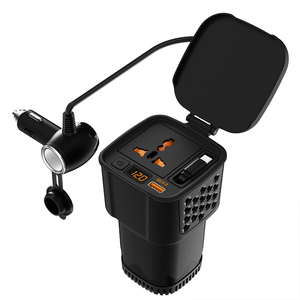
Compact CE-marked auxiliary power unit with continuous 200W output, dual USB fast-charging ports, and universal AC outlet protection.
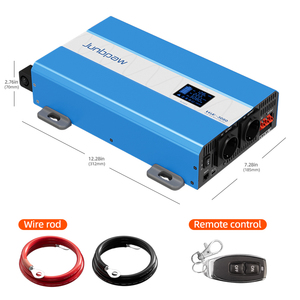
Ruggedized 50Hz/60Hz pure sine wave emergency converter designed for marine, RV, and field auxiliary energy backup systems.
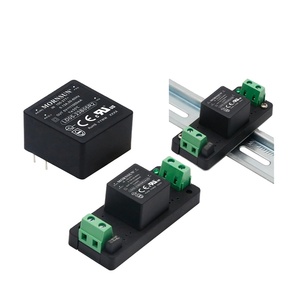
Encapsulated PCB-mount auxiliary power supply with high efficiency, low ripple noise, and wide input range for industrial automation controllers.
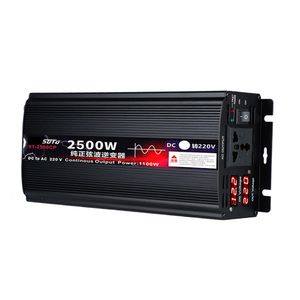
Heavy-duty auxiliary inverter supporting 12V/24V/48V/60V DC inputs with smart LED telemetry for commercial and industrial vehicles.
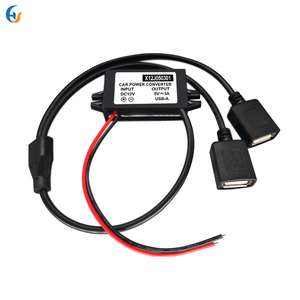
High-efficiency waterproof DC step-down regulator module engineered for fleet electronics, telemetry sensors, and mobile auxiliary devices.
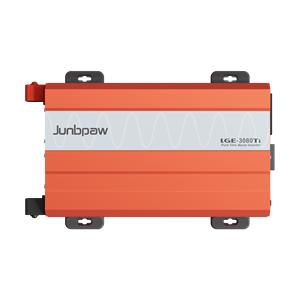
Industrial DC-to-AC power converter offering multi-voltage input options (12V/24V/48V) and intelligent overload protection circuits.
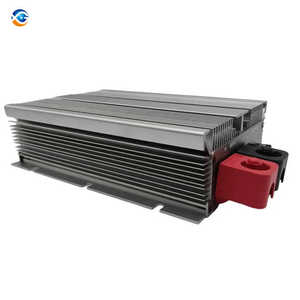
Ultra-ruggedized 12V to 48V step-up power supply certified for trucks, forklifts, mining vehicles, and harsh outdoor auxiliary applications.
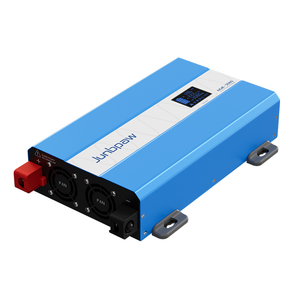
High-capacity pure sine wave auxiliary power unit designed for uninterruptible power supplies (UPS), remote sub-stations, and home microgrids.
Auxiliary Power Units (APUs) and conversion systems form the electrical backbone of modern rolling stock, heavy industrial automation, e-mobility fleets, and off-grid sub-stations. Ensuring absolute compliance with European Conformity (CE) directives requires rigorous multi-stage topology design, magnetic integration, and electromagnetic containment.
Auxiliary power exporters must guarantee dielectric strength and galvanic insulation up to 4.2 kV DC. Our systems implement planar transformer isolation barriers that prevent high-voltage transient coupling to secondary control logic, upholding strict safety thresholds across operate thermal ranges (-40°C to +85°C).
Industrial auxiliary converters generate fast dv/dt switching transients. Through zero-voltage switching (ZVS) resonant topologies, integrated LC input filters, and multi-layer shielded chassis, our export hardware achieves Class B emissions compliance under EN 55032 and EN 50121-3-2 standards without external filtering.
Exported auxiliary units destined for transportation and military environments undergo 3-axis shock and random vibration testing. Silicone potting and conformal coating choices guarantee thermal dissipation while protecting against humidity, dust ingress (IP67), and combustion hazards.
| Auxiliary Power Platform | Input Voltage Matrix | Efficiency Rating | Isolation Rating | CE Certification Standards | Primary Industrial Application |
|---|---|---|---|---|---|
| Encapsulated AC/DC Modules | 85 – 264 VAC / 120 – 370 VDC | 91% – 94% | 3,000 VAC Isolation | EN 62368-1, CE | PCB Automation, Control Cabinets |
| Heavy Duty DC/DC Buck/Boost | 9 – 36 VDC / 36 – 160 VDC | 93% – 96% | 1,500 VDC Galvanic | EN 50155, CE, IP67 | Mining Trucks, Forklifts, Rail Auxiliaries |
| Pure Sine Wave DC/AC Inverters | 12V / 24V / 48V / 110 VDC | 92% – 95% | 2,500 VDC Input-Output | EN 61000-6-2/4, CE | Commercial Fleets, Marine, Off-Grid Solar |
| Modular APU Rack Systems | 400 VAC 3-Phase / 750 VDC Catenary | 95% – 97.5% | 4,200 VDC Reinforced | EN 50155, EN 45545-2, CE | Passenger Rail HVAC, Substation Battery Charging |
Global supply chain evolution, decarbonization mandates, and the electrification of industrial fleets are fundamentally altering how procurement directors evaluate CE-certified auxiliary power exporters.
Procurement departments are prioritising exporters utilizing Silicon Carbide (SiC) and Gallium Nitride (GaN) switching stages. Wide-bandgap devices decrease power dissipation by up to 40%, enabling higher switching frequencies (200kHz+) and reducing planar transformer footprints by half. This directly lowers operational energy costs and reduces total cost of ownership (TCO) across 15 to 20-year asset lifecycles.
Next-generation B2B auxiliary power specifications mandate integrated digital communication gateways (CANopen, Modbus TCP, Ethernet/IP). Exporters offering embedded cloud connectivity enable real-time tracking of thermal profiles, input current degradation, and MTBF estimation. This shift allows maintenance teams to transition from reactive component replacement to predictive condition-based maintenance.
To eliminate single-point system failures in critical infrastructure, modern RFP specifications increasingly call for modular auxiliary power chassis. Parallelable 3kW to 10kW rectifier shelf systems with active droop current sharing guarantee uninterrupted load delivery even during single-module servicing or maintenance hot-swapping.
With industrial equipment operating spans frequently surpassing 20 years, supply chain vulnerability has made long-term component lifecycle support a top procurement decision factor. Top-tier European exporters guarantee form-fit-function redesign pathing, last-time-buy component banking, and long-term repair network commitments.
As power density demands push traditional topology boundaries, key design innovations are elevating system efficiencies above 97% while enabling operation under severe thermal and electrical strain.
Replacing conventional wire-wound transformers with PCB-embedded planar magnetics allows consistent automated production quality, superior thermal conduction through chassis cooling plates, and dramatically reduced parasitic leakage inductance.
Modern auxiliary power conversion units are adopting bidirectional topologies (AC/DC & DC/DC), enabling auxiliary battery banks to feed energy back into microgrids or catenary networks during peak demand spikes or regenerative braking events.
Advanced aluminum substrate PCBs coupled with synthetic phase-change thermal interface materials allow full-power operation without fan cooling. Fanless designs dramatically increase system MTBF by eliminating failure-prone mechanical moving parts.
Engineered in Barcelona, Spain, our power conversion platforms bring over four decades of custom engineering and ISO 9001 certified manufacturing rigor to global OEM partners.

Trusted By Global Tier-1 Systems Manufacturers








Answers to key technical, compliance, and logistics questions commonly submitted by engineering procurement teams.
CE compliance verification involves documented type-testing against the Low Voltage Directive (LVD 2014/35/EU) and Electromagnetic Compatibility Directive (EMC 2014/30/EU). Standard test sequences include dielectric withstand testing (up to 4 kV AC), surge immunity (IEC 61000-4-5), conducted and radiated emissions (EN 55032 Class B), thermal derating evaluation, and hazardous material compliance under RoHS 2011/65/EU.
A typical custom power supply development cycle ranges from 16 to 28 weeks, covering initial specification review, thermal/magnetic simulation, sample prototyping, and qualification campaigns. Development schedules are substantially compressed when modular building blocks—such as pre-qualified planar transformers and resonant power stages—are integrated into the engineering scope.
Our standard and custom auxiliary power units are thermally engineered for full-load operation up to +55°C without forced cooling, and extended up to +85°C with linear thermal power derating (typically 2.5% per °C above +55°C). Internal temperature sensors provide automated over-temperature shutdown to protect sensitive semiconductors against permanent thermal stress.
Yes. Our DC/DC converters, battery chargers, and rack-mount rectifiers feature built-in active current sharing (ORing FETs and active droop control). This capability allows up to 12 modules to operate in parallel, enabling modular expansion up to 72 kW while providing seamless N+1 redundancy for critical installations.
We provide comprehensive component life-cycle monitoring, issuing PCN (Product Change Notifications) at least 12 months prior to component obsolescence. For long-term railway and defense infrastructure projects, we offer form-fit-function redesign guarantees and maintain component supply reserves for 20+ years.
Send us your input range, required outputs, mechanical envelope, and target certification standards. Our engineering team in Barcelona will review your request and provide a technical proposal within 48 hours.