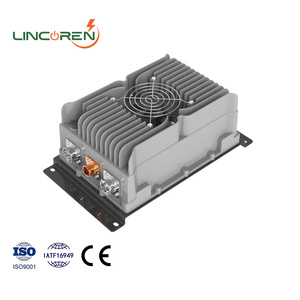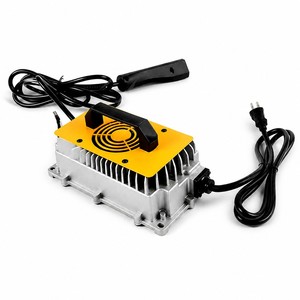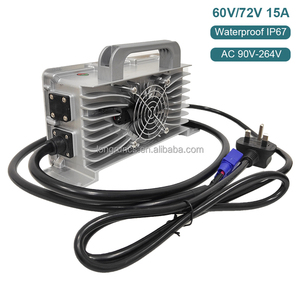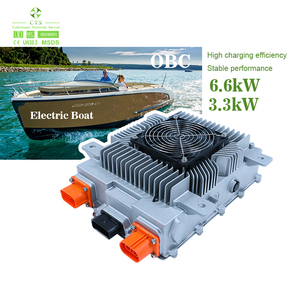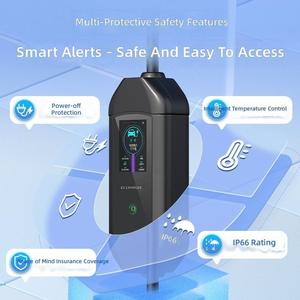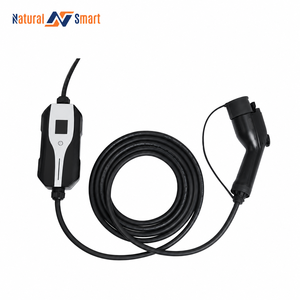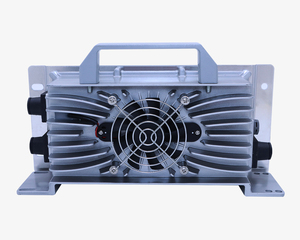
Engineered for maximum power density, operational safety, and thermal resilience across electric mobility, industrial machinery, marine, and commercial transport fleets.
Our OEM manufacturing infrastructure combines rigorous European R&D design practices with global production capacity to deliver high-reliability onboard chargers.
Navigating the transition toward high-voltage electric mobility requires onboard charging systems (OBC) that go beyond standard power conversion. Our factory leverages decades of power electronics engineering, originally refined in European railway, high-tech, and energy storage domains.
We solve the critical engineering bottlenecks faced by automotive OEMs, industrial machinery builders, and specialized transport manufacturers: thermal dissipation, electromagnetic compatibility (EMC), shock resistance, and lifetime component availability.

An engineering breakdown of how next-generation power semiconductors, bidirectional topologies, and high-density integration are transforming vehicle charging performance.
Replacing silicon MOSFETs with Silicon Carbide (SiC) and Gallium Nitride (GaN) power switches raises operating switching frequencies beyond 200 kHz. This dramatically scales down passive magnetics and transformer footprint, achieving system power densities exceeding 3.0 kW/L while operating at efficiencies up to 96.8%.
Modern onboard charging architectures are transitioning from unidirectional AC-to-DC conversion to dual-stage bidirectional topologies (Dual Active Bridge - DAB). This enables Vehicle-to-Grid (V2G), Vehicle-to-Load (V2L), and Vehicle-to-Home (V2H) functionality, transforming the electric vehicle battery into a dynamic mobile energy storage unit.
To optimize chassis space and wiring harness complexity, automakers are standardizing on integrated power conversion units. Combining a 6.6kW Onboard Charger with a 1kW–3kW DC/DC converter (supplying 12V/24V low-voltage auxiliary networks) reduces weight by up to 25% and simplifies installation in restricted vehicle bays.
Understanding the operational trade-offs across common onboard charger topologies enables system architects to match power electronics precisely to their application profile.
| OBC Topology Stage | Peak Efficiency | Power Density | Bidirectional Support | Ideal Application Scope |
|---|---|---|---|---|
| Single-Phase Interleaved PFC + LLC | 93.5% - 95.0% | 1.5 - 2.0 kW/L | Unidirectional Only | Light EVs, AGVs, Golf Carts (0.75kW - 3.3kW) |
| Totem-Pole PFC + Dual Active Bridge (SiC) | 95.5% - 97.2% | 2.8 - 3.8 kW/L | Full V2G / V2X Compatible | Passenger EVs, Commercial Fleets (3.3kW - 11kW) |
| Three-Phase Active Front End (AFE) + LLC | 96.0% - 97.5% | 3.2 - 4.2 kW/L | Optional / High-Power V2G | Heavy Duty Logistics, Buses, Marine (11kW - 22kW+) |
| Integrated Combo (OBC + Auxiliary DCDC) | 94.8% - 96.5% | 3.5 kW/L Combined | Application Dependent | Urban Transit, Forklifts, Specialty Machinery |
Global buyer priorities are shifting from simple unit cost purchasing toward lifecycle cost optimization, stringent safety standards, and software-defined power management.
Modern procurement technical requests require native support for high-speed CAN 2.0B, CANopen, and ISO 15118 protocols. This allows seamless "Plug & Charge" capabilities, dynamic communication with the Battery Management System (BMS), and remote over-the-air (OTA) charging profile updates.
Off-highway equipment, electric forklifts, construction machinery, and marine vessels demand fully potted, cast-aluminum enclosures capable of resisting constant vibration (EN 61373 Class 1B), high-pressure washdowns, and thermal shock from -40°C to +85°C.
Export markets require flexible chargers that operate reliably across fluctuating worldwide grid conditions. Sourcing trends prioritize wide input voltage ranges (85V–265V AC single-phase, 380V–480V AC three-phase) with integrated ground-fault immunity for unstable charging locations.
Everything you need to know about specifying, certifying, and importing high-reliability onboard chargers from our manufacturing plant.
Our onboard battery chargers are designed and factory-tested under full compliance with the European Low Voltage Directive (LVD 2014/35/EU) and Electromagnetic Compatibility Directive (EMC 2014/30/EU). Specific automotive and equipment standards include EN 61851-1 (EV conductive charging systems), EN 61000-6-2 / EN 61000-6-4 (industrial immunity and emissions), EN 60335-2-29 (battery charger safety), and EN 61373 for shock and vibration resistance. CE test documentation and Declaration of Conformity (DoC) are provided with all OEM deliveries.
Yes. Every battery chemistry—whether LiFePO4, NMC, LTO, or Lead-Acid—requires a tailored charging curve (CC/CV, multi-stage floating, or custom pre-charge algorithms) to preserve battery health and maximize cycle life. Our engineering team pre-programs custom firmware profiles via CAN bus based on your pack manufacturer’s exact voltage thresholds, thermal limits, and wake-up signalling requirements.
A 2-in-1 combo unit integrates the high-voltage AC-to-DC onboard charger (e.g., 6.6kW) and the low-voltage DC-to-DC converter (e.g., 1.2kW for 12V/24V systems) inside a single aluminum heat-sink chassis. This yields up to a 30% reduction in physical volume, eliminates heavy interconnect cables, lowers overall vehicle BOM costs, and simplifies thermal management through a single liquid-cooling port or shared cold plate.
For standardized catalogue models or mild parameter tweaks (voltage scaling, CAN protocol adjustments), qualified samples are available within 2 to 4 weeks. Full custom electrical or mechanical design programs—including custom planar magnetics, specialized IP69K housing, and complete qualification campaigns—typically run from 12 to 20 weeks from specification approval to Golden Sample sign-off.
All industrial-grade and off-highway chargers undergo automated functional testing (ATE), thermal shock cycling (-40°C to +85°C), high-humidity testing, and 100% full-load burn-in before leaving the factory. Critical electronics are protected using complete polyurethane or silicone conformal potting, yielding IP67/IP68 dust and water ingress protection while transferring internal heat efficiently to the outer chassis enclosure.
Consult with our power conversion engineers to select the optimal topology, mechanical layout, and certification path for your project.