
Direct factory supply featuring low EMI horizontal topologies, multi-slot trigger coils, SMD telecom transformers, medium frequency pulse magnetics, and specialized solar inverter topologies.
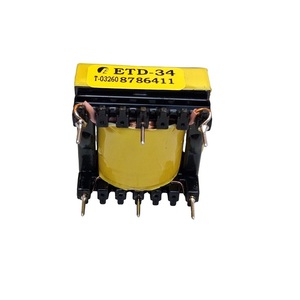
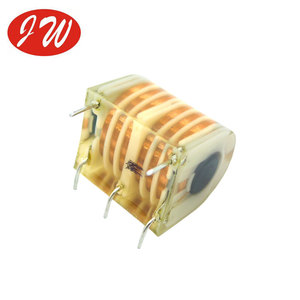
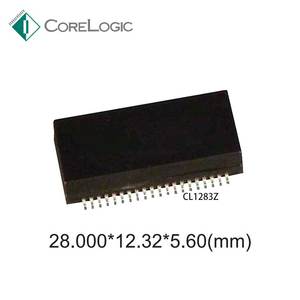
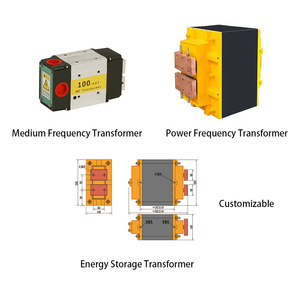
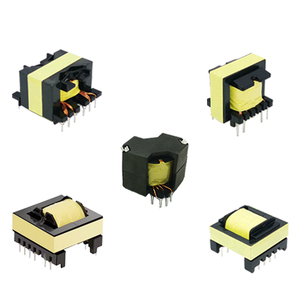
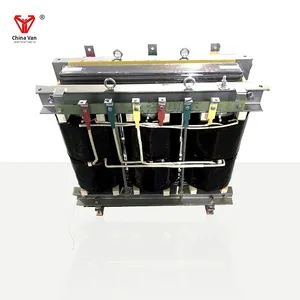
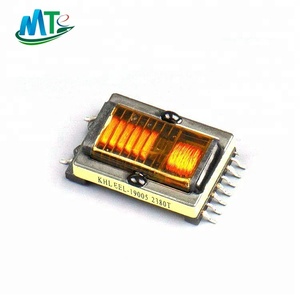
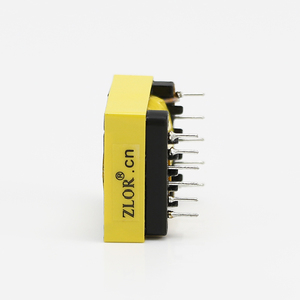
A trusted OEM/ODM power electronics component partner supplying certified magnetic components across 5 continents for over 40 years.
An engineering analysis of magnetics design, wide-bandgap (SiC/GaN) integration, planar magnetic structures, and common-mode transient immunity (CMTI).
The rapid adoption of Silicon Carbide (SiC) and Gallium Nitride (GaN) power switches demands pulse transformers capable of operating at switching frequencies exceeding 500 kHz with extreme $dV/dt$ slew rates (>100 V/ns). Modern gate drive pulse transformers must provide ultra-low interwinding capacitance ($C_{ww} < 5\text{ pF}$) to prevent common-mode noise propagation and gate breakdown under rapid switching transients.
High-density SMPS designs are transitioning from traditional wire-wound bobbins (such as EE and ETD cores) to planar magnetic structures built on multi-layer PCBs. Planar pulse transformers offer unmatched repeatability of leakage inductance ($L_k$), low profile geometries (<10 mm height), superior thermal dissipation, and automated surface-mount assembly compatibility for aerospace, automotive, and telecom applications.
Industrial solar inverters (operating up to 1500 VDC bus voltage) and medical equipment require pulse transformers with enhanced dielectric isolation. Compliance with IEC/EN 61558-2-16 and EN 62368-1 requires high Partial Discharge Inception Voltage (PDIV > 1800 V peak) and triple-insulated wire (TIW) systems to guarantee zero dielectric breakdown across 20-year operational lifespans.
A critical parameter in pulse transformer specification is the volt-second product ($E \cdot t = \Delta B \cdot A_e \cdot N_p$). To prevent core saturation and pulse distortion during high duty cycle operations, manufacturers utilize high-permeability Manganese-Zinc ($\text{MnZn}$) ferrite and nanocrystalline alloys. Proper core geometry selection (e.g., EPC, PQ, ETD) ensures that the peak flux density ($\Delta B$) remains comfortably below saturation limit ($B_{sat} \approx 0.38\text{ T}$ at $100^\circ\text{C}$), preserving pulse signal fidelity and preventing destructive current spikes in gate drive circuits.
A technical comparison guide for power supply designers, magnetics procurement specialists, and system engineers.
| Core Topology / Material | Saturation Flux ($B_{sat}$) | Interwinding Cap ($C_{ww}$) | Operating Temp Range | Typical Applications | CE Certification Standards |
|---|---|---|---|---|---|
| MnZn Ferrite (EE / ETD Core) | 0.38 – 0.42 T | 12 – 25 pF | -40°C to +130°C | Horizontal SMPS, Flyback Converters, General Gate Drives | IEC/EN 61558-2-16, CE LVD |
| Nanocrystalline Core | 1.20 – 1.35 T | 5 – 10 pF | -50°C to +180°C | High Power Medium Frequency (1000W+), Solar Inverters | EN 60950-1, EN 62368-1 |
| Planar PCB Core (SMD) | 0.35 – 0.40 T | 2 – 6 pF | -40°C to +125°C | T1/E1 ISDN ISDN Interfaces, High-speed SiC/GaN Gate Drivers | EN 50155, CE EMC (2014/30/EU) |
| Encapsulated Slot Core (EPC/PQ) | 0.40 – 0.45 T | 8 – 15 pF | -40°C to +150°C | Negative Ion Ozone Generators, High Voltage Trigger Coils | IEC 60664-1, CE LVD (2014/35/EU) |
Strategic procurement shifts, total cost of ownership (TCO) optimization, compliance verification, and supply chain resiliency in custom magnetics sourcing.
Leading European and global procurement managers are moving away from manual coil winding due to batch-to-batch variation in leakage inductance ($L_k$) and interwinding capacitance ($C_{ww}$). Future supplier qualifications mandate automated CNC winding machines, automatic laser stripping, and 100% automated parametric testing (LCR, turns ratio, pinout, and Hi-Pot flash testing) directly integrated into factory MES platforms.
Regulatory scrutiny under EU Directives (Low Voltage Directive 2014/35/EU, EMC Directive 2014/30/EU) requires complete raw material traceability. Sourcing decisions now hinge on full material disclosure (FMD), UL94-V0 flame retardant bobbins/encapsulations, Class F/H ($155^\circ\text{C}/180^\circ\text{C}$) insulation system approvals, and conflict-mineral free copper sourcing.
Custom power supply development cycles have compressed from 40 weeks to under 16 weeks. Strategic OEM buyers prioritize factories capable of utilizing standardized modular cores (e.g., EE, ETD, EPC, PQ) and rapid 3D-printed bobbins to supply qualified engineering samples within 7–14 business days, significantly lowering Non-Recurring Engineering (NRE) expenditures.
Recent supply chain disruptions have highlighted the vulnerability of single-source magnetics. Global buyers are establishing dual-sourcing framework agreements with factories offering cross-compatible form-fit-function equivalents for legacy pulse transformer part numbers (e.g., Pulse Electronics, Wurth Elektronik, Bourns replacements) without sacrificing dielectric reliability.
With over 40 years of power electronics development experience, our engineering facility de-risks custom pulse transformer programs through rigorous thermal, magnetic, and dielectric validation before volume production.









Direct answers from our senior magnetics engineering team regarding compliance, technical parameters, custom lead times, and quality control.
Submit your electrical specifications, core topology requirements, or legacy part numbers today. Receive direct engineering feedback, 3D STEP models, and a competitive volume quote within 24 hours.
Get a Quote