
Explore our flagship power conversion systems engineered for vehicle, industrial automation, solar energy, and embedded board applications.
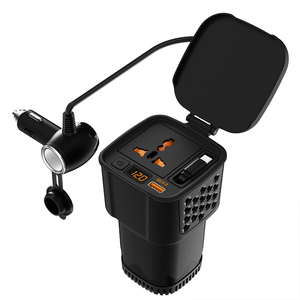
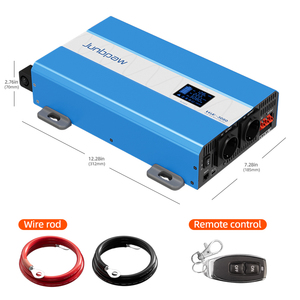
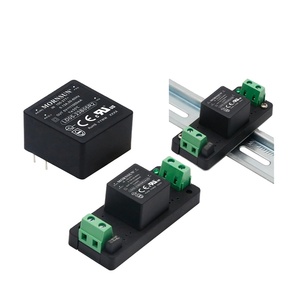
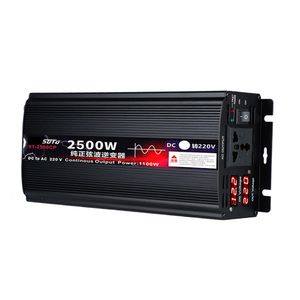
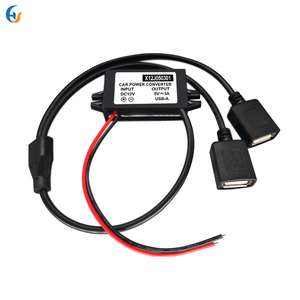

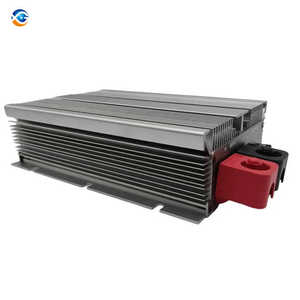
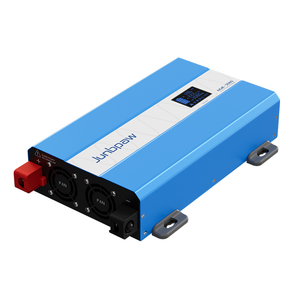
An in-depth technical analysis on topology selection, thermal design margins, electromagnetic compatibility (EMC), and procurement strategies for industrial switching power supplies.
Modern industrial power systems operate under stringent requirements for efficiency, power density, and environmental resilience. As global industries shift toward electrification, automated manufacturing, renewable grid integration, and smart mobility, the role of CE certified switching converters has become paramount. Unlike legacy linear power supplies—which convert excess voltage into wasted thermal dissipation—switching mode power supplies (SMPS) utilize high-frequency pulse-width modulation (PWM) and resonant switching topologies to achieve energy conversion efficiencies routinely exceeding 92% to 98%.
Obtaining authentic CE (Conformité Européenne) certification is not merely a legal gateway for marketing within the European Economic Area (EEA); it serves as a rigorous engineering benchmark guaranteeing adherence to the Low Voltage Directive (LVD 2014/35/EU) and Electromagnetic Compatibility Directive (EMC 2014/30/EU). For global original equipment manufacturers (OEMs), systems integrators, and engineering procurement professionals, partner selection hinges on a manufacturer's capacity to deliver predictable Mean Time Between Failures (MTBF), withstand severe catenary voltage transients, and manage thermal stress across extended operating lifetimes.
Founded with a dedicated commitment to industrial power excellence in Barcelona, Spain, our manufacturing infrastructure combines four decades of power electronics design with ISO 9001-certified quality controls. Having engineered over 1,000 customized power solutions for railway networks, high-tech machinery, defense platforms, and energy substations, our engineering team brings verified field reliability to every converter platform.
We bridge the gap between off-the-shelf standard hardware and tailor-made OEM solutions. Utilizing over 260 pre-qualified standard modular building blocks—including planar magnetics, soft-switching LLC stages, and digital DSP control boards—we drastically shorten Non-Recurring Engineering (NRE) timelines and sample delivery from months to weeks.
Selecting the optimal converter topology dictates the achievable efficiency, electromagnetic radiation, thermal footprint, and bill-of-materials (BOM) cost. In industrial power conversion, topologies fall into three primary categories: non-isolated buck/boost converters, isolated hard-switched converters (Flyback, Forward, Push-Pull), and isolated soft-switched resonant converters (LLC, Phase-Shifted Full Bridge).
| Topology Type | Power Range | Typical Efficiency | Galvanic Isolation | Primary Application Target |
|---|---|---|---|---|
| Synchronous Buck / Boost | 3W – 500W | 94% – 98% | Non-Isolated | Point-of-Load (POL), USB 5V Chargers, Automotive Step-Down |
| Flyback (Quasi-Resonant) | 1W – 150W | 85% – 91% | High (Up to 4kV) | Board-Mount AC/DC Modules, Auxiliary Gate Drivers |
| Single / Two-Switch Forward | 100W – 500W | 88% – 93% | Isolated | DIN Rail Power Supplies, Industrial Instrumentation |
| LLC Resonant Half-Bridge | 250W – 3kW | 93% – 96.5% | Isolated (Low Noise) | Telecom Rectifiers, Pure Sine Wave Inverters, High-Tech OEM |
| Phase-Shifted Full Bridge (PSFB) | 2kW – 72kW+ | 94% – 97.5% | High Voltage Isolated | EV Battery Chargers, Railway Auxiliaries, Substation Power |
A. Planar Transformer Integration: Traditional wire-wound magnetic cores suffer from high leakage inductance and severe proximity effects at switching frequencies above 100 kHz. By embedding flat copper windings directly within multi-layer PCBs alongside low-profile planar ferrite cores, our converter designs reduce magnetic volume by up to 70% while improving thermal dissipation through direct chassis conduction.
B. Zero Voltage Switching (ZVS) & Zero Current Switching (ZCS): Soft-switching resonant topologies eliminate turn-on and turn-off switching losses across MOSFETs and IGBTs. This reduction in dV/dt and dI/dt stress significantly lowers conducted and radiated Electromagnetic Interference (EMI), enabling effortless compliance with EN 55032 Class B without requiring massive input LC filters.
C. Wide Bandgap (SiC & GaN) Semiconductors: Substituting legacy silicon devices with Silicon Carbide (SiC) MOSFETs and Gallium Nitride (GaN) HEMTs enables operating frequencies above 500 kHz with negligible reverse-recovery losses. This dramatically scales power density, allowing 3kW power conversion within compact 1U rack-mount profiles.
Procurement managers and OEM hardware directors must anticipate technological shifts to prevent early hardware obsolescence and maintain competitive advantage. Key market developments driving switching power converter specification over the next decade include:
Modern switching converters no longer function as passive "black boxes." Digital CANbus, PMBus, and IoT Gateway integration allow real-time monitoring of internal capacitor temperatures, ripple voltages, and operating hours—enabling predictive maintenance before field failures occur.
Mission-critical infrastructure—such as data centers, railway substations, and automated manufacturing—increasingly demands hot-swappable shelf designs with active OR-ing MOSFETs and active current sharing to guarantee 99.999% system availability.
With the expansion of renewable microgrids and battery storage systems, converters must accept broad, fluctuating input spans (e.g., 250VDC–1000VDC or 4:1 railway ranges) while maintaining constant output regulation and tight transient recovery times.
A genuine CE Mark requires rigorous verification against European harmonized standards. Procuring non-compliant or self-declared power modules risks project delays, severe EMI pollution, safety hazards, and regulatory customs seizures. Premium quality compliance mandates testing across three main pillars:
Speak directly with our senior power electronics engineering team in Barcelona. Request detailed datasheets, 3D CAD files, or custom program quotes today.