Featured Product Portfolio
Industrial-Grade Power Conversion Modules
Explore our certified range of high-reliability AC/DC open-frame units, high-power semiconductor building blocks, custom heavy-copper PCBAs, and bidirectional power amplifiers.
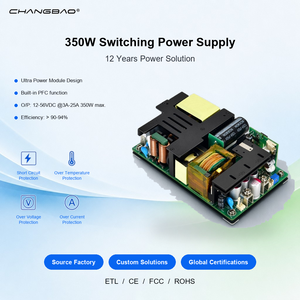
350W Ultra Power Module With PFC AC DC 12V 15V 24V 36V 48V 54V 3A-25A Open Frame Switching Power Supply
High-efficiency active PFC stage, ultra-compact open-frame design engineered for high thermal stress environments.
Contact Us
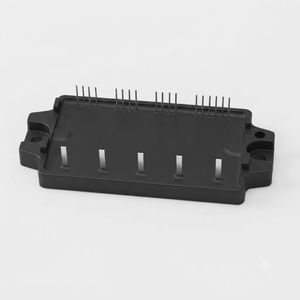
Compatible With PM25RHB120 Power Module High Power Semiconductor Module Industrial Component
Industrial IPM module with integrated drive and protection circuitry for high-frequency motor controllers.
Contact Us
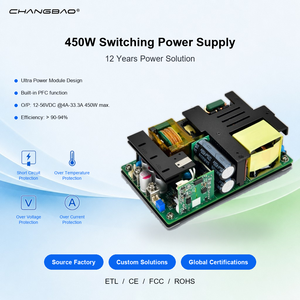
450W Power Module PCB Board PFC 12V 15V 24V 27V 36V 48V 54V 5A-30A AC DC Open Frame Supply
High-density resonant power topology delivering continuous 450W output with minimal EMI emissions.
Contact Us
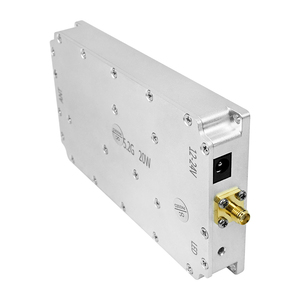
20W 2.4G 5.2GHz Bidirectional Linear Power Amplifier Module for Professional Communication
Ruggedized RF power amplification unit designed for low-distortion, wideband communication links.
Contact Us
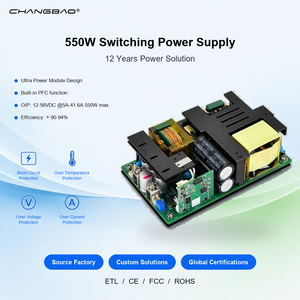
550W Power Module PFC 12V 15V 18V 19V 24V 27V 36V 48V 54V 10A-40A AC DC Open Frame Power Supply
Peak power handling capability with forced-air and conduction cooling profiles for industrial machinery.
Contact Us
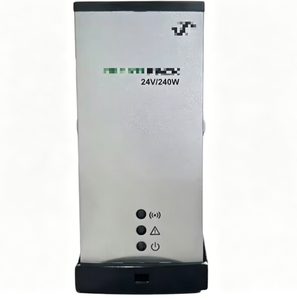
241120.200 High-Precision Industrial Power Supply & Rectifier Module
Precision-regulated output module optimized for telecom racks, automation systems, and critical back-up power.
Contact Us
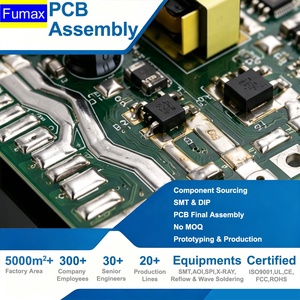
AC DC Power Supply Module Board PCBA Assembly Turnkey Heavy Copper PRINTED CIRCUIT BOARD
Heavy copper traces (up to 6oz) designed for continuous high current handling and thermal dissipation.
Contact Us
Professional Supply Charging Module 86.2*60*35mm Universal Power Supply Module AC/DC
Ultra-compact encapsulated AC/DC converter designed for IoT gateways, medical devices, and instrumentation.
Contact Us
40+
Years Engineering Heritage
1,000+
Custom Power Solutions
99.8%
First-Pass Yield Standard
50+
Countries Exported To
Executive Technical White Paper: Advanced Power Module Architecture & Engineering
In modern industrial, railway, energy, and defense systems, the power module is no longer a simple static component—it serves as the critical energy backbone determining overall system efficiency, MTBF (Mean Time Between Failures), thermal density, and total cost of ownership (TCO). As a premier China power modules factory and global exporter, our engineering philosophy bridges advanced power electronics innovation with rigorous manufacturing quality systems certified under ISO 9001 and compliant with EN 50155, EN 45545-2, and IEC 62368-1 standards.
Information Gain Insight: Modern switching power supply design relies heavily on Power Factor Correction (PFC) circuitry and active resonant topologies (LLC/CLLC). Achieving active PFC values above 0.99 while maintaining THD (Total Harmonic Distortion) below 5% reduces grid strain and thermal losses by up to 34% compared to legacy passive rectification topologies.
Whether deploying 350W, 450W, or 550W open-frame AC/DC power modules or high-power semiconductor building blocks like PM25RHB120 compatibles, system designers must navigate complex engineering trade-offs between switching frequency, thermal dissipation, magnetic integration, and electromagnetic compatibility (EMC). Our turnkey PCBA assembly processes utilize heavy copper boards (up to 6oz or higher), automated optical inspection (AOI), and precise thermal modeling to ensure zero infant mortality and exceptional long-term field stability.
Precision Engineering & Thermal Dissipation Strategies
Thermal stress is the primary contributor to electrolytic capacitor degradation and semiconductor failure in power conversion systems. Our open-frame power supplies integrate advanced aluminum substrate heat spreaders and localized thermal vias to route heat away from critical switching components.
- Wide AC Input Ranges: 85VAC to 264VAC universal voltage adaptation with active surge protection.
- Multiple DC Output Profiles: Precision-regulated 12V, 15V, 24V, 36V, 48V, and 54V rails with current capacities reaching 40A.
- Conduction & Forced-Air Optimization: Designed to maintain 100% continuous duty rating at elevated ambient temperatures (+70°C derating curve).
Future Technology Trends in Industrial Power Modules
The global power electronics industry is undergoing a seismic shift driven by decarbonization, electrification of transport, and high-density computing requirements. Understanding these technology vectors allows procurement teams and system engineers to future-proof their hardware architecture.
1. Wide Bandgap Semiconductors (GaN & SiC Integration)
Gallium Nitride (GaN) and Silicon Carbide (SiC) MOSFETs are rapidly replacing traditional Silicon (Si) IGBTs and planar MOSFETs. By offering significantly lower reverse recovery charges ($Q_{rr}$) and lower drain-to-source on-resistance ($R_{DS(on)}$), GaN and SiC permit switching frequencies exceeding 500 kHz to 1 MHz. This drastically reduces the physical footprint of magnetic components (chokes and transformers), resulting in power densities exceeding 40 W/in³.
2. Planar Magnetics & Integrated Transformer PCBs
Traditional wire-wound transformers suffer from manufacturing inconsistencies, leakage inductance, and poor thermal pathways. Future-proof power module designs utilize multi-layer planar transformers embedded directly within heavy-copper PCB structures. Planar magnetics deliver flat thermal profiles, exact parasitic predictability, and automated manufacturing compliance, eliminating manual assembly variations.
3. Digital Control & IoT Telemetry Integration
Analog PWM control loops are giving way to digital signal processors (DSPs) communicating over PMBus, CANbus, or Modbus protocols. Modern high-reliability installations require power modules equipped with real-time telemetry streaming: operational temperature, ripple voltage, current consumption, and remaining lifespan estimation for predictive maintenance.
Comparative Analysis: Traditional vs. Next-Gen Power Module Topology
| Performance Metric |
Legacy Silicon Power Modules |
Next-Gen GaN / SiC Power Modules |
Engineering Impact |
| Typical Efficiency |
85% - 89% |
94% - 97.5% |
50% reduction in heat dissipation requirements |
| Switching Frequency |
40 kHz - 100 kHz |
200 kHz - 1 MHz+ |
Up to 60% reduction in passive filter volume |
| Power Density |
8 - 15 W/in³ |
35 - 55+ W/in³ |
Enables ultra-compact equipment enclosures |
| Operating Temperature |
Max +85°C Junction |
Max +150°C to +175°C Junction |
Superior reliability in extreme environments |
| Control Interface |
Analog Feedback Loop |
Digital PMBus / CAN Telemetry |
Enables condition-based predictive maintenance |
Global Sourcing & Procurement Trends for Power Electronics
Strategic buyers sourcing power modules from China face evolving market dynamics. Sourcing strategies have transitioned from simple component cost minimization toward comprehensive risk mitigation, compliance, and supply chain transparency.
1. Turnkey Contract Manufacturing & Heavy-Copper PCBA Capabilities
System integrators increasingly favor factories that offer end-to-end turnkey manufacturing—from raw SMT assembly and thick-film copper PCB design to conformal coating and full functional burn-in testing (FCT). Sourcing a pre-validated PCBA power module assembly drastically shortens NRE (Non-Recurring Engineering) cycles and time-to-market.
2. Obsolescence Management & Long Lifecycle Guarantees
Industrial, rail, and defense equipment operates on product life cycles ranging from 15 to 30 years. Leading exporters must provide robust component lifecycle management, Last-Time-Buy (LTB) notices, and form-fit-function redesign support to prevent critical operational downtime in deployed fleets.
3. Dual-Sourcing & Modular Standard Platforms
To guard against global supply bottlenecks, enterprise purchasers are specifying open-frame power modules with standard footprint dimensions and compatible pinouts (such as the PM25RHB120 industrial package). Utilizing standard chassis, DIN rail, or open-frame mechanical footprints ensures seamless secondary-source substitution without requiring complete equipment recertification.
Why Partner With Our Power Modules Factory & Export Center
With over four decades of deep power electronics specialization and more than 1,000 custom platforms engineered, our manufacturing facility stands at the forefront of power conversion technology in China.
Our Core Manufacturing Strengths
- In-House Qualification Testing: Equipped with dedicated Anechoic EMC testing chambers, thermal shock chambers, automated vibration test benches (EN 61373), and high-voltage isolation testers.
- Rigorous Quality Standards: Fully certified ISO 9001 quality management system with strict traceability down to individual component reel lot numbers.
- Flexible Customization (OEM/ODM): Rapid modification of standard platforms (voltage tweaking, conformal coating, custom wire harnesses, mechanical enclosure brackets) within 4 to 8 weeks.
- Heavy Copper & High-Current Expertise: Manufacturing capability for heavy copper PCBs up to 10oz, capable of sustained high-ampere conduction without thermal delamination.
Procurement Guidance
Frequently Asked Questions (FAQ)
Answers to critical technical, quality, and supply chain questions encountered during power module procurement.
What power range and output voltage configurations do your power modules support?
Our power conversion platforms cover single-unit power ratings from 20W to over 550W in open-frame AC/DC configurations, extending up to multi-kilowatt modular racks for industrial rectifiers and converters. Standard DC output voltages include 12V, 15V, 18V, 24V, 27V, 36V, 48V, and 54V with current ratings up to 40A. Custom output voltages can be engineered upon request.
Which industry certifications and standards do your power modules comply with?
Our modules are designed and tested to comply with international safety, railway, and EMC standards, including IEC/EN/UL 62368-1 (Information & Audio/Video Equipment), EN 50155 / EN 50121-3-2 (Railway Applications), EN 45545-2 (Fire and Smoke Compliance), EN 61373 (Shock and Vibration Resistance), and CISPR 32 Class B for electromagnetic interference.
What is the typical lead time for standard products versus custom engineered power modules?
Standard inventory power modules are available for dispatch within 1 to 2 weeks. Custom OEM/ODM developments—including topology modification, specialized magnetics design, and prototype qualification—typically range from 12 to 20 weeks from technical specification approval to fully tested First Article Inspection (FAI) samples.
How do you ensure thermal management and reliability in high-power open-frame modules?
We utilize high-thermal-conductivity materials, optimized aluminum heatsinks, localized heavy copper traces, and high-grade 105°C long-life Japanese electrolytic capacitors. Every batch undergoes 100% full-load burn-in testing and environmental stress screening (ESS) to guarantee high MTBF under real-world operating profiles.
Do you offer custom turnkey PCBA assembly for heavy copper power supply modules?
Yes. We provide complete turnkey PCBA manufacturing, including heavy copper substrate fabrication (up to 10oz), SMT surface mounting, thur-hole component soldering, automated conformal coating for humid/corrosive environments, and end-of-line functional electrical testing.
Ready to Optimize Your Power Electronics Architecture?
Connect directly with our engineering and procurement team in China. We offer technical specification reviews, sample evaluation units, and rapid engineering quotes for custom power conversion projects.