
Engineered for mission-critical industrial, telecommunications, and railway power infrastructure with efficiency up to 96%.
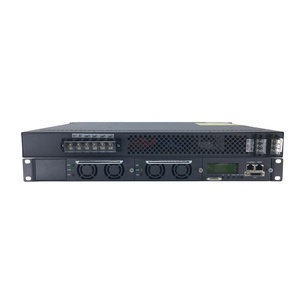
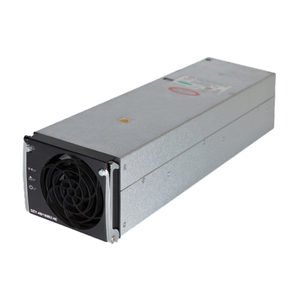
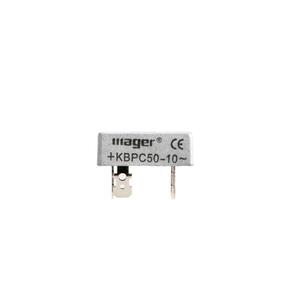
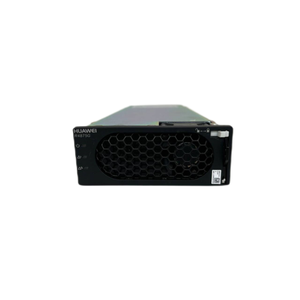
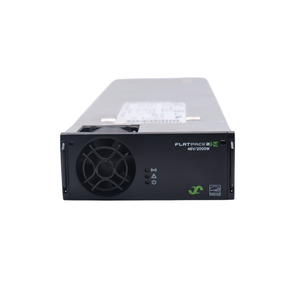
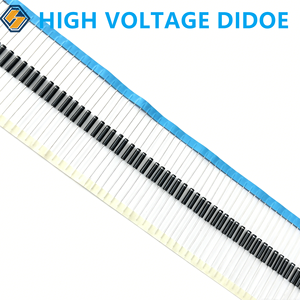
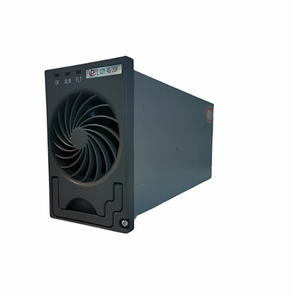
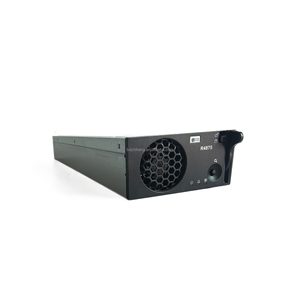
In modern industrial automation, telecommunication networks, railway electrification, and data storage ecosystems, the demand for high-reliability, ultra-high-efficiency AC/DC power rectifiers has expanded at an unprecedented pace. As a global manufacturing power hub, China’s industrial power conversion sector combines world-class technological integration, sophisticated semiconductor topologies, and optimized production scale. Partnering with a leading power rectifiers supplier allows international buyers and systems integrators to secure high-performance custom units or modular off-the-shelf power platforms that strictly adhere to international quality directives, including EN 50155, EN 45545-2, IEC 62368, and ISO 9001 certifications.
Traditional linear rectifiers have largely given way to modern Switch-Mode Power Supply (SMPS) rectifiers utilizing high-frequency pulse-width modulation (PWM), planar magnetics, and advanced power factor correction (PFC) circuitry. By converting incoming alternating current (AC) into stabilized, low-ripple direct current (DC) across varying input voltages, modern switch-mode rectifiers achieve total system efficiency ratings exceeding 96%. This drastic reduction in thermal dissipation directly impacts operational expenditure (OPEX) and extends component Mean Time Between Failures (MTBF) beyond 500,000 hours.
Whether deployed in remote telecom towers exposed to extreme ambient temperature fluctuations, or installed onboard high-speed rail passenger cars subjected to harsh shock and vibration, rectifiers must operate under severe environmental envelopes.

The landscape of power conversion systems is currently undergoing a transformative shift driven by decarbonization, electrification of transport networks, and the expansion of 5G cellular communication networks. Sourcing from top-tier Chinese rectifier manufacturers allows enterprise procurement teams to leverage several major technological advancements:
The integration of Silicon Carbide (SiC) and Gallium Nitride (GaN) switching devices minimizes switching losses, enables higher switching frequencies (above 500 kHz), and dramatically scales down passive component footprints.
Replacing traditional wire-wound transformers with multi-layer printed circuit board (PCB) planar transformers optimizes magnetic coupling, eliminates human winding variance, and provides superior thermal dissipation paths.
Digital signal processor (DSP) based control circuits allow dynamic adjusting of output voltage profiles, automated battery temperature compensation, active load balancing, and predictive fault monitoring via cloud gateways.
Global B2B buyers, EPC contractors, and original equipment manufacturers (OEMs) are fundamentally changing how power equipment contracts are structured. Modern procurement strategies focus heavily on long-term value, flexibility, and supply chain security:
While initial capital expenditures (CAPEX) remain a significant evaluation metric, procurement directors prioritize operational energy savings. A 2% improvement in rectifier efficiency across a 100kW data room or railway substation yields tens of thousands of dollars in energy cost reductions over a 10-year service life, offsetting initial module procurement costs.
Rather than installing monolithic static rectifiers, modern installations rely on subrack modular rectifiers (e.g., 19-inch 1U/2U/3U shelves). Purchasing modular units rated at 2kW, 4kW, or 6kW per module allows facility operators to adopt a "pay-as-you-grow" capital deployment model, adding active modules in parallel as power load demands increase.
Railway transit authorities and energy sub-stations require operating lifetimes exceeding 20 to 30 years. Sourcing rectifiers from manufacturers who offer formal obsolescence monitoring, form-fit-function design drop-in replacements, and long-term spare parts guarantees is essential for mitigating future system downtime.
| Rectifier Architecture | Typical Efficiency | Power Density | Primary Industrial Applications | Key Advantage |
|---|---|---|---|---|
| 3-Phase Dynamic Switch-Mode (HE) | 95.5% - 97.0% | High (>40W/in³) | Telecom core hubs, Railway substations, Large Data Centers | Ultra-low input THD, optimal phase balance |
| 19" Embedded Single-Phase Rack | 92.0% - 95.0% | Medium-High | Outdoor telecom base stations, Industrial cabinets | Compact hot-swappable installation, versatile DC distribution |
| Solid-State Bridge Rectifier Units | 90.0% - 93.0% | Medium | Machinery power supplies, Motor drives, Anodizing lines | Extreme mechanical robustness, simple heat-sink mounting |
| High-Voltage Miniature Diode Stacks | N/A (Fast Switch) | Compact Axial | High-voltage power supplies, Medical imaging, Laser modules | Up to 20kV rating, fast reverse recovery time (trr) |
Leading Chinese power rectifier engineering firms combine over four decades of power semiconductor mastery with rigorous European safety standards. When evaluating a supplier, top global engineering teams verify the following enterprise capabilities:
Expert answers to common engineering, commercial, and regulatory questions surrounding industrial power rectifiers.
Need assistance sizing a telecom rectifier system, custom railway power supply, or modular 48V DC plant? Our technical engineering team is ready to analyze your requirements and provide CAD models, datasheets, and competitive quotes.