
Explore our premium-grade rail transit inverters, traction power stacks, and specialized power supplies engineered under ISO 9001 and certified against EN 50155 railway standards.
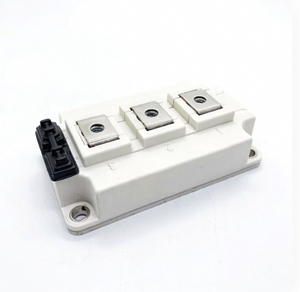
Ultra-low loss IGBT inverter module engineered for heavy rail propulsion, auxiliary converters, and urban transit traction systems.
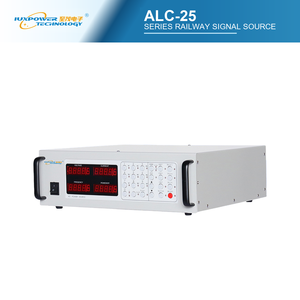
Precision programmable AC power supply designed for burn-in testing, signaling system validation, and high-accuracy trackside telemetry.
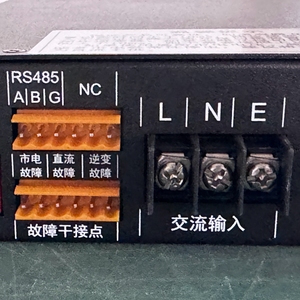
Ruggedized industrial inverter engineered to withstand severe voltage fluctuations, extreme vibration, and harsh catenary environments.
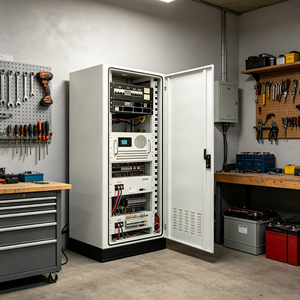
Pure sine wave 48Vdc to 220Vac line-frequency inverter featuring heavy-duty isolation transformers and instant overload protection for railway communications.
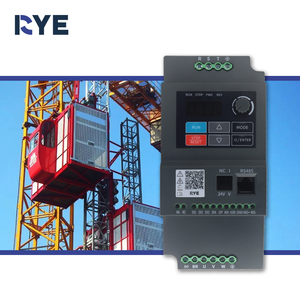
Compact DIN-rail variable frequency drive for controlling auxiliary ventilation fans, oil pumps, and synchronous motors in rolling stock cabinets.
High-reliability half-bridge IGBT inverter module designed for auxiliary power supply units (APU) and metro traction drives.
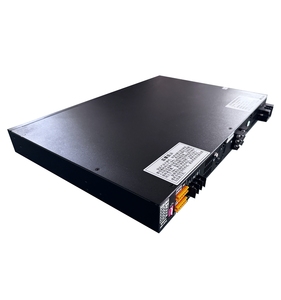
Hot-swappable 19-inch rack-mounted inverter designed for train control cabinets, signaling distribution, and emergency backup power.
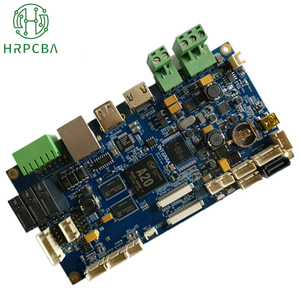
Custom-manufactured high-reliability inverter PCB assembly with triple conformal coating and strict thermal imaging screening for rail OEMs.
Comprehensive engineering insights into Chinese power electronics manufacturing, quality verification benchmarks, and design topology breakthroughs.
The global railway infrastructure landscape is undergoing a massive transformation. As high-speed rail networks, urban metro lines, and freight transit demand unprecedented energy efficiency, reliability, and reduced operational expenditure, the role of Railway Inverters and Power Conversion Systems (PCS) has become central to rolling stock design. China has emerged as the premier global manufacturing hub for railway inverters, leveraging vertically integrated supply chains, cutting-edge R&D centers, and world-class testing facilities that validate compliance with international standards such as EN 50155, EN 45545-2 (fire and smoke safety), and EN 61373 (shock and vibration).
Our manufacturing matrix combines four decades of accumulated power electronics expertise with automated surface-mount technology (SMT), planar transformer fabrication, and rigorous environmental stress screening (ESS). By adhering to strict ISO 9001 and IRIS (International Railway Industry Standard) frameworks, Chinese manufacturing facilities deliver industrial-grade power converters ranging from 50 W auxiliary modules up to 72 kW parallel rack systems and multi-megawatt traction drive units.
| Standard / Parameter | Standard Requirement | China Manufacturer Capability (Benchmark) | System Benefit |
|---|---|---|---|
| EN 50155 Input Window | 0.7 to 1.25 Un nominal (0.6 to 1.4 Un transient) | Ultra-wide 4:1 input ranges (24V, 48V, 72V, 110V DC) | Prevents system shutdown during deep catenary voltage dips |
| EN 61373 Vibration | Category 1, Class B body-mounted equipment | Potted inductors, heavy-duty chassis, locking fasteners | Eliminates solder joint fatigue and mechanical resonance failures |
| EN 45545-2 Fire Safety | Hazard Level HL1 to HL3 requirements | Self-extinguishing polymers, low-smoke zero-halogen cables | Maximum passenger safety in underground tunnels and subways |
| Efficiency Profile | Typically 88%–92% legacy silicon topologies | Up to 96.5% peak efficiency with SiC Mosfets & ZVS | Drastically reduces auxiliary HVAC energy consumption |
| MTBF (MIL-HDBK-217F) | > 250,000 hours at 40°C ambient | > 500,000 hours certified via accelerated life testing (ALT) | Lowers Total Cost of Ownership (TCO) over 25+ years |
Understanding the technological shifts in railway power conversion enables procurement managers and system integrators to future-proof their supply chains.
The industry is transitioning rapidly from legacy Silicon IGBT stacks to Silicon Carbide (SiC) MOSFETs. SiC enables switching frequencies up to 5x higher, reducing planar magnetics volume by 40% while cutting internal switching losses by more than 50%. Future-ready procurement strategies mandate SiC-compatible auxiliary power units (APU) to minimize rolling stock weight.
Modern train operators require zero-downtime maintenance. Procurement is shifting away from heavy single-chassis inverters toward 19-inch rack-mounted, N+1 redundant modular inverter shelves. If an inverter module encounters a fault, automated bypass switches isolate the module while maintenance teams hot-swap the unit without interrupting passenger services.
Next-generation railway inverters embed IoT communication gateways (CAN, Modbus, MQTT) that continuously monitor junction temperatures, DC bus voltage ripple, and electrolytic capacitor degradation. Procurement specs increasingly require cloud-connected diagnostics to transition from reactive repairs to predictive maintenance schedules.
With the rise of battery-electric multiple units (BEMUs) and catenary-free light rail transit (LRT), inverters must seamlessly handle wide input variations (from 48V/110V battery banks up to 1500V DC catenary taps). Bidirectional inverter/charger platforms allow regenerative braking energy to feed back directly into onboard energy storage systems (ESS).
As global safety regulations tighten, purchasing teams must demand comprehensive test certificates for EN 45545-2 HL3 compliance across all internal components. Conformal coatings, hermetically sealed IP66 chassis options, and potted magnetics are standardizing to survive tropical humidity, desert heat, and high-altitude low-pressure operational environments.
Our senior engineering team provides full compliance documentation (EN 50155, EN 45545-2), 3D CAD modeling, and rapid prototype customization within 16 to 28 weeks.
Addressing key technical inquiries regarding EN standards, custom development cycles, input transient protection, and lifecycle guarantees.
Deliver maximum power density, uncompromising safety, and 30-year operational reliability to your rolling stock projects.