
The Technical Framework of Next-Generation Voltage Regulation Systems
In modern industrial automation, railway transportation, telecommunications, and renewable microgrids, grid instability and transient voltage sags present severe risks to sensitive electronic payloads. As a premier China Best Voltage Regulators Supplier & Exporter, our engineering paradigm integrates advanced planar magnetics, silicon carbide (SiC) switching topologies, and dynamic loop control to deliver uncompromised voltage stability across variable input ranges.
Voltage regulators and power conversion units function as the primary defense mechanism against brownouts, switching surges, harmonics, and thermal noise. Operating across stringent global power standards, modern automatic voltage regulators (AVR) must reconcile high power density with strict electromagnetic compatibility (EMC) parameters outlined by IEC 61000 and railway-grade EN 50155 specifications.
Technical Insight: Traditional analog ferroresonant regulators are rapidly yielding to high-frequency pulse-width modulated (PWM) and resonant LLC topologies. By shifting switching frequencies beyond 100 kHz with wide-bandgap (WBG) semiconductors, thermal losses are decreased by up to 42%, while footprint requirement shrinks by over 60%.
Engineering Precision: De-Risking Power Architecture
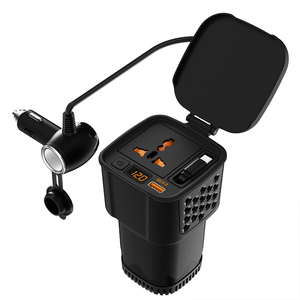
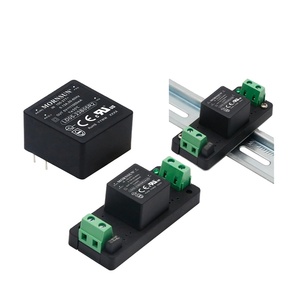
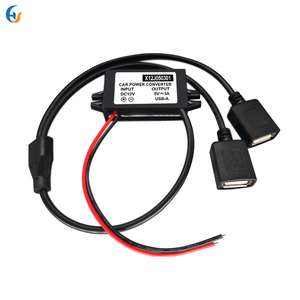
Every industrial power application demands tailored thermal, insulation, and mechanical envelopes. Whether designing high-power 40A DC/DC step-down buck modules with IP67 sealed aluminum housings for rugged transport fleets, or low-noise board-mount AC/DC converters (3W to 90W) for precision metrology instrumentation, structural reliability must be calculated prior to silicon manufacturing.
Our European-heritage engineering methodology enforces rigorous derating protocols. Active components, ceramic/electrolytic capacitors, and magnetic cores are rated to operate continuously under worst-case ambient conditions without exceeding 70% of maximum thermal junction temperatures.

Standard vs. Custom Power Systems Comparison Matrix
Determining whether to deploy standard off-the-shelf voltage regulators or initiate a tailored OEM development campaign depends heavily on certification mandates, mechanical footprints, and total cost of ownership (TCO).
| Evaluation Parameter | Standard Commercial Converters | Industrial Heavy-Duty Regulators | Custom Engineered Systems |
|---|---|---|---|
| Typical Input Window | ±10% Nominal VDC/VAC | Wide 2:1 / 4:1 Input Range | Ultra-Wide (e.g., 14.4 V to 154 VDC) |
| Galvanic Isolation | 1.5 kV DC | 3.0 kV AC / 4.2 kV DC | Up to 7.0 kV AC Reinforced Isolation |
| Thermal Envelope | -10°C to +50°C | -40°C to +70°C (EN 50155 OT4) | -50°C to +85°C Extreme Environmental |
| Protection Protocols | Basic OVP / OCP | Active Surge, OVP, OCP, OTP, Short | N+1 Hot-Swap Redundant Control |
| Compliance Target | CE / FCC Consumer | IEC 62368, IEC 61000 EMC | EN 50155, EN 45545-2 Fire/Smoke, EN 61373 |
Future Global Procurement Trends in Power Conversion (2026-2030)
As global supply chains place unprecedented emphasis on decarbonization, operational resilience, and energy efficiency, enterprise B2B buyers must align their procurement strategies with four key technology vectors:
1. Wide-Bandgap Semiconductor Integration
Adoption of Gallium Nitride (GaN) and Silicon Carbide (SiC) FETs enabling efficiency thresholds exceeding 96.5%, reducing passive cooling heat-sink volume dramatically.
2. Telemetry & IoT Cloud Supervision
Next-gen voltage regulators are evolving from passive hardware into connected nodes. Real-time RS485/CAN-Bus and cloud gateway reporting enable predictive failure analysis.
3. Bidirectional Energy Transfer
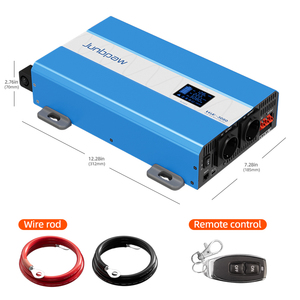
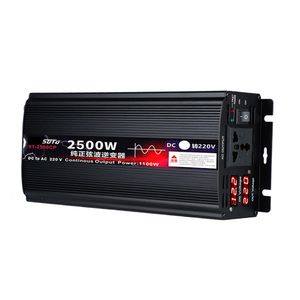
Inverters and chargers are transitioning to dynamic bidirectional topologies, supporting Vehicle-to-Grid (V2G) and localized battery energy storage systems (BESS).
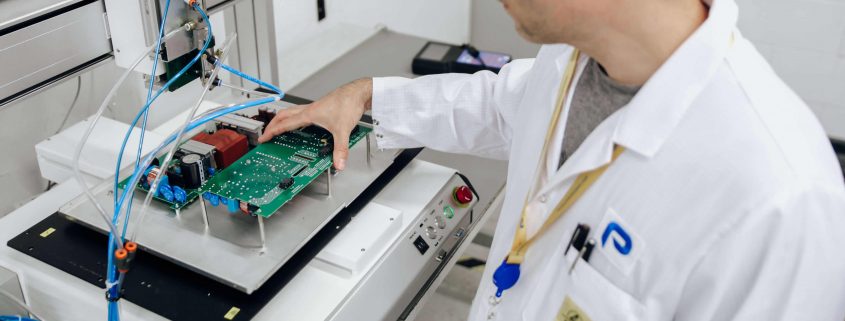
Enterprise Advantage: Why Direct Sourcing from China's Top Exporters Delivers Unrivaled ROI
Partnering with an established Chinese OEM/ODM exporter grants international buyers access to comprehensive manufacturing vertical integration. From high-frequency planar transformer winding to automated Surface Mount Technology (SMT) and full internal environmental stress screening (ESS), our facilities bridge competitive cost structures with uncompromising European engineering standards.
- In-House Test Laboratories: Comprehensive pre-compliance testing for EMC (surge, burst, radiated emissions), thermal cycling, and shock/vibration.
- Component Traceability: Complete BOM auditing and longevity management preventing unannounced component obsolescence over 15+ year operational lifespans.
- Customization Agility: Rapid prototyping schedules reducing custom project timelines from specification review to qualified samples down to 16-28 weeks.