China Top Bridge Rectifiers Suppliers & Exporter

Comprehensive Technical Engineering Guide, Industry Sourcing Matrix, & High-Reliability Power Conversion Systems (50W to 72kW)

Export-Grade Power Solutions

Featured Bridge Rectifiers & Power Conversion Units

Precision-engineered AC/DC conversion modules, pure sine wave inverters, high-power buck converters, and industrial power supplies engineered for extreme duty cycles.
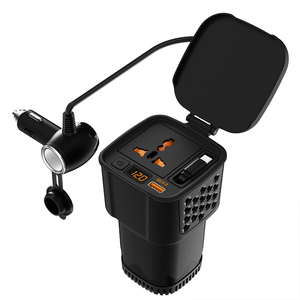
Car Laptop Charger Power Supply DC 12V to AC 220V 200W Converter Inverter

Car Laptop Charger Power Supply DC 12V to AC 220V 200W Continuous Cup Holder Converter

  • Continuous Power: 200W Peak
  • Input: DC 12V | Output: AC 220V
  • Compact Cup Holder Ergonomics
  • Integrated Universal AC Socket & USB
Solar Power RV Inverter 2kW 3kW 4kW Pure Sine Wave Emergency Converter

Solar Power RV Inverter 2kW/3kW/4kW Pure Sine Wave Emergency Converter

  • Output Power: 2000W / 3000W / 4000W
  • Pure Sine Wave (<3% THD)
  • Selectable 50Hz/60Hz Frequency
  • Rugged Marine & Off-Grid Design
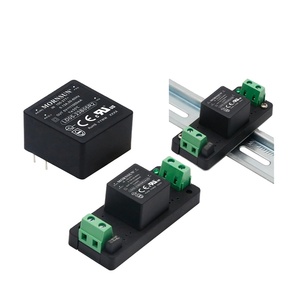
Board Mount AC DC Power Supply Converter Module 3W to 90W

Board Mount AC DC Power Supply Converter Module 3W–90W Series

  • Power Range: 3W up to 90W PCB Mount
  • High Efficiency Power Density
  • Low Ripple & Electromagnetic Noise
  • Industrial Temperature Tolerance
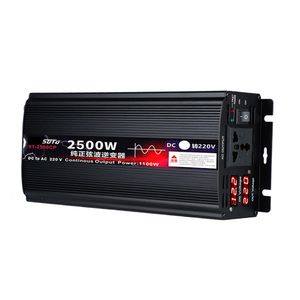
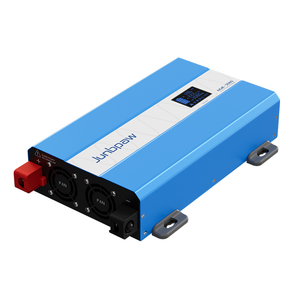
2500W Pure Sine Wave Solar Inverter Dual Voltage Display

12V/24V/48V/60V DC to AC 2500W Pure Sine Wave Solar Power Inverter

  • Multi-Input: 12V, 24V, 48V, 60V DC
  • Dual LCD Voltage & Status Display
  • Intelligent Thermal Fan Control
  • Comprehensive Overload Protection
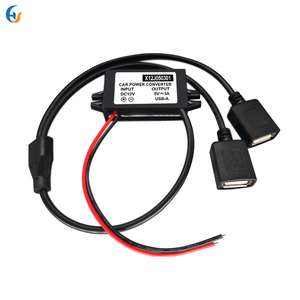
DC DC USB Power Converter Step Down Buck Module 12V 24V to 5V 3A

DC DC USB Converter 12V/24V to 5V 3A Step Down Buck Module Adapter

  • Input Window: 12V / 24V DC
  • Output: 5V DC @ 3A Continuous
  • Ultra-Compact Sealed Enclosure
  • High Conversion Efficiency (>92%)
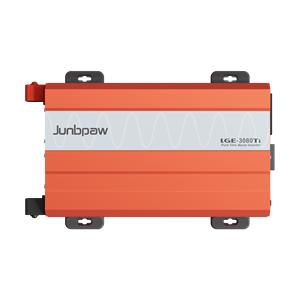
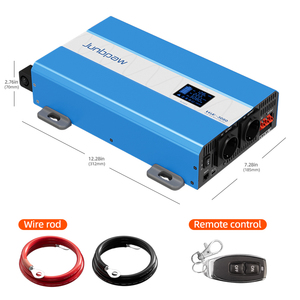
1KW 2KW 3KW Pure Sine Wave Inverter With Wireless Remote Control

1KW to 3KW Pure Sine Wave Inverter DC to AC with Wireless Remote

  • Scalable Platform: 1KW / 1.5KW / 2KW / 3KW
  • Input: 12V/24V/48V | Output: 100V–120V AC
  • Included Wireless Remote Control
  • Transient Surge Margin: 200%
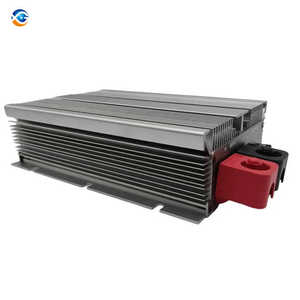
High Power 40A DC DC Converter IP67 Waterproof Aluminum Shell

High Power 40A DC/DC Converter 12V to 48V IP67 Waterproof Shell

  • Heavy-Duty Current Output: 40 Amperes
  • IP67 Fully Ingress Sealed Housing
  • Rugged Extruded Aluminum Heat Sink
  • Engineered for Trucks, Forklifts & EVs
Factory Wholesale 3kw Off-Grid Inverter 12V to 220V LCD Display

Factory Direct 3KW Off-Grid Power Inverter 12V to 220V LCD Display

  • Continuous Rating: 3000W Pure Sine Wave
  • Real-Time Multi-Metric LCD Monitor
  • Commercial Industrial Grade Topology
  • Optimized for High-Inductive Loads
Engineering White Paper

State-of-the-Art Bridge Rectifier Engineering & Sourcing

Evaluating semiconductor topologies, switching losses, thermal dissipation dynamics, and compliance protocols for industrial-grade AC to DC conversion.

The Technical Physics of High-Efficiency Rectification

A bridge rectifier converts alternating current (AC) into direct current (DC) using a four-diode closed-loop topology (or six-diode network for three-phase systems). In high-reliability industrial power supplies, selecting the proper rectification strategy—whether passive diode bridges, Schottky barrier rectifiers, or active synchronous MOSFET rectifiers—determines overall system power density, thermal headroom, and Mean Time Between Failures (MTBF).

Leading Chinese export suppliers have transitioned from legacy silicon-p-n junction diodes to advanced Silicon Carbide (SiC) and Synchronous Rectification (SR) switches. This shift slashes reverse recovery time ($t_{rr}$) down to near-zero nanoseconds, reducing switching losses by over 65% and driving total electrical conversion efficiencies above 96%.

Global Sourcing Criteria for Tier-1 Systems

Procurement teams targeting high-reliability OEM integration (railway rolling stock, energy storage, defense systems, and industrial automation) must evaluate Chinese exporters across four non-negotiable engineering vectors:

  • Thermal Junction Margin ($T_j$): Junction rating up to +175°C with direct copper bonding (DCB) substrate isolation.
  • Surge Non-Repetitive Forward Current ($I_{FSM}$): Capability to withstand 10ms transient spikes up to 300% nominal current.
  • Galvanic & Isolation Voltage: Dielectric breakdown tolerance exceeding 2,500V AC to 4,000V RMS.
  • Electromagnetic Compatibility (EMC): Compliance with EN 55032 Class B radiated/conducted emissions limits.
40+
Years R&D Mastery
1,000+
Custom OEM Designs
96.8%
Peak Conversion Efficiency
50W-72kW
Power Scale Range
100%
Full Burn-In Tested
Enterprise Core Competencies

Why Global Industry Leaders Partner With Our Supply Chain

Combining European design rigor with China’s advanced electronics manufacturing ecosystem. Every unit is engineered for long-duration operation under extreme thermal and mechanical stresses.

1. EN 50155 & Industrial Standards

Our standard platforms and custom bridge rectifiers adhere strictly to international rail and industrial standards, including EN 50155, EN 50121-3-2 (EMC), EN 45545-2 (Fire & Smoke Compliance), and IEC 61373 for shock and vibration resilience.

2. Planar Magnetics & Resonant Topologies

By integrating planar transformers and zero-voltage switching (ZVS) resonant power stages, our rectifiers achieve unmatched power density exceeding 45 W/in³ while eliminating physical thermal hot-spots across the PCB layout.

3. In-House Reliability Testing Laboratory

100% of our production batches undergo rigorous in-house validation: HALT/HASS stress testing, full thermal imaging beneath rated load, salt spray mist exposure for harsh environments, and automated 100% full-power burn-in cycles.

Engineering Selection Matrix

Bridge Rectifier & Converter Technology Comparison

A detailed trade-off matrix designed by power electronics specialists to guide procurement decision-making based on application parameters, thermal loss budgets, and total cost of ownership (TCO).

Topology Type Typical Efficiency Reverse Recovery ($t_{rr}$) Thermal Dissipation Needs Ideal Application Domain Cost Structure
Single-Phase Passive Bridge 88% – 92% Slow (1.5 – 3.0 µs) High (Large Aluminum Heatsink) Low-frequency mains, budget power adapters Standard / Low
Fast-Recovery Bridge Rectifier 91% – 94% Fast (150 – 500 ns) Moderate (Convection or Forced Air) Industrial AC/DC power supplies, welding Moderate
Schottky Barrier Bridge 93% – 95.5% Ultra-Fast (<10 ns) Low-Moderate (Low $V_F$ drop) High-frequency telecom switchgear, solar PV Mid-Tier Premium
SiC (Silicon Carbide) Active Rectifier 96% – 98.2% Near-Zero (<2 ns) Minimal (Minimal heatsink footprint) EV fast chargers, railway traction, aerospace High Reliability / High TCO Value
Synchronous MOSFET Active Bridge 97% – 98.8% N/A (Active Gate Control) Extremely Low (Conductive PCB trace cooling) Data center PSUs, high-end off-grid inverters Advanced Custom
Industry Intelligence

Future Sourcing & Procurement Trends (2025–2030)

Key technological evolutions shaping the international export market for bridge rectifiers, power converters, and industrial inverters.

1. Wide Bandgap (WBG) Semiconductor Dominance

The migration from traditional silicon (Si) to Silicon Carbide (SiC) and Gallium Nitride (GaN) substrates represents the most critical inflection point in high-power rectification. WBG semiconductors operate at switching speeds exceeding 500 kHz while enduring operating junction temperatures above 200°C. For procurement managers, sourcing SiC-integrated bridge rectifiers yields up to a 40% reduction in total enclosure volume due to scaled-down passive magnetics.

2. IoT-Enabled Telemetry & Condition Monitoring

Next-generation industrial power converters now incorporate embedded microcontrollers with Modbus RS485 or CANbus communication gateways. Real-time telemetry monitoring input AC voltage spikes, secondary DC ripple current, thermal junction stress, and capacitor degradation allows predictive maintenance algorithms to schedule servicing prior to field catastrophic failure.

3. Active Power Factor Correction (PFC) Integration

International energy efficiency regulations (such as EU Ecodesign Directive Lot 9 and US Energy Star specs) mandate strict power factor targets. Sourcing trends favor single-stage bridge rectifiers integrated with Interleaved Active PFC Circuits, pushing power factor metrics to >0.99 and total harmonic distortion (THD) down below 5%.

4. Modular Parallel Scaling & Hot-Swap Redundancy

Enterprise buyers are increasingly specifying modular shelf systems over monolithic power units. Modern rectifiers featuring active droop current sharing and hot-swappable N+1 redundancy enable facilities to scale capacity dynamically from 3kW up to 72kW without interrupting continuous mission-critical operational uptime.

R&D Innovation Roadmap

Advancements in Modular Power Conversion

How our engineering team addresses high-density power demands, harsh climatic envelopes, and extreme mechanical shock requirements.

01. Phase-I

Direct Copper Bonding (DCB) Packaging

Replacing conventional epoxy PCB substrates with Direct Copper Bonding on ceramic insulators ($Al_2O_3$ or $AlN$). This lowers internal thermal resistance ($\theta_{JC}$) down to <0.25 °C/W, enabling extreme heat evacuation directly through the chassis body.

02. Phase-II

Bidirectional Power Flow Topologies

Developing dual-active-bridge (DAB) matrix converters that enable seamless bidirectional energy transfer between AC grid connections, high-voltage battery banks, and DC traction buses for energy recovery applications.

03. Phase-III

IP67 High-Ingress Sealed Conduction

Fanless, fully potted aluminum enclosures designed for outdoor sub-zero and tropical conditions (-40°C to +85°C ambient). Complete immunity against salt spray fog, conductive dust particulates, and high-pressure jet washing.

Buyer & Technical Guidance

Frequently Asked Questions for B2B Sourcing

Answers to critical technical, quality control, compliance, and custom engineering inquiries raised by global procurement officers and design engineers.

How do I calculate the required forward surge current rating ($I_{FSM}$) for industrial bridge rectifiers?
The non-repetitive peak forward surge current ($I_{FSM}$) must be specified based on the maximum inrush current charging the downstream DC-link bulk electrolytic capacitors during cold-start power-up. We recommend selecting a bridge rectifier where the $I_{FSM}$ rating is at least 2.5 times the maximum calculated inrush peak current for a half-cycle (8.3ms at 60Hz or 10ms at 50Hz). For inductive motor loads or harsh grid environments, incorporating NTC thermistors or active soft-start relays further safeguards the diode bridge against localized junction burnout.
What is the practical difference between standard silicon, Schottky, and active synchronous rectifiers?
Standard silicon p-n diodes exhibit a forward voltage drop ($V_F$) of ~0.7V to 1.1V per diode, incurring substantial conduction losses at high current. Schottky rectifiers utilize a metal-semiconductor junction yielding a lower $V_F$ (~0.3V to 0.5V) and virtually zero reverse recovery time, making them ideal for high-frequency low-voltage conversion. Active synchronous rectifiers replace diodes with controlled low-$R_{DS(on)}$ MOSFETs or GaN switches, driving forward voltage drops down below 0.1V and achieving efficiencies up to 98.5%.
What compliance standards and quality certifications should be verified when importing power converters from China?
Essential certifications include ISO 9001 quality management systems, CE conformity, RoHS & REACH environmental compliance, and safety standards such as UL 62368-1 (IT & AV equipment) or IEC/EN 61010-1 (industrial control). For railway and transportation deployments, ensure documented test reports for EN 50155, EN 50121-3-2 (EMC immunity and emissions), and EN 45545-2 (fire behavior approval).
What lead times and NRE costs are typical for custom OEM power conversion projects?
For standard off-the-shelf platforms, order lead times generally range from 2 to 4 weeks. For fully custom engineered power supplies (custom PCB footprint, specialized magnetics, IP67 enclosure engineering), the technical prototype delivery cycle spans 12 to 20 weeks from initial specification sign-off. Non-Recurring Engineering (NRE) costs vary based on certification requirements, thermal modeling complexity, and preliminary tooling needs. Re-using qualified modular blocks significantly cuts both NRE expense and time-to-market.
How does your supply chain manage component obsolescence and long-term product availability?
Recognizing that industrial, defense, and railway asset lifecycles extend across 15 to 25 years, we maintain active component end-of-life (EOL) monitoring. We commit to a minimum 10-year active supply guarantee per program baseline, backed by Last-Time-Buy (LTB) notification protocols, form-fit-function (FFF) redesign capabilities, and certified repair/refurbishment services for long-term fleet continuity.
Direct Factory Engineering Access

Request Technical Specifications or Custom Quotations

Speak directly with our senior power electronics specialists. Submit your target voltage inputs, current profile, thermal envelope, and regulatory targets for an expedited engineering review.