Precision Power Measurement Solutions

China Top Current Transformers Factory & Suppliers

Industrial-Grade Instrument Transformers, Nanocrystalline Cores & Custom Power Conversion Components for Global Substation, Smart Grid & OEM Systems

Engineered Instrument Transformers & Power Components

Explore our standard and custom-manufactured current transformers, dry-type resin cast power units, and PCB-mount precision sensors built to IEC 61869-2 & IEEE C57.13 standards.
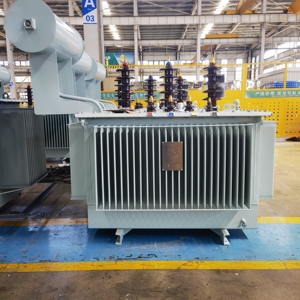
S22 Three Phase Oil Immersed Power Transformer
High Voltage Power

S22 Three Phase Oil Immersed Power Transformer 10kV 0.4kV 50Hz

  • Voltage Level: 10kV / 0.4kV Step-down
  • Frequency: 50Hz / 60Hz Universal
  • Loss Reduction: Ultra-low core loss design
  • Enclosure: Sealed oil-immersed corrugated tank
Send an Inquiry
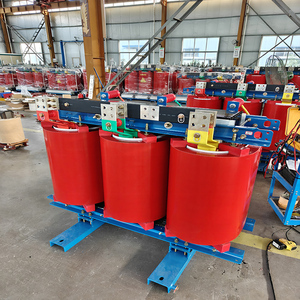
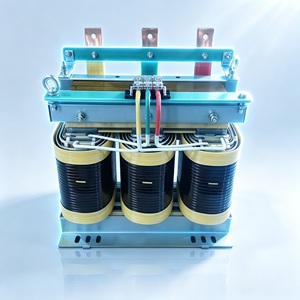
High Efficiency Nanocrystalline Core Transformer
Dry Type / Cast Resin

20 Years Factory High Efficiency Nanocrystalline Core Transformer

  • Core Material: High-permeability nanocrystalline
  • Insulation: Epoxy resin vacuum cast
  • Sensor Integration: Integrated current loop feedback
  • Application: Industrial distribution & drive power
Send an Inquiry
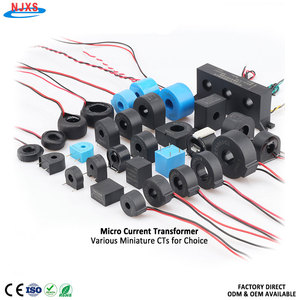
NJXSE CT Current Transformer Lead Wire PCB Mount
PCB Mount Precision

NJXSE Lead Wire CT Current Transformer 5A to 250A Pin Mount

  • Primary Current: 5A, 10A, 20A, 50A, 100A, 250A
  • Output Ratio: 2mA/2mA precision current output
  • Mounting: PCB pin mount / Flying leads option
  • Accuracy Class: 0.1 / 0.2S high linear range
Send an Inquiry
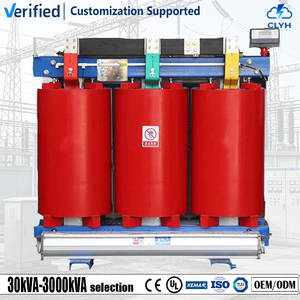
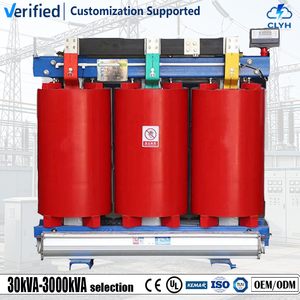
Three Phase Nanocrystalline Core SCBH11 Transformer
Energy Efficient SCBH11

Three Phase Nanocrystalline Core Cast Resin Dry Transformer SCBH11

  • Model Platform: SCBH11 High-efficiency dry type
  • Thermal Rating: Class F / Class H insulation
  • Environmental: Flame retardant & non-polluting
  • Smart Sensing: Optional built-in CT sensor loops
Send an Inquiry
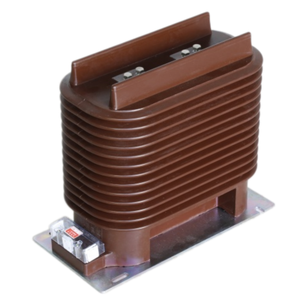
LZZBJ9-35 Indoor Epoxy Resin Cast Current Transformer
Medium Voltage Switchgear

LZZBJ9-35 Indoor Epoxy Resin Cast Current Transformer 0.2S/0.5S

  • Rated Voltage: Up to 40.5kV (KYN61-40.5 Switchgear)
  • Accuracy: 0.2S / 0.5S metering & 10P protection
  • Ratio Range: Custom turns ratio up to 3000/5A
  • Dynamic Thermal Current: Up to 40kA 1s short-time
Send an Inquiry
Low Voltage Split Core Current Furnace Transformer
Split Core / Industrial

Dry-Type Low Voltage 0.4kV Split Core Furnace Current Transformer

  • Structure: Openable split-core clamp design
  • Installation: Retrofit busbar without line cut
  • Application: Electric arc furnace & heavy busbar
  • Protection Enclosure: Wooden crate reinforced
Send an Inquiry
INNOOTEC High Frequency Current Transformer
High Frequency SMPS

PCB Mount High Frequency Current Transformer Screw & RF Coaxial

  • Frequency Response: 10kHz - 500kHz high bandwidth
  • Interfaces: Screw terminals + RF coaxial output
  • Application: SMPS inverter, welder & induction heat
  • Isolation: 4000V RMS primary to secondary
Send an Inquiry
Low-voltage Three-phase Isolation Dry-type Transformer
Low Voltage Isolation

5KVA to 30KVA Low-Voltage Three-Phase Isolation Dry Transformer

  • Power Capacity: 5KVA, 10KVA, 20KVA, 25KVA, 30KVA
  • Voltage Options: 0.8kV, 0.38kV, 0.22kV, 0.11kV
  • Winding Material: 99.99% Electrolytic Copper/Aluminium
  • Noise Rating: < 45dB quiet industrial operation
Send an Inquiry
20+
Years Manufacturing Excellence
0.2S
Precision Metering Accuracy
500k+
Annual Units Shipped
80+
Countries & Regions Exported
100%
Partial Discharge Testing

Industrial Whitepaper: Advanced Current Measurement & Sensor Technologies

In modern electrical distribution networks, medium-voltage switchgear installations, renewable microgrids, and switched-mode power supplies (SMPS), current transformers (CTs) serve as the fundamental sensing backbone. Accurate current measurement is crucial not only for revenue metering and tariff billing but also for high-speed differential protection, harmonic diagnostics, and thermal asset management.

As China's leading current transformer manufacturer and OEM exporter, our engineering facilities integrate advanced electromagnetic simulation (FEA), zero-phase displacement winding geometries, and ultra-low-loss core metallurgy. This technical guide outlines core physics, design selection frameworks, and procurement paradigms for global engineers and industrial sourcing executives.

Nanocrystalline Ribbon Cores

Delivering initial permeability ($\mu_i > 80,000$) up to 5 times higher than silicon steel, enabling Class 0.2S accuracy in minimal footprints with negligible phase error.

Epoxy Resin Vacuum Casting

Formulated APG (Automatic Pressure Gelation) resin systems ensure dielectric breakdown strength > 35kV/mm and partial discharge levels below 5pC at rated voltage.

High-Frequency Response

Optimized low-parasitic winding layouts for high-frequency switchgear and solar inverters supporting operating bandwidths up to 500kHz with coaxial signal coupling.

Electromagnetic Performance & Core Material Topology Comparison

Selecting the optimal current transformer requires balancing magnetic flux density, remanence, thermal withstand ratings, and frequency response. Below is a engineering matrix comparing core materials used in our China manufacturing plant:

Core Metallurgy Initial Permeability ($\mu_i$) Saturation Flux ($B_s$) Phase Shift Error Primary Application
Nanocrystalline Alloys 80,000 – 120,000 1.25 Tesla < 5 minutes Class 0.2S Revenue Metering & Smart Grid Sensors
Grain-Oriented Silicon Steel (CRGO) 1,500 – 5,000 2.03 Tesla 15 – 45 minutes 5P10 / 10P20 Protection & High-Power HV Distribution
Nickel-Iron Permalloy (80% Ni) 50,000 – 100,000 0.75 Tesla < 8 minutes Precision Laboratory CTs & Residual CT Leakage Sensors
High-Frequency MnZn Ferrite 2,000 – 10,000 0.45 Tesla Frequency Dependent SMPS Inverters, Welding Drives & RF Current Monitoring

For high-accuracy metering applications (such as Class 0.2S according to IEC 61869-2), nanocrystalline cores eliminate the non-linear magnetizing current errors inherent in standard silicon steel cores, preserving linear transformation down to 1% of rated primary current.

Future Global Procurement Trends for Current Transformers (2025–2030)

The global power transmission and distribution (T&D) equipment market is undergoing a seismic shift driven by energy transition initiatives, grid digitization, and electrification of industrial heating. Industrial buyers and EPC contractors sourcing current transformers from China must align with several dominant trends:

1. Integration of Smart Grids and Digital Substation Protocols (IEC 61850)

Legacy 5A or 1A secondary analog current signals are increasingly being converted at the primary sensor point. Electronic Current Transformers (ECTs) and low-power standalone sensors (LPITs) outputting 225mV or digital IEC 61850-9-2 Process Bus Sampled Values (SV) are drastically reducing copper cabling costs and eliminating open-circuit high-voltage hazards in substations.

2. Miniaturization and High-Density PCB-Mount Sensor Adoption

With the rise of localized EV fast-charging stations, decentralized solar microinverters, and smart building energy management systems (BEMS), procurement demand has shifted toward ultra-compact PCB-mount current transformers. Equipment designers demand pin-compatible, epoxy-encapsulated CTs with primary current capability up to 250A in footprints under 30mm.

3. Retrofit-Friendly Split-Core Engineering

Upgrading existing industrial plants without shutting down active busbars requires split-core current transformer architectures. Modern split-core designs utilize precision-machined core joints with zero-gap spring tensioning mechanisms, achieving Class 0.5 metering accuracy while enabling non-intrusive installation in furnace power feeds and data center distribution units.

Technology & Manufacturing Development Vectors in China

China's transformer manufacturing ecosystem has evolved from high-volume assembly to high-precision, automated R&D production lines. Key developmental breakthroughs incorporated into our factory operations include:

  1. Automated Precision Winding & Layer Insulation: Multi-axis CNC toroid winding machinery ensures absolute uniform turn spacing, minimizing stray capacitance and magnetic leakage fields.
  2. APG Vacuum Pressure Impregnation (VPI): Utilizing automated pressure gelation casting for epoxy resin components (like the LZZBJ9-35 indoor CT series) guarantees void-free insulation under extreme thermal cycling (-40°C to +120°C).
  3. Laser-Annealed Core Processing: In-house magnetic annealing furnaces under hydrogen atmosphere tailor the B-H hysteresis loop of nanocrystalline ribbons to produce flat-loop ($F$-loop) or square-loop ($R$-loop) core properties based on customer fault current requirements.

Why Partner With Our China Manufacturing Facility?

Combining 20+ years of electromagnetic engineering experience with world-class quality verification systems.

100% Full-Routine Test Guarantee

Every single current transformer undergoes automated turns ratio test, phase displacement check, power-frequency withstand voltage test, and partial discharge calibration before export packaging.

Full Custom OEM/ODM Engineering

Custom turns ratios, multi-ratio tapped secondaries, special mechanical envelopes, lead wire lengths, and custom pin configurations designed in-house within 5-7 business days.

International Certification Compliance

Manufactured strictly according to ISO 9001:2015, ISO 14001, CE, RoHS, and IEC 61869-1/2 guidelines. Complete Type Test Reports (KEMA/CNAS accredited) available upon contract request.

Global Logistics & Supply Chain Resilience

Robust export packaging including seaworthy wooden cases and protective foam trays. Efficient customs clearance handling for Europe, North America, Southeast Asia, and Middle East ports.

Frequently Asked Questions (Procurement & Technical FAQ)

Direct answers to common technical queries from electrical engineers and OEM purchasing teams.

What is the difference between metering class (0.2S, 0.5) and protection class (5P10, 10P20) CTs?
Metering current transformers (e.g., Class 0.2, 0.2S, 0.5) are engineered for high precision near rated current (1% to 120% of rated $I_n$) and are designed to saturate at lower overload currents to protect sensitive connected electricity meters. Protection class CTs (e.g., 5P10, 10P20) maintain linear ratio performance during heavy fault conditions (up to 10 or 20 times the rated current) so protective relays can accurately trip circuit breakers during short-circuit events.
Why choose Nanocrystalline cores over traditional Grain-Oriented Silicon Steel (CRGO)?
Nanocrystalline ribbon alloys feature magnetic permeability up to 100,000—dramatically higher than CRGO steel (~4,000). This enables extremely small phase displacement errors (less than 5 minutes) and allows current transformers to meet Class 0.2S standards with significantly reduced core weight and dimension, making them ideal for compact smart meters and high-density switchgear.
How do I calculate the correct secondary burden rating (VA) for my current transformer?
The total secondary burden is the sum of the power consumption of connected meters/relays (in VA) plus the electrical resistance losses of the secondary interconnecting cables ($I^2 \cdot R_{cable}$). Selecting a CT burden rating that closely matches the actual burden is vital: operating a CT far below its rated VA can increase measurement ratio errors, while exceeding rated VA causes saturation.
What are the typical sample lead times and mass production turnaround times?
Standard catalog CT models and samples are dispatched within 3 to 5 business days. Custom engineered units (requiring specific mechanical molds, custom turns ratios, or special insulation resins) take approximately 7 to 12 days for prototype delivery. Mass production orders (5,000+ units) are typically completed in 2 to 3 weeks.
Can your factory customize current transformers for harsh outdoor or high-altitude environments?
Yes. We offer specialized outdoor epoxy cast formulations (UV-stabilized cycloaliphatic resin) and sealed stainless-steel/corrugated oil tanks rated up to IP67. For high-altitude installations (>2000 meters above sea level), we customize creepage distances and insulation clearance factors in accordance with IEC standards.
Why is open-circuit protection critical for current transformers, and how do you mitigate it?
Operating a conventional current transformer with an open secondary circuit causes all primary current to act as magnetizing current, inducing extremely high voltage spikes across the secondary terminals that pose severe electrical shock hazards and insulation breakdown. We provide integrated over-voltage protection diodes or secondary shorting blocks on specific precision models upon request.

Need Custom Current Transformers or Bulk Factory Pricing?

Consult with our engineering team today to review single-line diagrams, request customized technical drawings, or receive competitive OEM pricing.