
Engineered to rigorous international standards (EN 50155, IEC 62109, UL 1741), our premium power conversion platforms deliver peak efficiency, sub-millisecond grid response, and robust LiFePO4 battery integration for global distribution.
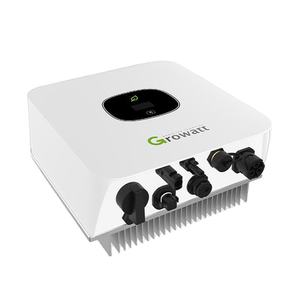
European & American version compatible. Features ultra-wide DC input, factory warranty, and high-frequency MPPT for residential rooftop efficiency.
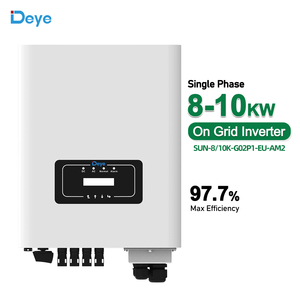
Deye series on-grid power inverter equipped with intelligent backflow limiter, anti-islanding protection, and dual-MPPT wind/solar tracking.
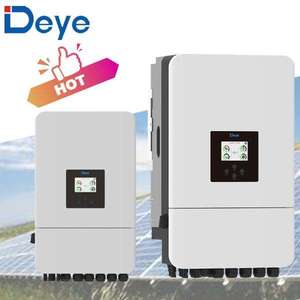
Split-type 220V/230V architecture with CAN bus communication, low voltage battery coupling, and dynamic peak shaving capability.
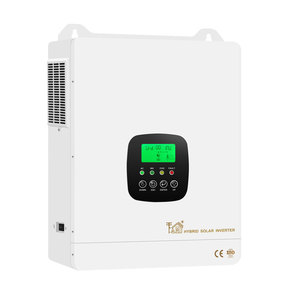
Pure sine wave wall-mounted residential power unit integrated with 300Ah energy storage, anti-backflow smart control, and CAN communication.
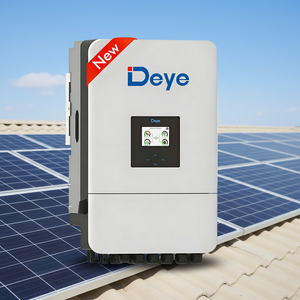
Optimized for European low-voltage home battery networks. Supports up to 16 units in parallel with full remote monitoring diagnostics.
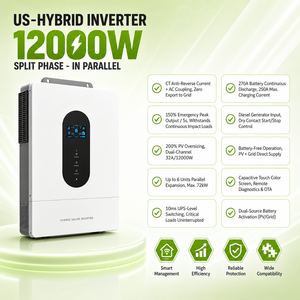
Customized for US residential rooftops. Heavy-duty pure sine wave output with high-voltage MPPT efficiency exceeding 98.5%.
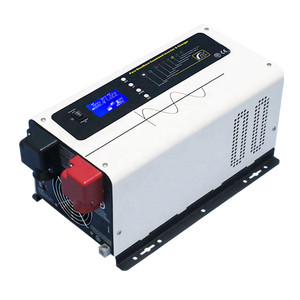
Multi-voltage off-grid power conversion platform designed for extreme ambient temperatures, remote telecom sites, and emergency back-up.
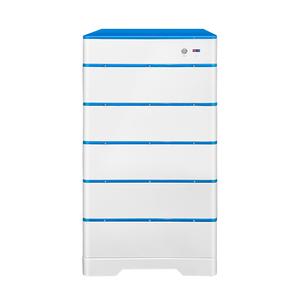
Modular stackable energy storage system with integrated CAN bus control, dual MPPT solar charger, and zero-transfer time grid switching.
As global decarbonization mandates accelerate, B2B procurement directors and utility project developers are shifting from standard hardware purchasing toward holistic, long-lifecycle energy architecture evaluation. China’s manufacturing ecosystem for grid-connected inverters has evolved from cost-driven assembly to technological leadership in high-density power electronics, wide-bandgap semiconductor integration, and grid-supportive algorithms.
Transitioning from legacy Silicon IGBTs to Silicon Carbide (SiC) and Gallium Nitride (GaN) MOSFETs elevates switching frequencies beyond 100 kHz. This reduces inductive component volume by 40% while pushing CEC efficiency past 98.5%.
Modern grid compliance requires inverters to behave as synthetic voltage sources rather than pure current injectors. Grid-forming topologies deliver virtual inertia and black-start capability to stabilize microgrids with high renewable penetration.
Procurement orders increasingly demand dual-protocol native integration supporting CAN 2.0B and RS485 Modbus to seamlessly interoperate with tier-1 LiFePO4 Battery Management Systems (BMS) without third-party gateways.
Understanding the underlying power topology evolution allows EPCs and importers to de-risk 20-year infrastructure assets against dynamic grid codes and harsh environmental stress.
Conventional wire-wound transformers are being rapidly superseded by planar magnetic transformers and integrated planar inductors. By embedding copper coils within multi-layer printed circuit boards (PCBs), thermal dissipation is optimized, parasitic leakage inductance is minimized, and mechanical profile height is reduced by over 50%.
Complex commercial rooftops experience dynamic shading from HVAC units, structural parapets, and cloud passages. Modern Chinese grid inverters integrate neural-network-enhanced Maximum Power Point Tracking (MPPT) algorithms that scan the full I-V curve within milliseconds, preventing local maxima trap errors and capturing up to 6% more annual yield.
Grid operators in Europe, North America, and Australia impose strict feed-in tariffs or absolute zero-export constraints. Next-gen inverters incorporate internal high-speed digital signal processors (DSPs) paired with external split-core current transformers (CTs) to execute closed-loop power adjustment in under 20 milliseconds.
Achieving tier-1 reliability requires rigorous manufacturing controls, environmental stress screening, and compliance with severe industrial specifications such as EN 50155, EN 45545-2 (Fire & Smoke), IEC 61000 (EMC), and EN 50124 (Insulation Coordination).









Detailed technical insights regarding grid-tie compliance, harmonic suppression, battery communication, and warranty terms.
Our manufacturing platforms cover single-phase 220V/230V/240V units from 1 kW to 10 kW, split-phase 120V/240V US models from 6 kW to 12 kW, and three-phase 380V/400V commercial units up to 125 kW. Parallel rack architectures allow system expansion up to 72 kW for residential and microgrid storage installations.
All exported inverter models are certified against international safety standards including IEC/EN 62109-1/-2 for solar safety, EN 50549-1 / VDE-AR-N 4105 for European grid connection, UL 1741 SA / IEEE 1547-2018 for North America, and CEI 0-21 for Italy. Dynamic frequency control and anti-islanding mechanisms are verified in certified laboratories.
The integrated smart limiter reads instantaneous building power consumption via external current transformers (CTs) or an RS485 energy meter. The internal microsecond DSP continuously throttle AC output to ensure solar power matching household consumption perfectly, avoiding any unauthorized power export to the grid operator.
A standard OEM customization program ranges from 16 to 28 weeks from initial specification sign-off to qualified prototype production. By utilizing pre-certified building blocks (such as planar transformers and digital resonant controllers), NRE costs and time-to-market are significantly minimized.
Standard factory warranty terms cover 5 to 10 years, with optional extension up to 15 years for utility-grade projects. Key critical components—such as industrial-grade film capacitors and SiC MOSFETs—are rated for design lifetimes exceeding 20 years under MTBF calculations adhering to Telcordia SR-332 standards.
Connect directly with our senior power conversion engineering team to obtain technical specifications, factory test reports, and wholesale OEM pricing for high-reliability grid-tied inverters.
Get Catalog