
Explore our engineered line of high-efficiency DC/DC converters, pure sine wave inverters, and modular AC/DC power supply platforms manufactured under strict ISO 9001 and industrial safety protocols.
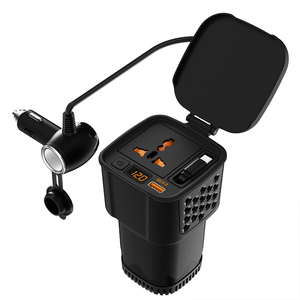
Compact in-vehicle power converter features universal socket layout, smart thermal dissipation, continuous 200W pure delivery, and multi-protocol safety protection for mobile electronics.
Inquire Now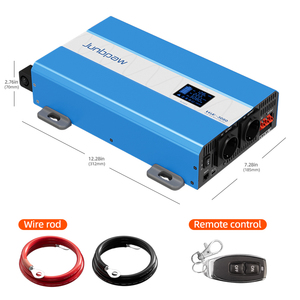
Heavy-duty 50Hz/60Hz dual frequency switchable emergency inverter designed for marine, RV, and off-grid mobile operations with high surge overload capacity.
Inquire Now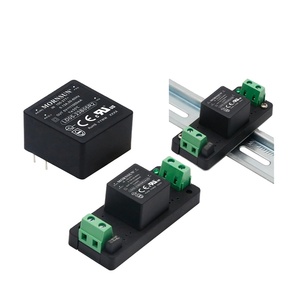
Ultra-compact PCB board mount AC/DC converters engineered for embedded controls, IoT gateways, and precision industrial automation panels requiring low standby power.
Inquire Now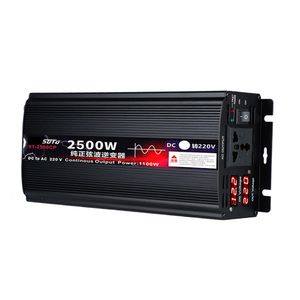
High-efficiency solar power converter featuring real-time dual voltage LCD monitoring, low THD sine output, and aluminum-alloy heat dissipation chassis.
Inquire Now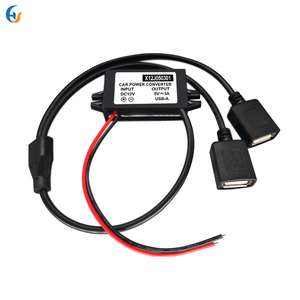
Ruggedized synchronous buck module providing stable 5V DC output with integrated USB pinout, waterproof epoxy potting, and short-circuit auto-recovery.
Inquire Now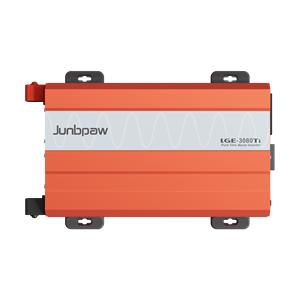
Multi-voltage DC 12V/24V/48V to AC 100V-120V power converter with intelligent wireless remote status management for emergency power equipment.
Inquire Now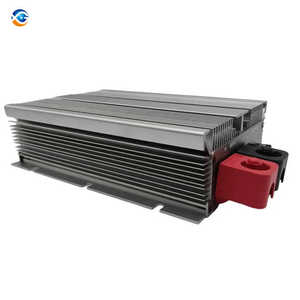
Industrial grade 12V to 48V voltage step converter encased in an IP67 sealed extruded aluminum shell engineered for trucks, forklifts, and harsh environments.
Inquire Now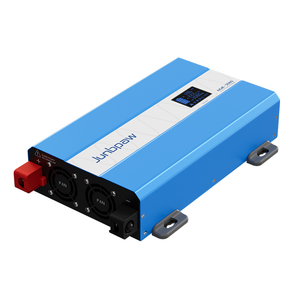
High-output 12V to 220V power converter optimized for residential back-up energy systems, incorporating smart LCD diagnostics and peak power management.
Inquire NowIn modern high-performance power electronics, the demand for compact, ultra-reliable, and highly efficient frequency conversion has driven a fundamental shift away from traditional two-stage AC-DC-AC conversion systems. As a premier China wholesale matrix converters supplier and exporter, our engineering division delivers advanced direct power conversion systems designed to overcome the physical limitations of legacy Intermediate DC-Link Voltage Source Inverters (VSIs).
Traditional frequency converters require a diode or active bridge rectifier to establish a intermediate DC voltage rail, followed by a large electrolytic capacitor bank for energy storage, and finally an inverter stage. This structural dependency introduces critical failure points: electrolytic capacitors degrade under high ambient temperatures, exhibit elevated Equivalent Series Resistance (ESR) over operational hours, and impose substantial volume penalties.
The Matrix Converter (MC) topology completely eliminates the intermediate DC energy storage stage. By directly modulating the AC input waveform through high-speed Silicon Carbide (SiC) MOSFETs or IGBT bidirectional switches, matrix systems achieve direct AC to AC frequency and voltage conversion within a single silicon layer. This topological simplification yields exceptional power density improvements (up to 300% increase in kW/L volumetric efficiency) and elevates Mean Time Between Failures (MTBF) beyond 150,000 operational hours in harsh industrial and railway environments.
Achieving stable output voltages and sinusoidal line currents without an intermediate energy reservoir requires sophisticated modulation algorithms executed on high-speed Digital Signal Processors (DSPs) or FPGA arrays. Our enterprise matrix switch architectures leverage advanced Space Vector Modulation (SVM) combined with Venturini direct control algorithms:
The duty cycles of the nine bidirectional switches are recalculated continuously within microsecond control loops to satisfy two fundamental physical constraints: avoiding short-circuiting the input voltage phases and ensuring continuous output load current flow. Under Venturini's rigorous mathematical framework, the maximum voltage transfer ratio of a direct matrix converter is theoretically capped at 86.6% ($\frac{\sqrt{3}}{2}$) of the input voltage when employing third-harmonic injection techniques without altering phase angles.
For demanding heavy-industrial drives, crane hoists, elevator traction systems, and railway auxiliary power units, kinetic energy regeneration during braking maneuvers presents a significant design challenge. In standard inverters, regenerative energy must be dumped into massive resistor banks as heat or passed through expensive active front-end (AFE) rectifiers.
Matrix converters possess inherent four-quadrant bidirectional power flow capability. Regenerative electrical energy from decelerating motor loads flows seamlessly backward through the matrix switch array directly onto the grid with near-zero phase displacement. Furthermore, the high switching frequencies enabled by SiC devices reduce Input and Output Total Harmonic Distortion (THD) below 3%, fulfilling stringent IEEE 519 and EN 50121-3-2 electromagnetic compatibility compliance metrics without demanding bulky external passive filtering.
As global original equipment manufacturers (OEMs), systems integrators, and industrial purchasing directors restructure their supply chains for maximum resilience and decarbonization, the market for matrix conversion systems and specialized industrial power supplies is undergoing a rapid evolution. Understanding these procurement macro-trends is essential for technical buyers negotiating long-term wholesale supply contracts with Chinese exporters.
B2B procurement teams are increasingly prioritizing power converters built upon Silicon Carbide (SiC) MOSFET and Gallium Nitride (GaN) HEMT switch topologies over silicon-based IGBT legacy platforms. SiC-based matrix switches permit switching frequencies exceeding 100 kHz while cutting switching losses by more than 60%. For international buyers, sourcing SiC-native matrix systems dramatically lowers total lifecycle operating costs through reduced cabinet cooling footprints and reduced structural weight in mobile applications.
Developing fully custom industrial power conversion hardware carries significant Non-Recurring Engineering (NRE) costs and prolonged qualification timelines. To mitigate this commercial risk, modern sourcing strategies favor suppliers who maintain pre-qualified, standardized power module building blocks (ranging from 50W PCB boards up to 72kW high-power rack systems). By combining standard qualified planar transformers and standardized matrix control cards, engineering teams de-risk custom deployments, shortening sample delivery from 52 weeks down to 16–28 weeks.
Industrial machinery, defense platforms, and railway rolling stock operate on multi-decade service cycles (often 20 to 30 years). Procurement managers now enforce strict supply longevity clauses, component lifecycle tracking, and Form-Fit-Function (FFF) replacement guarantees. Tier-1 China exporters must demonstrate comprehensive component last-time-buy (LTB) protocols, backwards-compatible engineering workflows, and sustained spare-part availability.
To maintain a competitive edge in semantic search evaluation and technical performance, our R&D engineering centers continuously push the boundaries of power electronics density and digital telemetry. The future of industrial direct power conversion centers around three major technical vectors:
Currently, bidirectional matrix switches are realized by connecting two discrete MOSFETs or IGBTs back-to-back with reverse anti-parallel diodes. The industry roadmap is actively moving toward true single-chip monolithic bidirectional SiC devices. Monolithic integration cuts switch footprint in half, lowers stray gate inductance, and eliminates complex multi-chip wire bonding, enabling unprecedented volumetric power densities above 15 kW/L.
Static power supplies are transforming into intelligent edge-nodes within smart factory ecosystems. Advanced matrix power converters now integrate industrial communication gateways (MODBUS, CANopen, Ethernet/IP) and cloud telemetry modules. By capturing real-time high-frequency telemetry—such as switch junction temperature estimates, line voltage imbalance, dynamic ripple stress, and thermal cycle counts—predictive AI models can alert maintenance teams to potential field issues months before functional failure occurs.
As microgrids integrate higher concentrations of wind, solar, and battery storage, matrix converters are evolving from grid-following devices into grid-forming assets. Advanced direct AC-AC matrix converters can synthesize stable voltage vectors directly from variable-frequency wind turbine generators or micro-hydro turbines, delivering clean 50Hz/60Hz voltage rails to local industrial loads without intermediate high-voltage DC conversion stages.
With over 40 years of accumulated engineering expertise and more than 1,000 custom power designs delivered across 5 continents, our facility stands as a premier manufacturing powerhouse in China. We bridge the gap between high-volume manufacturing efficiency and elite European-grade engineering compliance.
Our state-of-the-art in-house qualification laboratory is fully equipped with EMC anechoic chambers, multi-axis climatic thermal chambers (-40°C to +85°C), and electrodynamic shock and vibration test benches compliance-certified against EN 61373 and IEC 61000 standards.
We specialize in planar transformer winding design, three-phase resonant power stages, and high-density magnetic integration. Our custom planar designs optimize thermal dissipation while maintaining tight leakage inductance control for maximum efficiency.
Every power system manufactured in our facilities strictly complies with international standard frameworks, including EN 50155 (Railway Rolling Stock), EN 45545-2 (Fire and Smoke Safety), IEC 61010 (Safety for Measurement/Control Equipment), and ISO 9001 quality management systems.
Get authoritative answers to the most common technical and commercial questions surrounding wholesale matrix converters, custom modifications, and OEM exporter logistics.
Need a customized matrix switch architecture, specialized railway DC/DC converter, or a bulk wholesale quotation? Contact our engineering team directly to evaluate your electrical input/output parameters, thermal constraints, and compliance requirements.
Inquire Now