China Wholesale Microgrid Systems Manufacturers & Exporters

Industrial-Grade Energy Storage, Hybrid Inverters & Containerized BESS for Global Commercial, Agricultural & Island Power Grids

Enterprise Hardware Catalogue

Featured Commercial & Industrial Microgrid Systems

Tier-1 certified energy storage containers, hybrid inverters, and intelligent power control systems designed for extreme climate resilience and grid stability.
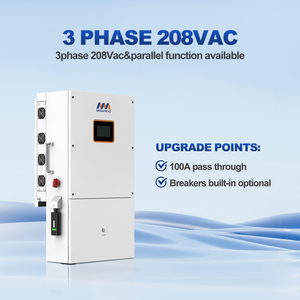
Megarevo US Version R10KLNA R12KLNA Hybrid Solar Inverter

Megarevo US Version R10KLNA R12KLNA Hybrid Solar Inverter 10KW 12KW Three Phase 120V 240V

Send an Inquiry
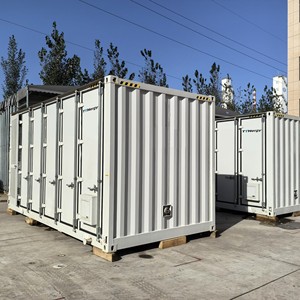
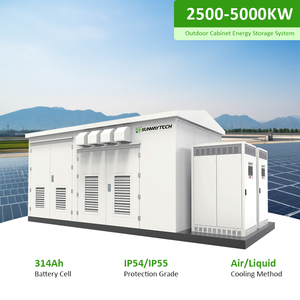
1MW 2MW 2.5MW 3MW 5MW Solar Battery Container System

1MW 2MW 2.5MW 3MW 5MW Solar Battery Container System For Farms Agricultural Sites And Remote Microgrids

Send an Inquiry
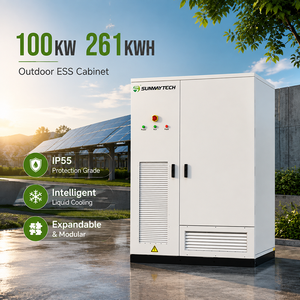
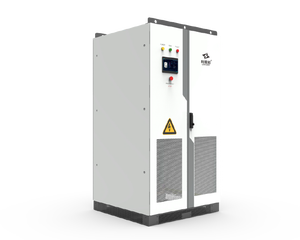
ATESS 100kW 261kWh Hybrid Storage System

Remote Microgrid and Island Power Stability Achieved by ATESS 100kW 261kWh Hybrid Storage System

Send an Inquiry
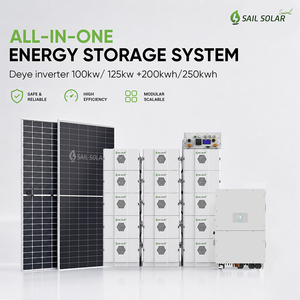
Deye 100kw 125kw Commercial Microgrid Solar Energy Storage System

Deye 100kw 125kw with High Voltage Battery 200kwh 250kwh Commercial Microgrid Solar Energy Storage System

Send an Inquiry
Outdoor All in One Solar Battery Energy Storage System BESS

Outdoor All in One 75kWh 150kWh 200kWh 300kWh Solar Battery Energy Storage System Microgrid BESS

Send an Inquiry
Microgrid Commercial LiFePO4 Energy Storage System Weatherproof

Microgrid Commercial LiFePO4 Energy Storage System Weatherproof for On/Off Grid Power Outage Protection

Send an Inquiry
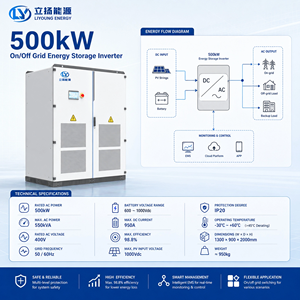
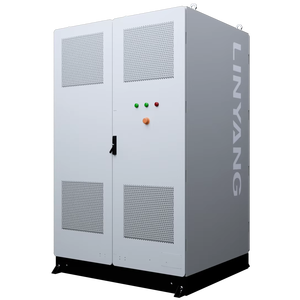
125KW/250KW Hybrid Microgrid Inverter System

125KW/250KW Hybrid Microgrid Inverter System AC Solar Energy Storage Three Phase On/Off Grid LiFePO4

Send an Inquiry
EGF-Hub LiFePO4 Smart Microgrid Control System 300kW

EGF-Hub LiFePO4 Smart Microgrid Control System 300kW On/Off Grid Air Cooling Industrial Architecture

Send an Inquiry
40+
Years Power Electronics Mastery
1,000+
Custom Microgrid Projects Engineered
99.4%
Converter Efficiency Peak Rating
50+
Countries Global Export Network
ISO/EN
Fully Certified Test Lab Compliance
Technical Whitepaper & Sourcing Guide

Engineering Next-Generation Microgrid Systems: The Wholesale Procurement & Architecture Blueprint

As global power grids face unprecedented strain from renewable penetration, extreme climate events, and industrial electrification, decentralized Microgrid Energy Storage Systems (BESS) have evolved from backup luxuries into critical infrastructure assets. For EPC contractors, utility developers, commercial facility managers, and wholesale importers sourcing equipment from China, understanding the convergence of grid-forming inversion, thermal stability, and battery chemistry management is essential for long-term project bankability.

Grid-Forming VSG Control

Advanced power conversion units act as Virtual Synchronous Generators (VSG), supplying real inertia, synthetic frequency stabilization, and black-start capabilities during full blackout conditions.

Tier-1 LiFePO4 Density

Utilizing high-cycle prismatic LFP cells with automated aerosol fire suppression, active liquid cooling thermal equalization, and integrated 3-tier BMS safeguards.

Turnkey Containerization

Pre-engineered 20ft/40ft ISO modular containers integrated with PCS, HVAC, lightning protection, and Modbus/DNP3 industrial communication gateways.

1. Technological Evolution of Microgrid Architecture

The standard microgrid has transitioned from simple Grid-Following (GFL) topology to autonomous Grid-Forming (GFM) architecture. GFL systems rely on a rigid external voltage reference from a central utility grid; should the utility fail, GFL inverters trip immediately. Conversely, modern Chinese OEM microgrid exporters—such as those producing the 100kW to 5MW systems showcased above—integrate GFM technology capable of establishing voltage amplitude and phase angle independently.

This paradigm shift is enabled by high-speed Digital Signal Processors (DSP), SiC (Silicon Carbide) semiconductors, and zero-voltage switching (ZVS) resonant power topologies. By managing localized droop control (P/f and Q/V), multi-megawatt battery systems can operate in parallel without control communication latency, allowing seamless islanding mode transition in under 10 milliseconds.

2. Sourcing & Procurement Trends for Wholesale Buyers

When purchasing microgrids wholesale from Chinese OEM/ODM suppliers, overseas engineering teams are shifting away from piecemeal component procurement toward "All-in-One" integrated outdoor enclosures and containerized BESS. This trend reduces field commissioning errors by up to 70% and lowers overall Balance of System (BOS) capital expenditure.

Key procurement criteria include:

  • Cell-to-Container Thermal Variance: Ensuring liquid-cooled systems maintain internal cell-to-cell delta T below 3°C, extending battery lifetime past 6,000 cycles at 80% DoD.
  • High Voltage DC Bus Efficiency: Transitioning from 400V DC architectures to 1000V–1500V DC systems, reducing copper losses, enabling slimmer cable cross-sections, and maximizing PCS efficiency up to 98.8%.
  • Dual-Stage Galvanic Isolation: Protecting sensitive control systems from high-voltage DC faults, atmospheric lightning surges, and dynamic grid harmonic distortion (THD < 2%).

Manufacturing & Reliability Standards: The Manufacturer Advantage

With over 40 years of power conversion engineering expertise and more than 1,000 customized power solutions engineered worldwide, our manufacturing partners adhere to strict European and International quality frameworks. Every microgrid cabinet and battery container undergoes stringent internal testing:

  • Environmental & Climatic Testing: Validated against harsh thermal envelopes (-30°C to +55°C), high humidity, and marine-grade corrosion environments (C5 anti-corrosion rating).
  • Vibration & Mechanical Resilience: Engineered in accordance with EN 61373 and IEC 60068 standards for rugged transport and seismic shock survival.
  • Electromagnetic Compatibility (EMC): In-house lab compliance following EN 61000-6-2/4 industrial EMC guidelines to prevent operational signal disruption.
  • 20-Year Lifecycle & Obsolescence Management: Comprehensive component lifecycle tracking, ensuring guaranteed spare parts availability, remote firmware updates, and retrofit support over multi-decadal operating terms.
Strategic Sourcing Insights

Microgrid Procurement & Technical FAQ

Answers to complex engineering, international compliance, and wholesale procurement questions commonly raised by B2B importers.

What is the difference between Grid-Following and Grid-Forming microgrid inverters?
Grid-Following (GFL) inverters require a stable existing utility grid to sync their AC output voltage and frequency. If the main grid goes down, GFL inverters automatically trip. Grid-Forming (GFM) inverters act as independent voltage sources, using droop control and virtual synchronous generator algorithms to establish voltage and frequency autonomously, allowing islanded operation and emergency black-start capabilities.
What power and energy capacity range do your containerized BESS cover?
Our wholesale portfolio spans decentralized 10kW to 125kW commercial hybrid systems up to 1MW, 2MW, 3MW, and 5MW containerized battery systems for utility and agricultural applications. Modular rack architectures allow parallel coupling to reach multi-gigawatt-hour project scales with integrated master EMS control.
Which safety and electrical compliance standards do these systems meet for export?
Our exported microgrid hardware is manufactured to meet rigorous international standards, including IEC 62477-1 (safety for power electronic converters), IEC 62619 (safety for industrial LFP cells), IEEE 1547 / UL 1741 SA (grid interconnection and smart inverter capabilities), CE certification, UN38.3 transport safety, and IP55/IP65 ingress protection ratings.
How do liquid cooling and air cooling compare in commercial BESS applications?
Air cooling is highly cost-effective and suitable for smaller, low C-rate commercial systems (0.5C or below) in mild climates. Liquid cooling provides superior thermal management, keeping temperature variations between battery cells below 3°C even under high C-rate charge/discharge cycles and hot ambient environments (up to 55°C). Liquid cooling increases battery life expectancy by up to 20% and reduces system footprint by 35%.
What is the expected lead time for custom wholesale OEM microgrid manufacturing?
Standard pre-engineered hybrid inverters and cabinet systems are stocked for immediate dispatch (1 to 2 weeks). Fully customized megawatt-scale containerized BESS projects—including custom planar magnetics, specific transformer integration, and tailored EMS software configurations—typically require 12 to 18 weeks from engineering approval through Factory Acceptance Testing (FAT).
Do you offer smart IoT monitoring and remote maintenance features?
Yes. All systems feature integrated IoT communication modules supporting RS485, Modbus RTU/TCP, CAN bus, and Ethernet interfaces. Optional cloud monitoring dashboards provide real-time telemetry on State of Charge (SoC), State of Health (SoH), cell temperatures, alarm management, and predictive maintenance diagnostics accessible globally via web or mobile interfaces.

Engineered Solutions for Your Microgrid Projects

Need customized technical datasheets, full system sizing calculation, or wholesale container pricing? Speak directly with our senior power conversion engineering team today.