
Explore our core power conversion architectures engineered for heavy-duty automotive, railway, marine microgrid, and industrial automation applications.
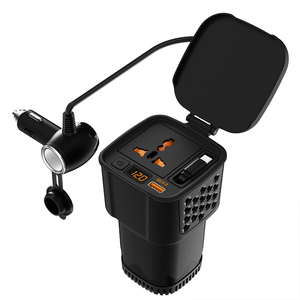
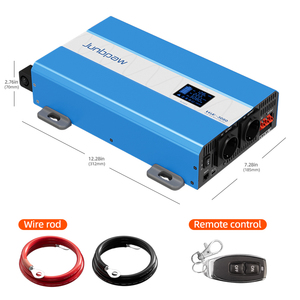
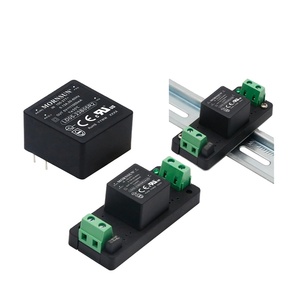
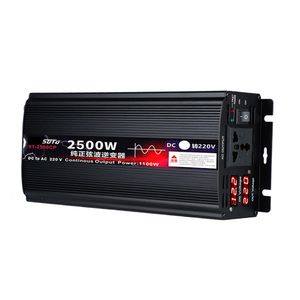
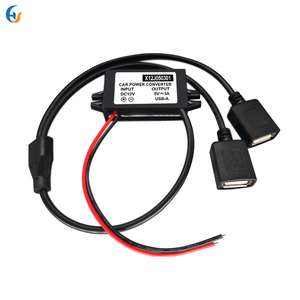
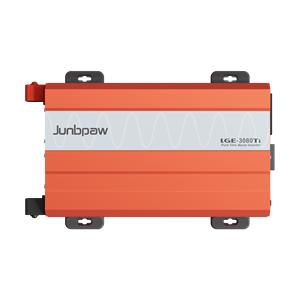
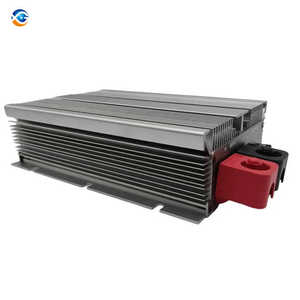
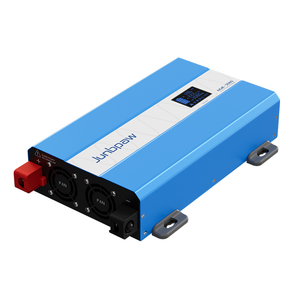
As a specialized manufacturer and global exporter of high-reliability industrial power electronics, we bridge the gap between initial conceptual specification and long-term series production. Our custom OEM battery chargers and power conversion modules are built on 40 years of engineering rigor.

An engineering analysis of semiconductor selection, magnetic optimization, thermal derating curves, and closed-loop BMS integration in high-duty industrial chargers.
Modern industrial OEM battery chargers transition from conventional Silicon MOSFETs/IGBTs to Silicon Carbide (SiC) and Gallium Nitride (GaN) devices. Switching frequencies exceeding 100 kHz reduce magnetic component sizes by up to 40% while achieving efficiency figures above 96.5% under partial and full load profiles.
Efficiency > 96.5%By implementing Interleaved Resonant LLC and CLLC topologies, zero-voltage switching (ZVS) and zero-current switching (ZCS) are maintained across wide dynamic battery voltage spans (e.g., 12V to 800V DC). This dramatically mitigates Electromagnetic Interference (EMI) and electrical noise conducted to sensitive onboard CANbus nodes.
Zero-Voltage SwitchingReplacing traditional wire-wound transformers with PCB-embedded planar magnetics yields predictable leakage inductance, superior heat dissipation directly through cold-plate contact, and low profile form-factors essential for space-constrained rolling stock and Autonomous Guided Vehicles (AGVs).
Ultra-Low ProfileMicrocontroller-driven software control enables seamless multi-stage algorithm switching: Constant Current (CC), Constant Voltage (CV), Equalization, and Floating Charge modes. Integrated temperature sensors adjust output profiles dynamically to maximize lithium-ion (LFP/NMC) and lead-acid battery lifecycle safety.
LiFePO4 & NMC CompatibleEngineered without vulnerable internal cooling fans for harsh environments. Utilizing IP67 aluminum chassis enclosures and potting compounds, thermal dissipation relies on baseplate conduction cooling to withstand ambient temperatures ranging from -40°C up to +85°C without premature power derating.
IP67 Fanless ConductionBridgeless totem-pole Active PFC stages guarantee a unity Power Factor (PF > 0.99) and Total Harmonic Distortion (THD < 5%) across universal AC power grid inputs (85V–264V AC, 45–65Hz), adhering to stringent EN 61000-3-2 class D power quality standards.
PF > 0.99 / THD < 5%Key technology vectors and procurement shifts reshaping how systems integrators, OEMs, and utility procurement directors source custom power hardware over the next decade.

Procurement specifications are rapidly shifting from traditional unidirectional battery chargers toward bidirectional AC/DC and DC/DC energy conversion modules. Enabling Vehicle-to-Grid (V2G) and Vehicle-to-Everything (V2X) connectivity allows battery banks in electric fleets, mobile machinery, and backup systems to function as dynamic energy storage assets that inject power back into microgrids during peak demand hours.
Industrial plants, railway wayside substations, and data centers are prioritizing modular power shelves. Instead of a single high-power monolithic charger, buyers select modular 19-inch rack-mount charging units configured in parallel with active current sharing. If one module fails, the remaining N+1 redundancy preserves continuous system operation while allowing hot-swappable replacement without downtime.
Modern procurement requires chargers equipped with digital communication interfaces—CANbus, Modbus TCP, Ethernet/IP, and IoT gateways. By monitoring real-time switching thermal profiles, ripple voltage, and internal capacitor wear metrics, fleet managers deploy AI-driven predictive maintenance to eliminate unexpected field outages.
Evaluating technical specifications, certification scope, and Total Cost of Ownership (TCO) across different power supply sourcing strategies.
| Evaluation Parameter | Custom OEM Battery Chargers (Our Solution) | Standard Catalog Industrial Supplies | Low-Cost Commodity Converters |
|---|---|---|---|
| Efficiency & Topology | 95% – 97.5% (SiC/GaN Resonant) | 88% – 92% (Standard Hard Switched) | 78% – 85% (Basic Flyback/Forward) |
| Operating Temperature | -40°C to +85°C (Full Conduction) | -20°C to +50°C (Forced Air Fan Required) | 0°C to +40°C (Rapid Thermal Derating) |
| Normative Compliance | EN 50155, EN 45545-2, EN 61373, IEC 62368 | Standard CE / UL 60950 | Self-Declared Unverified CE |
| Custom Mechanical Footprint | 100% Tailored to Enclosure & Mounting | Fixed Chassis Dimensions | Fixed Plastic Sockets / Shells |
| Design Life & MTBF | > 1,000,000 Hours (Telcordia SR-332) | 300,000 – 500,000 Hours | < 50,000 Hours |
| Obsolescence Guarantee | 20+ Years Fixed BOM & Support | 3 – 5 Years Component Phase-out | Unannounced Component Substitution |
| Total Cost of Ownership (TCO) | Lowest long-term maintenance & downtime cost | Moderate long-term operational costs | High risk of warranty recalls & field failures |
Reliability cannot be tested into a finished product—it must be engineered into the foundational design. Every custom OEM battery charger platform undergoes comprehensive internal verification before entering client production lines.

Detailed technical answers to common questions regarding customization scopes, development timelines, certifications, and export capabilities.
Submit your custom input voltage, target charging profiles, environmental requirements, and mechanical footprint directly to our senior power engineering team.