
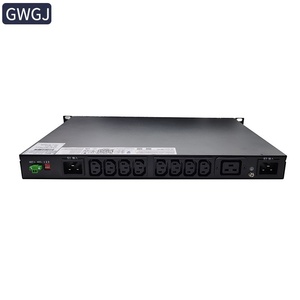
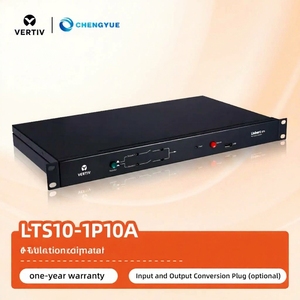
Explore our engineering-certified OEM static transfer switches designed for sub-5ms seamless power transfers, data center redundancy, and critical industrial automation environments.
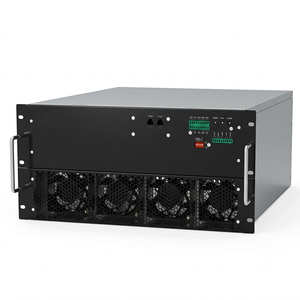
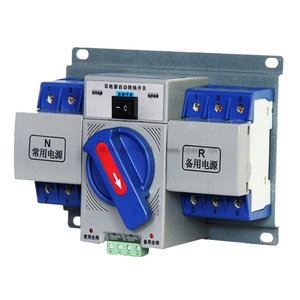
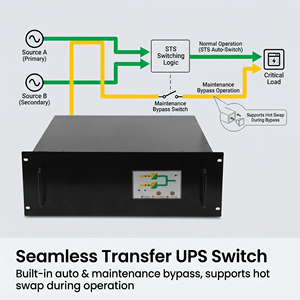
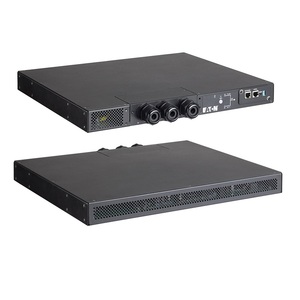
Understanding the sub-cycle silicon switching mechanisms that prevent power degradation, phase disruption, and equipment resets in modern industrial grids.
In high-reliability industrial energy ecosystems, electrical power continuity cannot rely on traditional electromechanical Automatic Transfer Switches (ATS). Mechanical contactors introduce switching delays ranging from 30ms to over 100ms—a time frame that guarantees server shutdowns, micro-controller resets, process interruption in high-tech manufacturing, and severe voltage sags. A Static Transfer Switch (STS) utilizes solid-state silicon-controlled rectifiers (SCRs) arranged in anti-parallel configurations to execute instant phase transfers in under quarter-cycle durations (< 3ms to 5ms).
When operating under dual-independent AC feeds (Mains A and Mains B / UPS A and UPS B), our custom OEM static switch architectures continuously analyze wave-shape integrity, phase synchronization, total harmonic distortion (THD), and RMS voltage levels. Should the primary feed suffer an out-of-tolerance condition, the digital signal processor (DSP) triggers zero-cross break-before-make commutation, ensuring that cross-conduction between out-of-phase sources is mathematically eliminated while load hardware experiences uninterrupted power delivery.
Utilizing high-speed digital DSPs coupled with optical thyristor gate drivers, our OEM switches achieve rapid transfer execution during out-of-phase power drops without tripping upstream breakers or inducing downstream transformer inrush currents.
Engineered with oversized SCR modules rated for 200% surge overloads, integrated TVSS transient voltage surge suppressors, and active thermal heat-pipe topologies that sustain full output under extreme 60°C ambient cabinet conditions.
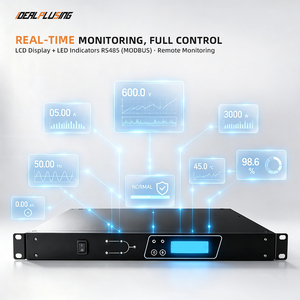
Modbus-RTU, RS485, SNMP v3, and Ethernet-enabled communication modules stream microsecond waveform captures, temperature logs, and fault diagnostics directly to SCADA frameworks or IoT cloud dashboards.
A comprehensive technical benchmarking analysis for power infrastructure procurement officers, electrical engineers, and system integrators.
| Performance Criteria | Standard Electromechanical ATS | Industrial SCR Static Switch (STS) | Next-Gen Hybrid SiC Solid-State STS |
|---|---|---|---|
| Transfer Time (ms) | 30ms – 150ms (Interruption prone) | 1.5ms – 4.5ms (Sub-cycle) | < 0.8ms (Ultra-instantaneous) |
| Contact Wear / Mechanical Fatigue | High (Physical moving parts degrade) | Zero (Fully solid-state design) | Zero (Solid-state semiconductor) |
| Inrush Current Management | Unregulated (Risk of breaker trip) | Phase-synchronized algorithm | Active current shaping & limiting |
| MTBF (Mean Time Between Failures) | ~100,000 Hours | > 500,000 Hours | > 750,000 Hours |
| Efficiency at Full Load | 99.9% (Low idle losses) | 99.1% – 99.4% | 99.6% (Wide-bandgap SiC reduced thermal losses) |
| Target Sourcing Application | Non-critical standby generators | Data centers, Rail, Process OEM | Hyperscale AI clusters, Defense, Metrology |
Backed by over four decades of European power electronics development, our custom static transfer switch factory partners deliver custom-engineered hardware built to withstand harsh electrical and environmental stress. Every solution is validated against strict international certifications before dispatch.

Key technological shifts shaping how enterprise buyers, system integrators, and electrical procurement leads specify power transfer systems over the coming decade.
Global static switch procurement is transitioning toward Wide Bandgap (WBG) SiC semiconductors. SiC reduces internal switching heat generation by over 40%, allowing ultra-compact rackmount density and boosting energy conservation across hyperscale installations.
Future-ready static switches incorporate edge compute algorithms that track micro-level contact resistance, junction gate degradation, and switching arc transients. Procurement managers are prioritizing units that notify maintenance teams prior to fault occurrences.
As microgrids, battery energy storage systems (BESS), and localized solar arrays integrate into factory distribution networks, OEM static switches are expanding from AC-only configurations into high-voltage DC static transfer configurations.
Customized power transfer platforms tailored to meet stringent industry standards across global infrastructure networks.
On-board and wayside static switches compliant with EN 50155, EN 45545-2 (Fire and Smoke Safety), and EN 61373 shock/vibration standards. Ensures uninterrupted power for signaling, door controls, and auxiliary networks.
Rack-mount STS units deployed in dual-corded server architectures to provide localized N+1 feed redundancy. Prevents single point-of-failure power disruptions across mission-critical compute clusters.
Zero-break power transition switches engineered to shield high-sensitivity EUV lithography, chemical vapor deposition, and automated testing tools from grid sag disruption.
Consult directly with experienced power electronics engineers. Send us your voltage inputs, transfer threshold requirements, thermal profile, and mechanical footprint constraints for a complete engineering assessment.
Contact UsExpert answers addressing switching speeds, phase synchronization, custom thermal design, and international shipping protocols.