
Explore our core power conversion building blocks, engineered to meet stringent global efficiency, EMC, and thermal safety standards for industrial, automotive, and microgrid deployments.
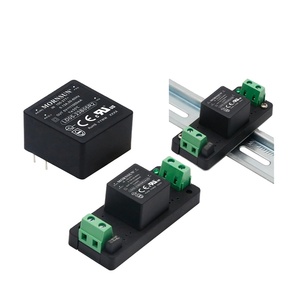
Compact PCB-mount isolated converters featuring ultra-wide input voltage ranges, low standby power, and reinforced insulation for smart grid and automation instrumentation.
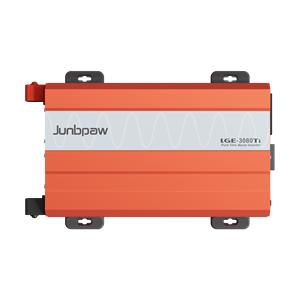
Ruggedized off-grid inverter architecture supporting DC 12V/24V/48V conversion to AC 110V/220V with integrated wireless remote monitoring and peak surge tolerance.
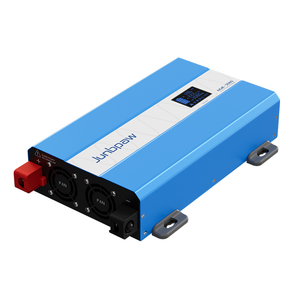
High-efficiency power converter with smart LCD diagnostic display, DSP dynamic control, and intelligent multi-stage thermal dissipation for residential energy systems.
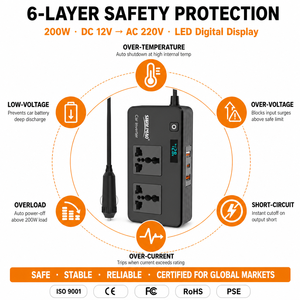
Automotive-grade lightweight power conversion system equipped with dual AC outlets and USB-C PD fast charging modules for mobile diagnostic units.
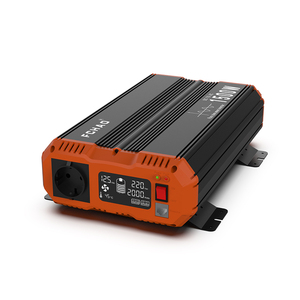
Low Total Harmonic Distortion (THD < 3%) power inverter designed for sensitive electrical loads, mobile labs, and harsh outdoor ambient conditions.
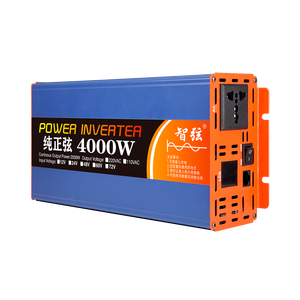
Flexible input matrix (12V to 60V DC) converter engineered for industrial backup arrays, emergency telecommunication racks, and field machinery.
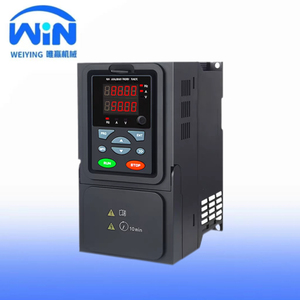
Direct-drive solar PV inverter with dynamic Maximum Power Point Tracking (MPPT) and ruggedized IP65 enclosure for agricultural and municipal pumping installations.
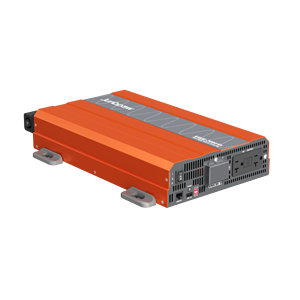
High-inrush current capability inverter engineered to start heavy inductive motor loads including compressor air conditioners and outdoor refrigeration power banks.
In the global industrial power supply ecosystem, selecting an enterprise-grade OEM/ODM AC converters factory requires moving beyond simple nominal voltage and amperage considerations. Modern power conversion architectures demand stringent compliance with electromagnetic compatibility (EMC), thermal efficiency envelopes, dynamic transient resistance, and long-term component lifecycle availability. As industrial automation, railway electrification, smart microgrids, and defense applications demand higher power density in smaller physical footprints, OEM and ODM partners must provide verified engineering proof rather than theoretical maximum performance.
Standard commercial-grade power supplies frequently fail when exposed to harsh operating environments characterized by wide temperature fluctuations (-40°C to +85°C), mechanical vibration up to 5g, and high catenary input voltage spikes. For critical installations, B2B procurement managers and systems design engineers must evaluate original manufacturers against strict international norms, including EN 50155 for railway rolling stock, IEC 62368-1 for audio/video/ICT equipment safety, and EN 45545-2 fire protection standards.
Modern custom AC/DC converters must integrate active PFC stages achieving PF > 0.98. This minimizes total harmonic distortion (THD), suppresses line pollution, and complies with IEC/EN 61000-3-2 limits under partial and peak load operation.
Industrial topology designs mandate reinforced insulation barriers capable of withstanding dielectric test voltages up to 3000VAC - 4200VAC between primary input and secondary output circuits, ensuring complete ground loop isolation.
The next decade of power conversion is shaped by wide-bandgap (WBG) semiconductors, planar magnetics, smart IoT diagnostics, and environmental sustainability mandates.
Transitioning from legacy Silicon MOSFETs to wide-bandgap GaN and SiC devices enables switching speeds exceeding 500 kHz. This reduces magnetics volume by up to 40%, slashes conversion thermal losses, and delivers efficiency curves above 96% even under partial loads.
Custom ODM designs are abandoning traditional round-wire toroidal designs in favor of multi-layer planar PCB magnetics coupled with LLC resonant topologies. This yields predictable low parasitic leakage inductance and ultra-flat mechanical profiles ideal for sub-rack mounting.
Next-generation OEM converter factories are integrating microcontrollers with PMBus, CANopen, or Modbus protocols. Real-time telemetry streams input transient logs, capacitor degradation indices, and internal thermal gradients to industrial IoT cloud dashboards.
| Engineering Vector | Legacy AC Converter Designs | Next-Gen OEM/ODM Factory Standard | Procurement Impact |
|---|---|---|---|
| Semiconductor Switching | Silicon MOSFETs / IGBTs (<100 kHz) | GaN FETs & SiC Diodes (>300 kHz) | Higher efficiency, 35% smaller enclosure weight |
| Magnetics Architecture | Wire-wound bulky transformers | Planar Transformers on FR4/Polyimide | Repeatable automated assembly, zero manual winding drift |
| Thermal Management | Active high-RPM fans (High failure rate) | Conduction / Cold-Plate / Passive Liquid | Extends field MTBF beyond 500,000 hours (Telcordia SR-332) |
| Supervision & Control | Analog feedback loops | 32-Bit Digital Signal Controllers (DSP) | Field-programmable output parameters & firmware updates |
Our partner manufacturing footprint represents state-of-the-art power conversion engineering. From rapid prototype design NRE to high-volume automated Surface Mount Technology (SMT) production lines, our facilities bridge complex electrical specs into validated physical hardware.

Trusted by World-Class System Integrators & Tier-1 OEMs








To minimize non-recurring engineering (NRE) costs and shorten delivery schedules from 28 weeks to under 12 weeks, evaluate your project requirements against our design block matrix.
Best suited for tight time-to-market schedules. By selecting an existing qualified chassis (such as standard 19-inch rack units or DIN-rail housings) and customizing internal transformer taps or conformal coating formulas, project risk is virtually eliminated.
Tailored for specialized form factors, high-voltage catenary inputs (up to 3000VDC/VAC), extreme shock requirements, or non-standard multi-output power rails (e.g., simultaneous isolated +24V, +12V, -12V, and 5V outputs).


Clear answers to crucial procurement, technical compliance, and custom engineering inquiries.
For custom power supply developments (ODM), a standard engineering lifecycle takes between 16 to 28 weeks from design specification lock down to delivery of fully qualified First Article Inspection (FAI) prototypes. If your project utilizes pre-qualified internal building blocks (e.g., existing planar transformers, resonant power topologies, and standardized control cards), prototype delivery can be accelerated to 8–12 weeks, significantly reducing non-recurring engineering (NRE) expenditure.
Industrial, rail, and energy programs operate over decades. Our factory quality control framework incorporates proactive lifetime monitoring via SiliconExpert and direct semiconductor foundry alerts. We implement strict Form-Fit-Function (FFF) redesign protocols, organize Last-Time-Buys (LTB) for critical ICs, and maintain complete archiving of mechanical tooling and firmware codebases to support field repairs and drop-in replacements for 15 to 20+ years.
For sealed IP65 to IP67 environments where forced-air cooling fans are prohibited due to dust or moisture ingress risks, our design engineering team utilizes conduction cooling via integrated cold-plate aluminum baseplates, heat-pipe spreading matrices, or potting with high thermal conductivity resin (up to 1.5 W/m·K). This ensures internal power devices (GaN FETs, magnetic cores) remain well within safe operating junction temperatures ($T_j < 110^\circ\text{C}$).
Our power supplies are designed and tested to meet EN 50155 (Railway applications - Rolling stock equipment), EN 50121-3-2 (EMC on-board rolling stock), EN 45545-2 (Fire safety HL1 to HL3 hazard levels), EN 61373 (Shock and vibration testing Cat 1 Class B), and IEC/EN 62368-1 for industrial ICT equipment. Certified compliance reports are provided alongside FAI deliveries.
Standalone board-mount modules start at 3W up to 90W. Chassis-mount and DIN-rail converters span 100W to 3000W. For sub-station, data center, or heavy machinery requirements, our hot-swappable modular rectifier racks can be connected in active dynamic parallel N+1 redundancy architectures achieving aggregate system outputs up to 72 kW with current-sharing telemetry.
Submit your input/output requirements, mechanical constraints, target compliance standards, and annual volume target directly to our senior power conversion engineering team.