
Explore our top-recommended power conversion modules de-risked for extreme thermal environments, catenary voltage spikes, off-grid solar storage, and rugged mobile applications.
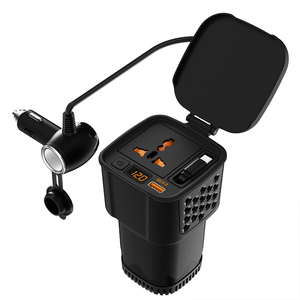
Compact continuous 200W vehicle power supply designed for cup-holder mounting. Features universal AC output socket and integrated overload protection for mobile electronics.
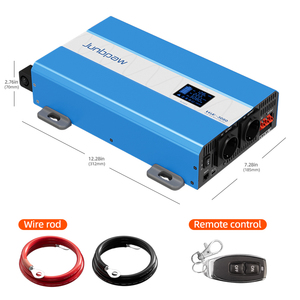
High-efficiency pure sine wave single output converter engineered for RV off-grid systems, fishing expeditions, and remote emergency power applications.
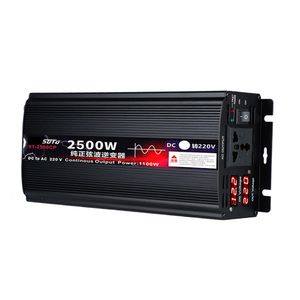
Heavy-duty power converter equipped with real-time dual voltage LCD telemetry. Optimized for residential energy back-up and heavy industrial DC bus conversion.
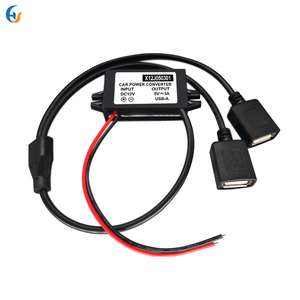
High-density step-down buck power module delivering stable 5V output for automotive electronics, fleet telematics, and embedded system power distribution.
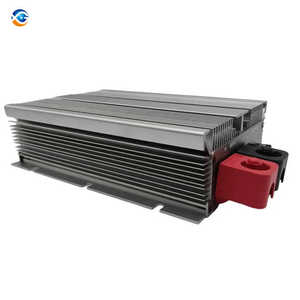
Ruggedized waterproof converter housed in extruded aluminum. Built for extreme shock, vibration, and thermal stress in forklifts, trucks, and e-mobility fleets.
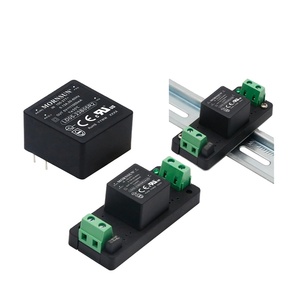
Encapsulated PCB-mount AC/DC converters for industrial automation controls. Ultra-low standby consumption, high galvanic isolation, and broad operating temperatures.
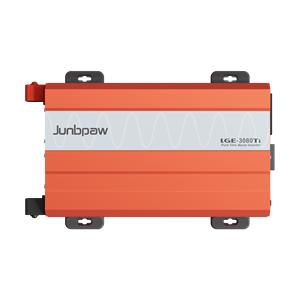
Multi-input DC (12V/24V/48V) to AC converter platform featuring wireless/wired remote supervision. Engineered for mobile service vehicles and utility vans.
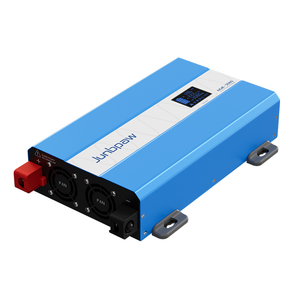
Heavy-duty 3000W continuous sine wave converter engineered for high surge starting loads. Features intelligent LCD diagnostic dashboard and low battery cutoff.
In modern industrial automation, railway transportation, energy storage, and defense systems, the power conversion architecture serves as the critical backbone determining overall system reliability and total cost of ownership (TCO). Power converters—spanning DC/DC converters, DC/AC inverters, AC/DC battery chargers, and variable frequency drives (VFDs)—must function continuously under hostile operating conditions. These include wide ambient thermal swings (-40°C to +85°C), high electromagnetic interference (EMI), mechanical shock, and catenary voltage transients.
This comprehensive industry whitepaper provides enterprise procurement officers, electrical system architects, and OEM design engineers with an authoritative benchmark of the Top 10 Power Converters Manufacturers & Factory Capabilities globally. By evaluating core engineering metrics, planar magnetic integration, thermal management strategies, and international regulatory compliance (such as EN 50155, EN 45545-2, and IEC 62368), this document establishes a strategic roadmap for de-risking high-power procurement programs.
With over four decades of dedicated power electronics R&D based in Barcelona, Spain, our manufacturing framework bridges standard off-the-shelf readiness with deep custom engineering. By maintaining fully integrated design, prototyping, and testing facilities internally, we eliminate third-party development friction and fast-track complex programs.
Engineered specifically for rolling stock, subsea, and energy substations complying with EN 50155, EN 50121-3-2 (EMC), EN 45545-2 (Fire & Smoke HL1-HL3), and EN 61373 shock/vibration standards.
Utilizing advanced planar transformers and multi-phase resonant LLC topologies to achieve power densities up to 40W/in³ while minimizing thermal hot spots and parasitic inductances.
Guaranteed component supply management, last-time-buy proactive alerts, form-fit-function redesign support, and long-term fleet repair networks for extended infrastructure lifespans.
The global power conversion supply chain consists of tier-1 custom engineering partners and high-volume commodity manufacturers. The decision matrix below compares the top 10 market leaders across critical procurement parameters including power spectrum, compliance rigor, custom NRE timelines, and target industrial sectors.
| Manufacturer / OEM | Primary Power Scope | Core Topology / Feature | Standards Compliance | Customization Agility |
|---|---|---|---|---|
| Premium PSU (Europe) | 50W to 72kW | Planar Resonant, Silicon Carbide (SiC) | EN 50155, EN 45545-2, IEC 61010 | High (16-28 Wks NRE) |
| Vicor Corporation | 50W to 50kW | Factorized Power Architecture (FPA) | MIL-STD-810, DO-160, IEC 62368 | Moderate (Modular Focus) |
| Delta Electronics | 100W to 500kW | High Efficiency AC/DC Rectifiers | ISO 9001, UL 60950, CE | Low (Volume Standard) |
| TDK-Lambda | 10W to 50kW | Programmable & DIN Rail Units | IEC 61000, EN 62368-1 | Moderate |
| Advanced Energy | 100W to 100kW | High Voltage DC & Plasma Power | Semi F47, UL 61010 | Moderate to High |
| Murata Power Solutions | 1W to 10kW | Board-Mount Isolated DC-DC | Medical IEC 60601-1, UL 60950 | Standard Catalog Focus |
| Traco Power | 1W to 22kW | Ruggedized Railway & Industrial | EN 50155, EN 45545-2 | Low (Standardized Catalog) |
| Mean Well | 1W to 10kW | Commercial Enclosed & LED Drivers | UL 1012, CE, CB | Off-the-shelf Volume |
| ABB Power Conversion | 500W to 150kW | Telecom Rectifiers & DC Bus Modules | NEBS Level 3, UL 62368 | Moderate |
| XP Power | 1W to 50kW | AC-DC & High Voltage Supplies | ANSI/AAMI ES60601-1, CE | Moderate |
The power electronics sector is experiencing a structural shift driven by decarbonization, electrification of transport, and cloud-connected industrial assets. Systems buyers must align their procurement criteria with four dominant technological vectors shaping the next decade:
Replacing legacy Silicon MOSFETs with Silicon Carbide (SiC) and Gallium Nitride (GaN) devices reduces switching losses by up to 60%, allowing power supplies to operate at higher switching frequencies with dramatically smaller planar magnetics.
Modern converters now integrate digital communication gateways (CANbus, MODBUS, Ethernet/IP) that continuously stream ripple voltage, capacitor equivalent series resistance (ESR), and operating temperature to cloud dashboards for predictive failure forecasting.
To handle fluctuating catenary power lines, battery degradation, and hybrid microgrids, next-generation DC/DC platforms feature ultra-wide 4:1 and 10:1 input windows (e.g., 14.4V to 154V continuous), eliminating multi-SKU inventory requirements.
Critical infrastructure requires zero downtime. Modular hot-swappable sub-racks equipped with active current sharing and static transfer switches enable live maintenance without interrupting downstream operations.
Standard standalone modules typically cover 50W to 2.5kW, while modular industrial rack architectures extend capacity seamlessly from 3kW up to 72kW. Higher power demands are achieved through parallel load-sharing connections with N+1 active redundancy.
For railway rolling stock, compliance with EN 50155 (electronic equipment on rolling stock), EN 45545-2 (fire and smoke behavior), EN 61373 (vibration/shock resistance), and EN 50121-3-2 (EMC) is mandatory. Stationary industrial installations should adhere to IEC 61010, IEC 62368-1, and IEC 61000 immunity requirements.
Full custom development programs—from initial specification review and planar transformer synthesis to qualified First Article Inspection (FAI) samples—typically require 16 to 28 weeks. Timelines can be significantly shortened by leveraging pre-qualified modular building blocks.
Most industrial converters maintain full nominal power rating up to +55°C or +70°C ambient using natural convection or conduction cooling. Above these thresholds, thermal protection algorithms apply a linear derating profile (typically 2.5% per °C) up to maximum junction limits (+85°C or +105°C).
We implement rigorous Lifecycle Obsolescence Management. This includes active monitoring of silicon and passive component supply chains, stocking critical long-lead ICs, establishing Last-Time-Buy (LTB) protocols, and designing pin-compatible retrofit replacement modules for legacy fleets.
Connect with our senior application engineering team to evaluate datasheets, request 3D CAD step files, or receive custom NRE lead time estimations for your specific application.