
Engineered to rigorous ISO 9001 and EN 50155 design standards for high reliability under extreme operational shock, temperature, and vibration environments.
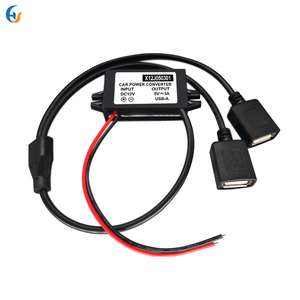
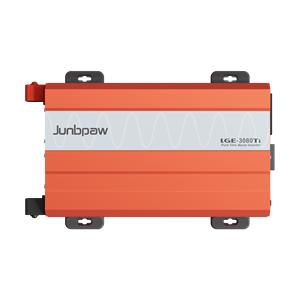
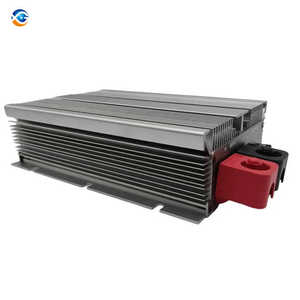
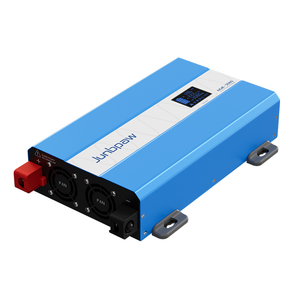
Partnering with global transit authorities, commercial logistics operators, OEM vehicle manufacturers, and industrial plant managers to deliver zero-defect power electronics.
The global transition toward total commercial fleet electrification demands an unprecedented level of power density, continuous thermal stability, and multi-voltage adaptability. Selecting a qualified China fleet chargers supplier is no longer merely a commercial sourcing exercise; it is a critical systems-engineering decision. Modern commercial fleets—comprising municipal e-buses, last-mile delivery vans, heavy-duty mining trucks, and warehouse material handling systems (forklifts, AGVs)—operate under grueling continuous-duty cycles that stress power conversion components far beyond consumer automotive limits.
Whether deploying on-board step-down buck converters (such as 48V to 12V/5V DC-DC systems for telemetry and onboard electronics), high-power industrial battery chargers, or pure sine wave DC-AC inverters for auxiliary vehicle equipment, engineering teams must prioritize topologies that feature zero-voltage switching (ZVS), wide input voltage windows (2:1 and 4:1 ratios), and high galvanic isolation (exceeding 1500V to 3000V DC).
Key Fleet Engineering Mandate: Commercial fleet chargers must deliver high power conversion efficiency (≥96%) while surviving extreme ambient temperature fluctuations (-40°C to +85°C), high ingress conditions (IP67 sealed units), and severe mechanical shock compliant with EN 61373 railway standards.
Industrial fleet electrification relies on a hybrid power architecture split between centralized depot fast-charging infrastructure and decentralized on-board power conditioning:
As procurement directors and engineering leaders evaluate top tier China suppliers, four macro engineering trends are reshaping procurement specifications for 2025 and beyond:
Silicon Carbide (SiC) and Gallium Nitride (GaN) MOSFET topologies are replacing traditional Silicon IGBTs. This shift increases switching frequencies beyond 100 kHz, drastically reducing planar transformer volume while pushing total conversion efficiency beyond 97.5%.
Fleets increasingly require universal power conversion blocks capable of operating across legacy 12V/24V lead-acid environments as well as modern 48V/60V lithium-iron-phosphate (LFP) bus systems without requiring hardware redesigns.
Conformal coating is no longer sufficient for heavy-duty commercial fleets. Top suppliers now utilize solid polyurethane potting and die-cast aluminum alloy shells to guarantee dust-tight, waterproof performance under aggressive pressure washing.
Fleet chargers are evolving from unilateral consumers of electricity into dynamic grid assets. Vehicle-to-Grid (V2G) enabling power modules allow fleet operators to sell excess battery energy back to regional utilities during peak tariff hours.
Modern fleet chargers integrate isolated CAN Bus, RS485 MODBUS, or cloud gateway modules to transmit real-time thermal, voltage, and ripple telemetry back to centralized fleet management software for predictive maintenance.
When evaluating high-power converters and chargers, system integrators must review the underlying electrical and thermal design trade-offs. Below is an engineering comparison matrix showcasing standard parameters across industrial fleet power components:
| Product Topology | Typical Input Range | Conversion Efficiency | Cooling Mechanism | Protection Rating | Target Fleet Application |
|---|---|---|---|---|---|
| 40A DC/DC Step-Down Buck | 12V / 24V / 48V / 60V DC | ≥ 95.5% | Natural Convection / Die-cast Shell | IP67 Waterproof | Forklifts, Delivery Trucks, Golf Carts |
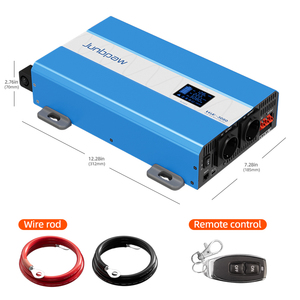
| Pure Sine Wave Inverter (3kW) | 12V / 24V / 48V DC | ≥ 92.0% | Smart Temperature-Controlled Fan | IP21 / IP42 Chassis | RV Emergency Power, Mobile Service Units |
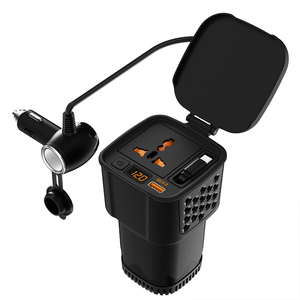
| Cup Holder Automotive Inverter | 11V - 15V DC | ≥ 88.0% | Internal Micro Fan | ABS Flame Retardant | Fleet Driver Telematics, Laptops, Mobile Devices |
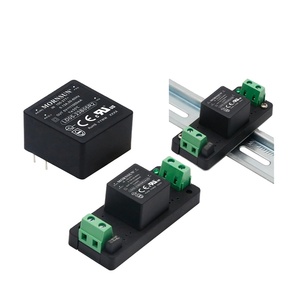
| Board-Mount AC/DC Modules | 85V - 264V AC Universal | 82% - 90% | Free Air Convection / Encapsulated | UL94V-0 Rated | On-Board Vehicle Telemetry ECU Boards |
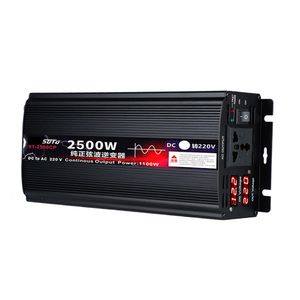
| High-Power Off-Grid Inverter | 48V DC to 220V AC | ≥ 94.0% | Forced Air Flow Tunnel | Heavy-Duty Metal Case | Remote Mining Fleets, Off-Grid Facilities |
Thermal dissipation remains the primary factor governing Mean Time Between Failures (MTBF) in fleet chargers. Standard wire-wound transformers suffer from significant skin effect losses at high frequencies. Leading manufacturers mitigate this by integrating planar transformers built on multi-layer PCBs. Combined with direct-bond copper (DBC) substrates and automated thermal pad deposition, heat is conducted directly to the outer aluminum chassis, extending component operational life to over 500,000 hours (MIL-HDBK-217F standard).
Addressing core engineering, regulatory compliance, and commercial sourcing inquiries for B2B procurement teams.
Building world-class fleet power solutions requires a complete manufacturing lifecycle under one roof. Our modern production facilities combine automated surface mount technology (SMT) lines, specialized high-frequency transformer winding machines, and rigorous environmental stress screening (ESS).
Every manufactured unit undergoes full-load thermal burn-in testing in environmental chambers to eliminate early-life component mortality before shipping.
Integrated electromagnetic compatibility chambers accelerate development loops, ensuring rapid compliance verification for radiated and conducted emissions.
We guarantee long-term component availability and supply-chain continuity for long-lifecycle commercial vehicle platforms (15+ year product support commitments).