
Engineered to rigorous international standards (EN 50155, IEC 61800-3, ISO 9001), delivering high efficiency, thermal resilience, and precise vector speed control across industrial, solar, and railway infrastructure.
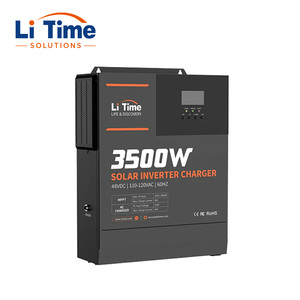
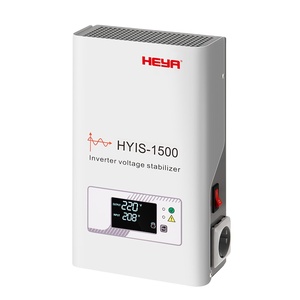
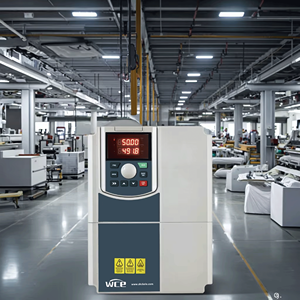
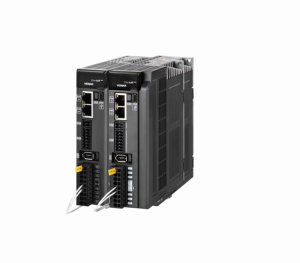
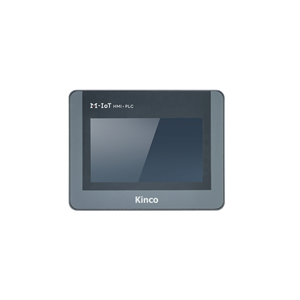
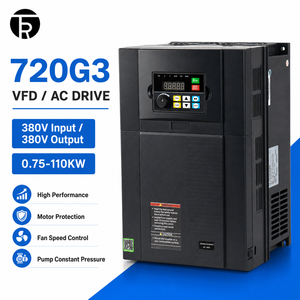
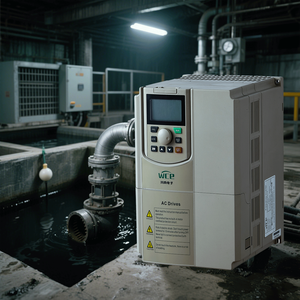
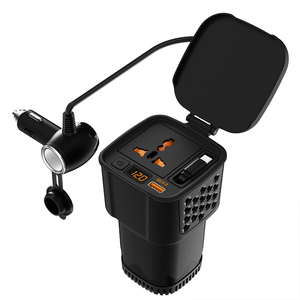
In the global industrial drive and power conversion landscape, procurement teams face an imperative: balancing aggressive capital expenditure (CAPEX) limits with strict operational availability and lifecycle requirements. As a premier China industrial inverter manufacturer and global exporter, our engineering ecosystem reconciles these demands by combining advanced topology research with high-volume, ISO 9001-certified manufacturing capabilities.
Unlike standard consumer-grade power converters, true industrial Variable Frequency Drives (VFDs) and heavy-duty DC/AC inverters must withstand hostile operational profiles. Our platforms feature conformal-coated circuit assemblies, planar magnetics, dynamic active front-end (AFE) regenerative capabilities, and multi-stage electromagnetic interference (EMI) filtering compliant with IEC 61800-3 category C1/C2 requirements.
Thermal stress is the primary contributor to electrolytic capacitor degradation and IGBT power module failure. Our design strategy employs independent air-duct architecture that completely isolates sensitive control electronics from heat-sink airflow channels, reducing thermal-induced component failure rates by up to 64% in dusty or humid environments.
By transitioning key product lines to Silicon Carbide (SiC) MOSFETs and optimized resonant switching topologies, our latest power conversion units achieve peak operating efficiencies exceeding 98.5%. This reduces internal thermal losses and footprint requirements by up to 35% compared to traditional Si-IGBT drives.
Industrial procurement strategy is undergoing a structural shift driven by automation, continuous condition monitoring, energy decarbonization, and supply-chain risk management. Technical directors and enterprise buyers evaluating Chinese manufacturing partners must align their specifications with four decisive market trends:
Modern industrial facilities no longer accept "black box" inverters. Procurement specifications increasingly require embedded Modbus RTU, RS485, CANopen, or Ethernet/IP communication protocols as standard features. Modern drives now serve as edge sensors, continually streaming telemetry data—such as motor winding temperature, input line voltage dips, real-time power factor, and harmonic distortion—directly to central PLCs or cloud platforms for predictive maintenance scheduling.
Global industrial growth in emerging markets has made power quality a primary operational challenge. Facilities frequently experience line voltage fluctuations from 90V to 310V in single-phase systems or severe phase imbalance in three-phase supplies. Next-generation inverters incorporate active automatic voltage regulation (AVR) stages capable of maintaining full rated torque output across severe grid sag conditions without shutting down on undervoltage faults.
Decentralized manufacturing, municipal wastewater pumping stations, and commercial processing facilities often lack direct access to three-phase utility grids. The market has seen a surge in demand for high-capacity (7.5kW to 45kW+) single-phase to three-phase vector controlled VFDs. Advanced digital space-vector pulse-width modulation (SVPWM) enables these units to generate balanced three-phase 380V/440V AC output directly from single-phase 220V sources without requiring bulky transformer gear.
| Technology Metric | Legacy Industrial Inverters | Next-Gen OEM Power Inverters (Current Standard) |
|---|---|---|
| Semiconductor Base | Standard Silicon IGBT Modules | Silicon Carbide (SiC) & Ultra-Fast Trench IGBTs |
| Switching Frequency Range | 2 kHz - 8 kHz (Audible Noise, High Loss) | 16 kHz - 50 kHz+ (Silent Operation, Reduced Loss) |
| Control Algorithm | Basic V/f (Voltage/Frequency) Pattern | Sensorless Vector Control (SVC) & Direct Torque Control (DTC) |
| Thermal Architecture | Single Enclosure Common Airflow | Dual-Chamber Isolated Ducting + Conformal PCB Coating |
| Total Harmonic Distortion (THD) | > 8% (Requires external choke) | < 3% Clean Waveform (Integrated Active Filtering) |
The industrial power conversion industry is accelerating away from passive PWM drives toward high-frequency resonant converter architectures. Driven by heavy industrial requirements in railways, defense, data center power backups, and heavy motor drive systems, engineering standards now mandate smaller physical envelopes, higher overload tolerances, and reduced electromagnetic emissions.
Replacing traditional wire-wound transformers with multi-layer printed circuit board (PCB) planar magnetics drastically minimizes leakage inductance, enhances thermal dissipation, and reduces magnetic component height by over 60%.
In heavy motor deceleration and elevator/crane applications, regenerative energy is traditionally wasted through braking resistors as heat. AFE inverters feed excess braking energy back into the facility's AC grid at unit power factor, cutting net facility energy consumption.
Modern safety regulations require Safe Torque Off (STO) functions compliant with SIL 3 / PLe standards built directly into the inverter control board, eliminating external electromechanical contactors and speeding up safety trip response times.
For overseas enterprise buyers and original equipment manufacturers (OEMs), sourcing from a Chinese partner capable of tailoring control firmware (such as custom PID loops for sewage pumps or specialized acceleration curves for high-inertia centrifuges) provides a distinct competitive advantage in time-to-market and total engineering costs.
Our manufacturing and engineering infrastructure is built on decades of power electronics delivery across standard platforms and fully customized power conversion solutions. Standard catalogue units account for only a portion of global industrial needs; complex infrastructure projects frequently demand custom input range matching, specific enclosure footprints, or extreme ambient temperature operation (-40°C to +70°C).
When off-the-shelf power hardware cannot satisfy unique thermal envelopes or non-standard DC rail voltages (e.g., railway 750V/1500V catenary feeds or specialized defense DC buses), our structural and electrical design team initiates a streamlined custom development program:
Reliability must be engineered into every layer of hardware before manufacturing begins. Our factory implements stringent verification procedures across all component tiers:
Technical and logistical insights for global procurement managers, engineering consultants, and system integrators.
Whether you require standard high-efficiency VFDs, specialized single-to-three phase converters, or a fully custom power solution engineered to your exact mission profile, our engineering specialists are ready to review your technical specifications.