Rigorous compliance with EN 50155, IEC 62368, and ISO 9001 quality management standardizations. Explore certified standard platforms ready for global deployment.
In the contemporary landscape of high-reliability power electronics, global system integrators, OEMs, and procurement directors face an increasingly complex technical environment. Sourcing modular power supplies, DC/DC converters, pure sine wave inverters, and board-mounted AC/DC converters requires more than evaluating unit prices. It demands an exhaustive analysis of electromagnetic compatibility (EMC), thermal topology design, mean time between failures (MTBF), compliance with global regulatory standardizations (such as EN 50155, IEC 61000, and IEC 62368), and long-term supply chain resilience.
China has evolved into the undisputed global epicenter for power electronics manufacturing. However, identifying top-tier modular power supply factories capable of executing advanced custom topologies alongside standardized series production is a rigorous process. This whitepaper provides a comprehensive technical blueprint for engineering managers and procurement executives seeking to de-risk power conversion sourcing while maximizing technological competitive advantages.
Information Gain Insight: Advanced modular power supplies are shifting from rigid single-stage conversion architectures to digitally controlled, high-frequency resonant topologies featuring planar magnetics, dynamic active power factor correction (PFC), and Wide Bandgap (WBG) power semiconductors like Silicon Carbide (SiC) and Gallium Nitride (GaN).
Modular power conversion systems decouple complex power distribution networks into discrete, standardized, and hot-swappable building blocks. Whether engineered for board-level footprint efficiency (such as 3W to 90W encapsulated AC/DC modules) or multi-kilowatt industrial systems (such as 2.5kW to 3kW off-grid inverters and 40A step-down converters), modular architectures provide several distinct technical advantages:
Integrated current-sharing buses and internal ORing MOSFETs allow modular units to operate in parallel, eliminating single points of failure in continuous power paths.
Utilizing pre-certified PCB-mount or rack-mount building blocks drastically shortens Non-Recurring Engineering (NRE) cycles and speeds up system-level safety approvals.
Distributing power losses across multiple smaller modules simplifies conduction and convection cooling paths, reducing localized junction temperatures on key power switches.
The power electronics industry is undergoing a profound technological transformation driven by electrification, industrial automation, renewable energy integration, and smart grid infrastructure. Leading Chinese modular power supply factories are investing heavily in Next-Generation Power Switching Architectures to achieve unprecedented power density and operational efficiency.
Traditional silicon MOSFETs and IGBTs are reaching their physical limitations regarding switching speed and thermal dissipation. Modern modular supplies increasingly integrate Silicon Carbide (SiC) and Gallium Nitride (GaN) devices. WBG semiconductors offer significantly higher breakdown electric field strengths and thermal conductivities. This allows switching frequencies to push beyond 500 kHz, drastically reducing the physical volume of passive components—specifically inductors, transformers, and bulk filter capacitors—without compromising efficiency, which often exceeds 96% even under partial load profiles.

Conventional wire-wound magnetic transformers are a primary bottleneck in miniaturizing high-power modules. Premier factories are replacing conventional magnetics with multi-layer printed circuit board (PCB) planar transformers integrated with low-profile ferrite cores. When paired with soft-switching resonant topologies—such as LLC and Phase-Shifted Full-Bridge (PSFB) circuits—switching losses are virtually eliminated through Zero Voltage Switching (ZVS) and Zero Current Switching (ZCS) dynamics.
Analog PWM control loops are rapidly giving way to high-speed Digital Signal Processors (DSPs) and ARM Cortex-M microcontrollers. Modern power supply modules now feature real-time PMBus, CANopen, or Modbus communication protocols. This enables cloud-connected predictive maintenance, allowing remote monitoring of real-time input/output voltage status, thermal stress metrics, current sharing balances, and cumulative component aging data.
Strategic sourcing managers are shifting away from short-term transactional purchasing toward long-term lifecycle control. When evaluating modular power supply suppliers in China, enterprise buyers must account for the following macro-procurement shifts:
To assist technical selection, the table below outlines core operating parameters, target topology configurations, and key application fields for the primary modular power supply categories offered by our manufacturing ecosystem:
| Product Family | Typical Input / Output Ranges | Key Design Architecture | Target Application Sectors |
|---|---|---|---|
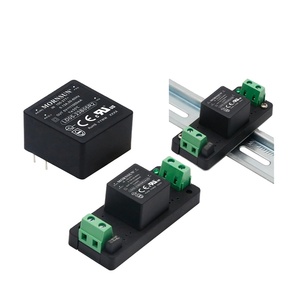
| Board-Mount AC/DC Modules | 85-264VAC in | 3.3V-48VDC out (3W-90W) | Encapsulated Flyback, Ultra-low standby loss | IoT Gateways, Medical, Industrial Controllers |
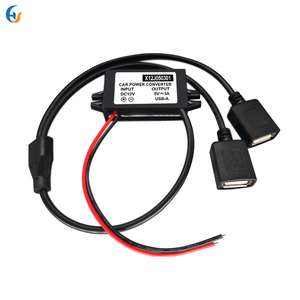
| Ruggedized High-Power DC/DC Converters | 9-36V, 18-75V, 48-110VDC in | 12V-48V (up to 40A) | IP67 Aluminum Enclosure, Synchronous Rectification | Forklifts, Mining Vehicles, Railway Auxiliaries |
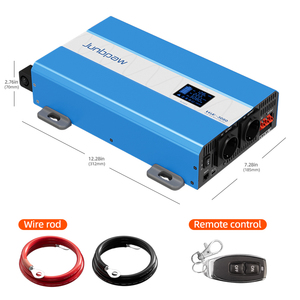
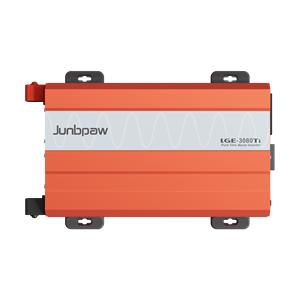
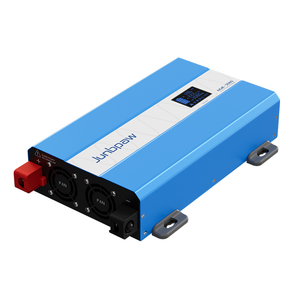
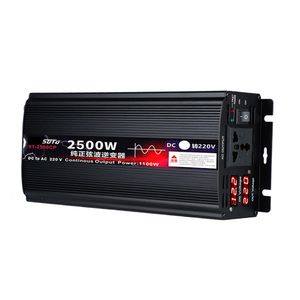
| Pure Sine Wave Power Inverters | 12V/24V/48V/60V DC in | 110V/220V AC out (1kW-4kW) | High-frequency SPWM, Dual Voltage LCD Display | Solar RV Systems, Off-Grid Storage, Emergency Backup |
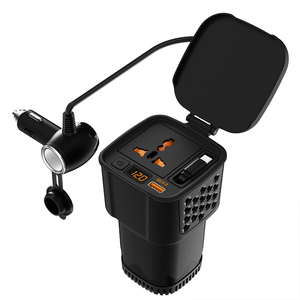
| Vehicle Cup-Holder Mobile Power Supplies | 12VDC Automobile Socket in | 220VAC / USB 5V out | Compact Heat-Dissipation Housing, Multiple Protections | Automotive Electronics, Field Engineering Laptops |
Combining over 40 years of power electronics legacy with advanced OEM/ODM manufacturing facilities to deliver unmatched reliability and performance.
Equipped with fully automated high-speed Surface Mount Technology (SMT) lines, selective soldering machines, automated optical inspection (AOI), and conformal coating chambers to ensure precision component assembly across every batch.
Every product line undergoes comprehensive qualification in our certified testing facilities. Our testing suite encompasses Electromagnetic Interference (EMI/EMC) chambers, 100% full-load burn-in rooms, thermal shock chambers, and vibration testing platforms matching EN 61373 specs.
With a dedicated R&D engineering staff of over 130 power electronics specialists, we provide custom NRE development programs. We modify standard platforms or engineer ground-up custom converters according to exact customer envelope dimensions, isolation thresholds, and thermal envelopes.
Our operational management strictly adheres to ISO 9001 quality management and ISO 14001 environmental management systems. Product lines carry full CE, RoHS, REACH, UL, and railway EN 50155 certification documentation ready for instant auditing.
Our factory platforms cover power outputs spanning from 3W PCB-mounted encapsulated modules up to 72kW multi-rack modular systems. We support ultra-wide input voltage windows including 2:1 and 4:1 ranges for DC/DC converters (9-36V, 18-75V, 43-160V DC for railway) and global universal AC inputs (85-264VAC) with active PFC.
Depending on the designated product line and application field, our products comply with IEC/EN/UL 62368-1 (Information Technology and Audio/Video Equipment), EN 50155 / EN 50121-3-2 / EN 45545-2 (Railway Applications), IEC 61000 (EMC Immunity and Emissions), and IP67 ingress protection standards for harsh environments.
A standard modified power project (leveraging qualified building blocks like pre-designed planar transformers and resonant control stages) typically requires 6 to 10 weeks to deliver qualified engineering samples. Full custom ground-up designs typically range between 16 and 24 weeks, depending on regulatory testing requirements and mechanical housing tooling schedules.
Our design team conducts advanced 3D Computational Fluid Dynamics (CFD) thermal modeling prior to physical prototyping. By utilizing heavy copper PCBs, internal metal-core heat spreaders, high-grade thermally conductive potting resins, and premium 105°C-rated long-life Japanese electrolytic capacitors, our modules achieve MTBF figures exceeding 500,000 hours under MIL-HDBK-217F guidelines.
Our standard board-mount AC/DC converter series (3W to 90W) offers 3000VAC to 4000VAC primary-to-secondary reinforced galvanic isolation. This ensures absolute safety, prevents ground loops, and protects delicate downstream microcontrollers from high-voltage line surges and transients.