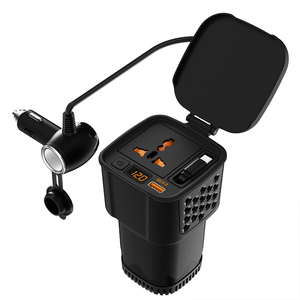
Car Laptop Charger Power Supply DC 12V to AC 220V 200W Continuous Cup Holder Car Converter Inverter
200W Continuous Output • Cup Holder Ergonomic Form Factor • Universal AC Socket • Thermal & Overload Protection
Inquire Now
Standardized platforms and customizable high-efficiency topologies engineered for rugged operational environments, severe thermal dynamics, and demanding power cycles.
200W Continuous Output • Cup Holder Ergonomic Form Factor • Universal AC Socket • Thermal & Overload Protection
Inquire Now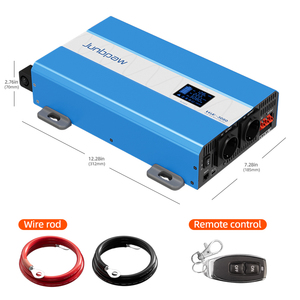
Pure Sine Wave Topology • 50Hz/60Hz Switchable • Heavy Surge Tolerance • Marine & Mobile RV Grade Reliability
Inquire Now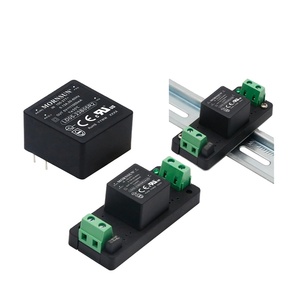
3W–90W Power Range • PCB Mount Encapsulated • High Galvanic Isolation • Wide Operating Temperature Envelope
Inquire Now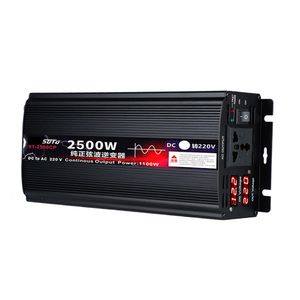
2500W Rated Power • Dual Real-Time LED Voltage Displays • Low THD Sine Output • Anodized Aluminum Enclosure
Inquire Now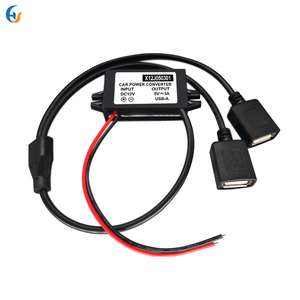
95%+ Conversion Efficiency • 12V/24V Wide Input • Sealed Waterproof Housing • Vehicle & Fleet Auxiliary Ready
Inquire Now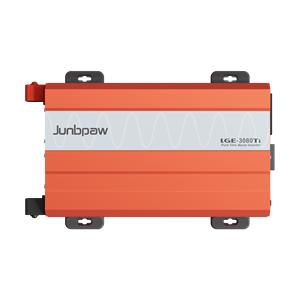
Multi-Voltage Input Flexibility • Integrated Remote Control Interface • Smart Variable Speed Cooling Fan • High Peak Power
Inquire Now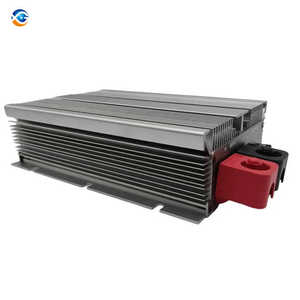
40A Output Current Handling • IP67 Sealed Rugged Construction • Forklift, Truck & Heavy Machinery Certified
Inquire Now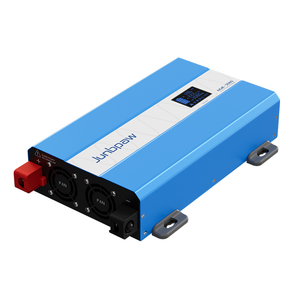
3000W Continuous Rating • Digital LCD Parameter Monitoring • Low No-Load Current Draw • Commercial & Residential Grade
Inquire NowNavigating modern railway electrification, heavy machinery auxiliary power, and renewable energy conversion demands rigorous design methodologies, absolute compliance, and long-horizon manufacturing capability.
Our traction converters and industrial DC/DC supplies are engineered from the PCB level up to satisfy rigorous international rail standards. Every unit passes stringent type testing against EN 50155 (Rolling Stock Electronic Equipment), EN 50121-3-2 (EMC), EN 45545-2 (Fire and Smoke Safety), and EN 61373 (Shock and Vibration resistance).
By incorporating zero-voltage-switching (ZVS) resonant converter topologies and custom planar transformers, our engineering teams drastically minimize copper and switching losses. This enables power densities exceeding 2.5 kW/L while ensuring exceptional thermal dissipation across full load cycles.
We eliminate development risk by housing a complete, accredited testing laboratory. Prototype and series units undergo thermal shock (-40°C to +85°C), high-G vibration testing, surge/transient simulation (catenary dropouts), and radiated/conducted EMC scans prior to full mass production release.
As a leading Chinese traction converter factory and global exporter, we combine localized supply chain agility for magnetic cores and power semiconductors with European-standard quality engineering. Our production footprint supports complete lifecycle management—offering Form-Fit-Function (FFF) replacement security, 20+ year component availability guarantees, and comprehensive failure mode effect analysis (FMEA) for global railway integrators.
The global traction power converter market is undergoing a structural paradigm shift driven by urban transit expansion, railway decarbonization, high-speed rail network upgrades, and the rapid electrification of commercial and off-highway heavy vehicles. System procurement directors and OEM engineering leads must navigate several evolving procurement vectors over the next decade:
Silicon Carbide (SiC) technology is rapidly replacing standard Silicon IGBTs in auxiliary power units (APU) and primary traction drives. SiC devices allow switching frequencies up to 5 times higher, dramatically reducing the weight and spatial envelope of passive magnetics while yielding system efficiency gains above 98.5% across varying load profiles.
Rail operators are demanding sub-system architectures that minimize Mean Time to Repair (MTTR). Modern procurement specifications mandate rack-mounted, hot-swappable converter blocks equipped with active current-sharing algorithms and isolated digital buses, ensuring zero-downtime operation even during individual power stage faults.
Next-generation traction converters are no longer passive power blocks. Integrating CANopen, Ethernet / IPT-DIR, and RS-485 IoT communication gateways allows converters to stream real-time thermal, ripple current, and voltage fluctuation metrics to fleet management dashboards, shifting maintenance from fixed calendar intervals to predictive telemetry.
Global rolling stock deployments require converters capable of seamless operation across cross-border electrification standards—including 600V, 750V, 1500V, and 3000V DC catenaries, as well as ultra-wide battery input ranges (24V to 110V DC) for traction control and auxiliary systems.
Below is an engineering summary comparing standard industrial converter topologies utilized across railway, heavy vehicle, and energy storage implementations:
| Converter Category | Typical Input Range | Output Capability | Target Standard Compliance | Key Topologies Utilized |
|---|---|---|---|---|
| Railway Auxiliary DC/DC | 24V, 48V, 72V, 110V DC (±30%) | 24V DC / 110V DC (50W – 10kW) | EN 50155, EN 61373 Class B | Interleaved ZVS Phase-Shifted Full-Bridge |
| Catenary Inverter (APU) | 600V / 750V / 1500V DC Wide Range | 3-Phase 380V / 400V / 440V AC | EN 50121-3-2, EN 50124-1 | 3-Level NPC / SiC MOSFET Inverter Bridge |
| High-Power Step-Up Buck | 12V / 24V Heavy Automotive | 48V DC up to 40A / 60A | ISO 16750, IP67 Sealed | Synchronous Rectification Buck-Boost |
| Board-Mount Micro Converters | 85V – 265V AC / 120V – 370V DC | 3.3V, 5V, 12V, 24V DC (3W–90W) | IEC 62368-1, EN 55032 Class B | Encapsulated Flyback with Integrated Planar Core |
In traction applications, thermal fatigue is the leading cause of power semiconductor degradation. Standard industrial power supplies frequently fail when exposed to the continuous cyclic thermal loads present during train acceleration, regenerative braking, and rapid ambient fluctuations (-40°C start-up up to +85°C internal cabinet temperatures).
Our engineering team solves this through advanced Direct Copper Bonding (DCB) ceramic substrates, heat-pipe thermal transport matrices, and vacuum-encapsulated pot resin. By eliminating thermal gradients across the power switches, we drastically reduce mechanical bond-wire stress, achieving documented field operational lifespans exceeding 20 years.
The transition to fast-switching wide-bandgap (SiC/GaN) devices introduces elevated dV/dt rates, which can induce severe electromagnetic interference (EMI) and common-mode noise into nearby signaling networks and sensitive sensor buses. Compliance with EN 50121-3-2 requires specialized input noise suppression and multi-stage filter designs.
We integrate symmetrical hybrid common-mode chokes, shielded planar magnetic transformers, and localized ground-plane routing. This ensures that conducted noise remains well below required CISPR and EN limits without necessitating bulky external filter accessories.
Modern transit systems leverage regenerative energy capture to feed power back into catenary grids or energy storage systems (batteries / supercapacitors). Our bidirectional converter platforms seamlessly transition from step-down buck operation during driving mode to boost mode during braking in less than 2 milliseconds, optimizing total fleet energy efficiency.
Everything you need to know about specifying, customizing, testing, and procuring high-reliability traction converters and industrial power supplies from China.
Whether you require immediate delivery of standard high-power converters or an end-to-end custom traction system engineered for EN 50155 certification, our senior engineering team is ready to evaluate your specifications.