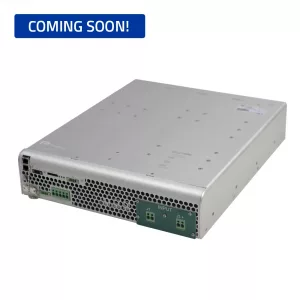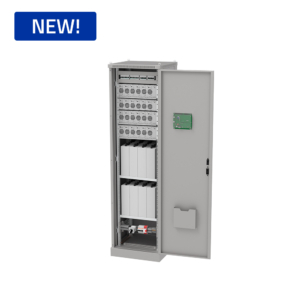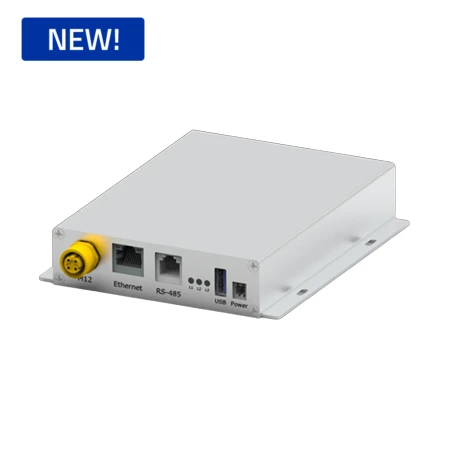
Explore our standardized, field-proven power conversion modules designed for high thermal stability, rugged deployment, and compliance with global safety standards.
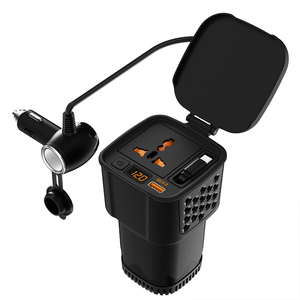
Continuous 200W cup-holder form factor car power inverter featuring universal AC socket and high-efficiency multi-port USB conversion.
Inquire Now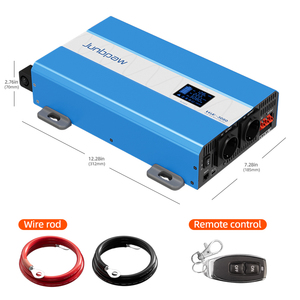
Rugged emergency & off-grid converter module delivering 50Hz/60Hz clean output for RV, marine, and mobile field operations.
Inquire Now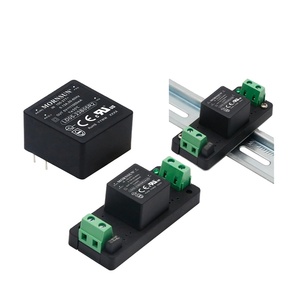
Compact, PCB-mountable industrial isolated power modules providing ultra-wide input voltage ranges and robust dielectric protection.
Inquire Now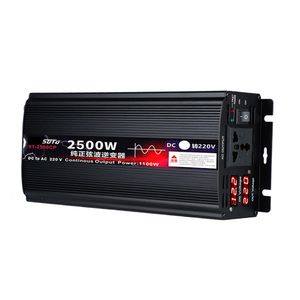
High-capacity 12V/24V/48V/60V input power inverter engineered with real-time operational diagnostics and dual surge capability.
Inquire Now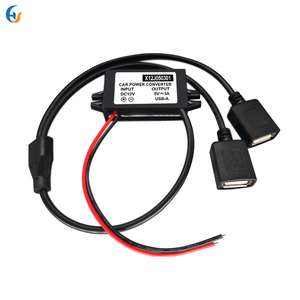
Encapsulated vehicle power supply adapter offering flame-retardant protection, synchronous rectification, and high energy conversion efficiency.
Inquire Now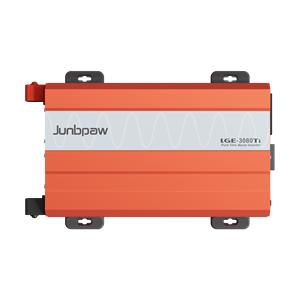
Industrial DC 12V/24V/48V to AC 100V/110V/120V converter incorporating intelligent remote monitoring and low standby power dissipation.
Inquire Now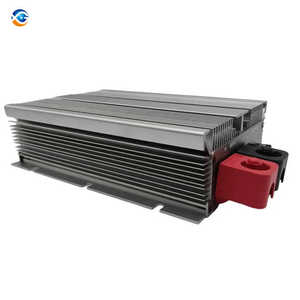
Fully potted, shockproof 12V to 48V voltage step converter tailored for harsh automotive, forklift, and outdoor industrial environments.
Inquire Now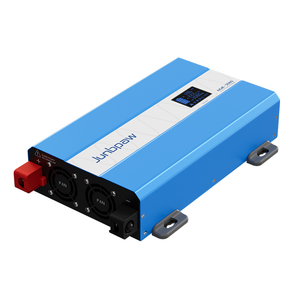
Commercial-grade 12V to 220V continuous inverter unit featuring digital LCD status telemetry, active cooling, and overload protection.
Inquire NowFour decades of accumulated power electronics know-how supporting critical applications across 5 continents.
Modern industrial, transport, and energy systems require increasingly dense, thermally resilient, and electrically isolated power conversion topologies. As embedded system designers migrate toward miniaturized enclosures and sealed chassis, selecting an established embedded power manufacturer becomes a fundamental engineering decision. Embedded power modules—ranging from low-wattage PCB-mounted AC/DC converters to high-power IP67 DC/DC step-up platforms—serve as the central nerve system of modern high-reliability equipment.
Historically, system integrators relied on standard off-the-shelf power units (COTS) with wide design margins, resulting in thermal throttling and structural footprint inefficiencies. Modern embedded power conversion architectures prioritize planar magnetic integration, high switching frequencies enabled by Wide Bandgap (WBG) device topologies such as Silicon Carbide (SiC) and Gallium Nitride (GaN), and resonant LLC power stages. This shift allows custom and modular power manufacturers to deliver power densities exceeding 30 W/in³ while meeting rigorous electromagnetic compatibility (EMC) and thermal derating requirements.
By replacing traditional wire-wound transformers with PCB-integrated planar magnetic structures, custom embedded power design eliminates hot-spots and parasitic leakage inductance. This engineering approach yields significant thermal and mechanical benefits:

System designers frequently encounter the trade-off between off-the-shelf standardized power modules and fully customized power electronics. A top-tier embedded power manufacturer de-risks this decision matrix by maintaining pre-qualified platform building blocks that can be adapted rapidly without incurring massive Non-Recurring Engineering (NRE) charges.
| Architecture Type | Typical NRE & Time-to-Market | Compliance & Certifications | Thermal & Mechanical Flexibility | Ideal Application Profile |
|---|---|---|---|---|
| Standard COTS Modules | Zero NRE / Immediate Availability | Pre-certified (IEC/EN 62368, CE) | Fixed form factor, standard conduction/convection | Rapid prototyping, low-stress industrial enclosures |
| Modified Standard Platforms | Low NRE / 6–12 Weeks Lead Time | Delta qualification using primary test data | Custom pinouts, conformal coating, custom voltage trim | Targeted industrial retrofits, specialized DC bus levels |
| Fully Custom Embedded PSU | Full NRE / 16–28 Weeks Qualification | Custom EN 50155, EN 45545-2, MIL-STD testing | Chassis-integrated potting, liquid cooling, tailored shape | Rolling stock railway, defense, space-constrained machinery |
Combining 40+ years of power electronics innovation in Barcelona with ISO 9001 quality controls to deliver mission-critical reliability.
Every platform undergoes extensive validation within our internal testing facilities, including pre-compliance EMC chambers, thermal shock chambers (-40°C to +85°C), and automated vibration test benches.
Specialized design methodologies for rolling stock and railway infrastructure complying with EN 50155, EN 50121-3-2 (EMC), EN 45545-2 (fire and smoke safety), and EN 50124-1 insulation coordination.
We actively manage component lifecycles for multi-decade deployment programs. Form-fit-function redesigns, last-time-buy strategies, and fleet maintenance support are built into our partnership model.

Whether configuring a compact 3W board-mounted DC/DC converter for sensitive sensor electronics or paralleling high-power 10kW traction auxiliary modules into a 72kW cabinet, our modular power architecture guarantees balance and control.
Active N+1 redundancy, dynamic current sharing via analog or PMBus interfaces, and hot-swappable shelf designs ensure zero single-point-of-failure operation in critical data centers, substations, and rail networks.
As industrial automation, electrification of transport, and microgrid renewable deployment accelerate, power system buyers must align with forward-looking procurement strategies. The global embedded power converter market is undergoing four major structural technological shifts:
Modern embedded power supplies are no longer passive black boxes. Integration of microcontrollers with PMBus, CANopen, or Modbus interfaces allows continuous real-time transmission of voltage ripple, operating temperature, and component degradation markers to edge cloud platforms for predictive maintenance.
Driven by battery energy storage systems (BESS) and Vehicle-to-Grid (V2G) applications, next-generation AC/DC and DC/DC converters feature dual-directional topology configurations. This allows seamless transitions between charging storage elements and feeding peak demand back into auxiliary DC buses.
Gallium Nitride (GaN) and Silicon Carbide (SiC) switching devices are transitioning from niche applications to mainstream standard embedded modules. WBG semiconductors allow switching speeds above 500 kHz, drastically scaling down filter inductor footprints while achieving continuous conversion efficiencies above 96%.
Extremes in climate and unconditioned operational environments require move away from forced-air cooling fans, which remain a primary mechanical point of failure. Conduction-cooled, sealed IP67 aluminum chassis filled with thermal potting compounds represent the modern standard for heavy machinery and outdoor DC microgrids.
Our power conversion systems are integrated globally into demanding applications where electrical failure is not an option.
On-board auxiliary converters, HVAC drives, door actuation systems, and catenary DC/AC inverters meeting strict EN 50155 surge transients.
Modular battery charging rectifiers, high-voltage DC/DC converters, and stationary backup power platforms designed for utility substations.
Monitored rack power supplies and cloud telemetry gateways designed for high-availability datacenters and industrial IoT edge nodes.
Comprehensive technical and commercial answers regarding manufacturing capabilities, development timelines, and standards compliance.
Our standard and modular platforms span from 3 W to 90 W PCB board-mount modules up to 72 kW integrated power systems. High-power systems utilize modular, hot-swappable 19-inch rack shelves with internal active current sharing, allowing engineers to scale power capacity or configure redundant N+1 switchgear configurations effortlessly.
Our rolling stock and wayside platforms are engineered natively to EN 50155, EN 50121-3-2 (EMC), EN 45545-2 (fire and smoke hazard level HL3 compliance), EN 61373 (shock and vibration resistance), and EN 50124-1 (insulation coordination). Industrial, energy, and laboratory modules conform to IEC/EN 62368-1, IEC 61010, and relevant UL certifications based on project scope.
A typical custom power project spans 16 to 28 weeks from initial specification review to fully qualified First Article Inspection (FAI) samples. By re-using verified planar transformer designs, pre-qualified resonant power topologies, and established thermal enclosures, our engineering team significantly reduces both development risk and NRE costs.
Because railway, energy, and defense projects remain deployed in the field for 20 to 30 years, we proactively monitor component lifecycles (EOL monitoring). We guarantee extended component supply agreements, Last Time Buy (LTB) notifications, and form-fit-function replacement engineering to ensure uninterrupted fleet maintenance support.
Yes. We specialize in conduction-cooled and IP67 fully potted enclosures engineered to dissipate heat directly through an integrated metal baseplate or external cold plate. This eliminates internal fans, allowing reliable operation in extreme ambient temperatures (-40°C to +85°C) without ingress of dust, moisture, or corrosive salt spray.
Submit your input/output voltage targets, ambient operating temperature envelope, mechanical footprint constraints, and target certification standards. Our technical engineering team will review your application and recommend the optimal standard platform or custom development path.
Inquire Now