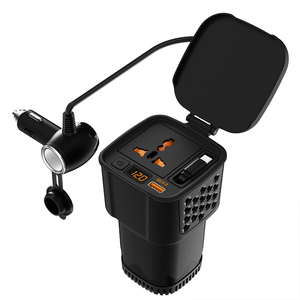
200W Continuous Cup Holder Power Converter
DC 12V to AC 220V power adapter featuring universal sockets, integrated surge protection, and ultra-quiet dynamic cooling.
Inquire Now
Explore our qualified product portfolio spanning high-frequency AC/DC, DC/DC buck-boost converters, and pure sine-wave DC/AC inverter modules engineered for high operational uptime.
DC 12V to AC 220V power adapter featuring universal sockets, integrated surge protection, and ultra-quiet dynamic cooling.
Inquire Now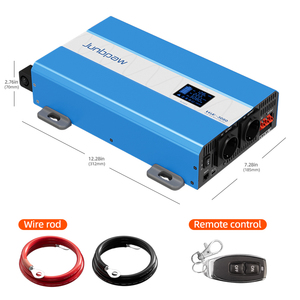
Pure sine wave single-output converter engineered for 50Hz/60Hz outdoor power resilience with rugged heat-dissipation casing.
Inquire Now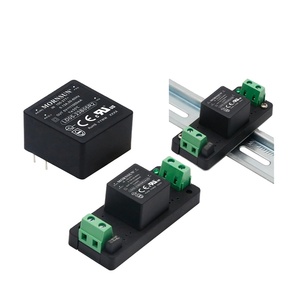
Compact encapsulate board-level switching power modules engineered for low EMI noise and wide input voltage fluctuations.
Inquire Now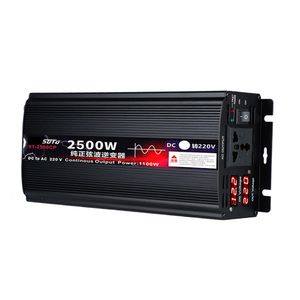
Multi-voltage DC input (12V/24V/48V/60V) converter featuring digital telemetry status LED displays and isolated PCB layout.
Inquire Now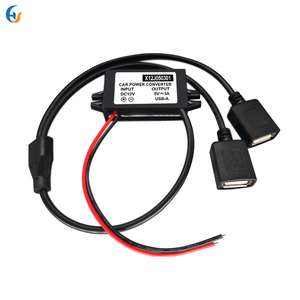
High-efficiency buck step-down converter with flame-retardant housing and over-current/over-temperature auto-recovery protection.
Inquire Now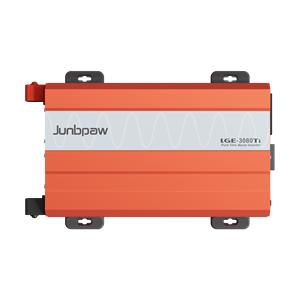
DC 12V/24V/48V to AC 110V/220V converter designed with remote wireless management for mobile workshop and fleet applications.
Inquire Now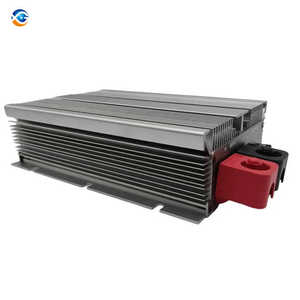
Heavy machinery and forklift step-down converter featuring IP67 sealed aluminum extrusion casing for harsh environmental duty cycles.
Inquire Now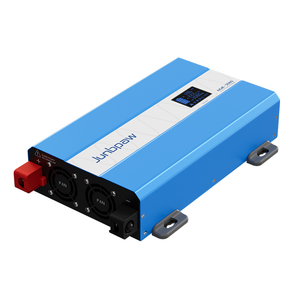
Factory-direct commercial energy storage inverter convert 12V DC up to 220V AC with active load tracking and digital status diagnostics.
Inquire NowInsulated Gate Bipolar Transistors (IGBTs) represent the foundational backbone of industrial power electronics, combining the high-input impedance of a MOSFET with the low saturation voltage capability of a bipolar junction transistor (BJT). In high-power inversion, traction drives, and renewable grid-tied rectifiers, selecting the right IGBT module supplier requires an intimate technical understanding of chip topologies, packaging physics, thermal resistance dynamics, and parasitic inductance mitigation.
Modern power conversion platforms demands increasing power density, higher junction temperature limits ($T_{j,max}$ up to 175°C), and enhanced short-circuit withstand capabilities ($t_{sc}$ ≥ 10 μs). As industrial power switching shifts toward high-frequency resonant topologies, IGBT module suppliers must innovate across both semiconductor die geometry and packaging substrates.
Technical Insight: Moving from planar gate structures to Trench-Gate Field-Stop (FS) technology reduces collector-emitter saturation voltage ($V_{CE(sat)}$) by up to 25%, drastically minimizing conduction losses in 1200V and 1700V power stages.
When evaluating IGBT modules for export and heavy-duty industrial applications, procurement engineers must distinguish between underlying chip generations:
Thermal management dictates real-world reliability. High-power IGBT modules leverage Direct Copper Bonded (DCB) or Active Metal Brazing (AMB) ceramic substrates (typically Silicon Nitride $Si_3N_4$ or Aluminum Oxide $Al_2O_3$). AMB substrates deliver superior thermal shock resilience, making them mandatory for railway traction, electric bus fast-chargers, and heavy industrial VFDs operating under cyclic thermal stress.
| Substrate Material | Thermal Conductivity (W/m·K) | Bending Strength (MPa) | CTE Matching (ppm/K) | Primary Industrial Application |
|---|---|---|---|---|
| Alumina ($Al_2O_3$) DCB | 24 – 28 | 400 | 6.8 | General Industrial Inverters & Standard Drives |
| Aluminum Nitride (AlN) DCB | 170 – 180 | 320 | 4.5 | High Power Densities & Centralized Solar Inverters |
| Silicon Nitride ($Si_3N_4$) AMB | 60 – 90 | 700 | 3.0 | Railway Traction (EN 50155), EV Powertrains & Defense |
The global market for IGBT modules and power conversion sub-assemblies is undergoing structural realignment. Driven by decarbonization mandates, grid electrification, and localized manufacturing resilience, procurement officers are transitioning from purely cost-centric models to lifecycle-cost and supply-chain transparency strategies.
Evaluating modules based on conduction and switching efficiency over a 20-year service life rather than initial piece-part acquisition cost.
Dual-sourcing strategies utilizing industry-standard module footprints (e.g., 62mm, EconoPACK™, PrimePACK™) to guarantee continuous assembly flow.
Incorporate embedded thermal sensors (NTC thermistors) and IoT gateways to transmit health parameters to cloud analytics for predictive maintenance.
Prior to locking in a long-term supply agreement with an IGBT exporter or power converter manufacturer, technical audit teams must verify the following parameters:
With over four decades of power electronics design and European manufacturing excellence based in Barcelona, Spain, our engineering ecosystem designs, qualifies, and manufactures high-reliability power conversion systems spanning from 50 W up to 72 kW in single units, with higher power scaling accomplished through parallel modular architectures.
From custom magnetic component design and planar transformer integration to thermal stress modeling and long-term component obsolescence management over 20+ year fleet lifespans.
Internal climatic chambers, shock & vibration test rigs (EN 61373), and electromagnetic compatibility (EMC) facilities ensure zero-defect product launches.
Over 260 qualified standard products held in stock alongside a dedicated R&D group that has delivered 1,000+ tailored engineering solutions for Tier-1 industrial partners.
Compliance engineering certified against EN 50155, EN 50121-3-2, EN 45545-2 (fire and smoke safety), IEC 61010, and IEC 62368 standards.
Trusted by Global Industry Leaders:








Addressing the core technical, logistical, and compliance inquiries encountered during power semiconductor and converter sourcing.
Submit your electrical parameters, thermal envelope, target input/output voltages, and compliance requirements to our application engineering team in Barcelona for instant standard unit selection or custom development feasibility.