Top Trusted Traction Drives Suppliers & Exporters

Engineering High-Reliability Power Conversion Systems, Heavy Industrial Inverters, and EN 50155 Compliant Auxiliary Systems from 50W to 72kW for Global Rail and Heavy OEM Applications.

Enterprise Product Portfolio

Precision Power Converters & Traction Auxiliary Hardware

Featured ruggedized DC/DC converters, pure sine wave inverters, and board-mount power modules engineered for continuous industrial duty, severe temperature envelopes, and high peak loads.
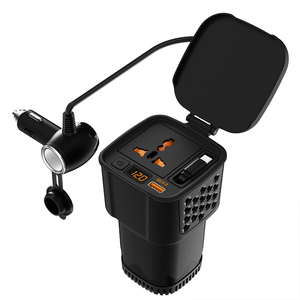
Car Laptop Charger Power Supply DC 12V to AC 220V 200W Converter Inverter
Car Laptop Charger DC 12V to AC 220V 200W Cup Holder Inverter
Compact 200W continuous output inverter featuring universal socket integration, designed for active vehicular field diagnostic stations and rugged mobile operating environments.
Input Voltage: 12V DC Nominal Continuous Power: 200W Real-Duty Form Factor: Ergonomic Cup-Holder
Send an Inquiry
Solar Power RV Inverter 2kW 3kW 4kW Pure Sine Wave Converter
Solar Power RV Inverter 2kW / 3kW / 4kW Pure Sine Wave Converter
Heavy-duty 50Hz/60Hz selectable emergency power inverter platform engineered for mobile auxiliary power networks, off-grid industrial shelters, and maritime field vehicles.
Output Scale: 2000W - 4000W Pure Sine Frequency: 50Hz / 60Hz Switchable Application: Heavy RV / Mobile Station
Send an Inquiry
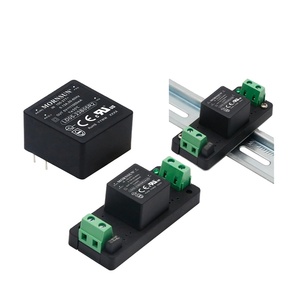
Power Supply AC DC Converter Module 3W to 90W Board Mount Converters
Board Mount AC/DC Power Converter Module Series (3W to 90W)
High-density encapsulating board-mount AC/DC converter modules scaling from 3W to 90W. Features high dielectric galvanic isolation and low standby power draw.
Power Steps: 3W up to 90W PCB Mount Topology: Encapsulated Flyback Isolation: High Dielectric Withstand
Send an Inquiry
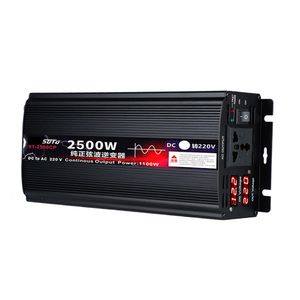
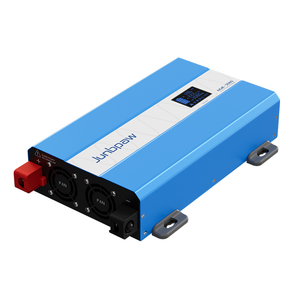
12V 24V 48V 60V DC AC Inverters 2500W Pure Sine Wave Dual Display
2500W Pure Sine Wave DC/AC Inverter with Dual Voltage LCD
Wide-input (12V/24V/48V/60V DC) industrial inverter providing 2500W continuous pure sine AC output. Integrated real-time dual telemetry displays for telemetry monitoring.
DC Inputs: 12V / 24V / 48V / 60V Options Output Rating: 2500W Continuous Sine Monitoring: Dual LCD Voltage Panels
Send an Inquiry
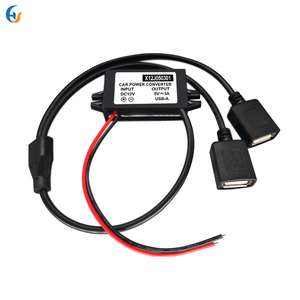
DC DC USB Power Converter 12V 24V to 5V 3A Step Down Buck Module
DC/DC Step-Down Buck Module 12V/24V to 5V 3A USB Adapter
High-efficiency DC/DC buck switching regulator converting wide vehicular DC bus lines to stable 5V 3A regulated USB outputs with integrated overcurrent protection.
Input Range: 12V - 24V DC Vehicle Bus Output: 5V DC @ 3A Continuous Efficiency: Up to 95% Switching
Send an Inquiry
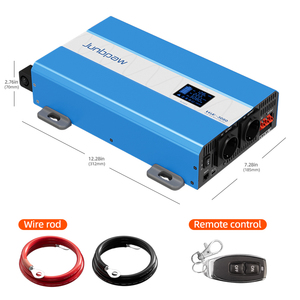
1KW 1.5KW 2KW 3KW Pure Sine Wave Inverter DC to AC Remote Control
1KW to 3KW Pure Sine Inverter with Remote Control Interface
Modular industrial power converter delivering 100V/110V/120V AC output from standard 12V/24V/48V DC battery banks. Features remote wire controller terminal interface.
Power Scale: 1000W, 1500W, 2000W, 3000W AC Output: 100V / 110V / 120V Pure Sine Control: External Remote Interface
Send an Inquiry
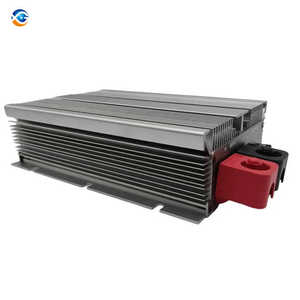
High Power 40A DC DC Converter IP67 Waterproof Aluminum Shell
High Power 40A IP67 Waterproof DC/DC Voltage Step Converter
Ruggedized 40A step-up/step-down converter encased in an IP67 sealed extruded aluminum housing. Engineered for forklifts, heavy trucks, and extreme-vibration machinery.
Current Output: 40A Continuous Drive Enclosure: Heavy Aluminum IP67 Sealed Target: Forklifts, Trucks, Rail Auxiliary
Send an Inquiry
Factory Wholesale 3kw Off-Grid Inverter 12V to 220V LCD Display
Industrial Wholesale 3kW 12V to 220V Sine Wave Off-Grid Inverter
High-capacity 3000W continuous output off-grid power conversion system featuring real-time diagnostic LCD display and thermal overload protective management.
Capacity: 3000W Continuous Peak Rated Conversion: 12V DC to 220V AC 50Hz Protection: Smart Thermal & Overload
Send an Inquiry
Enterprise Reliability Benchmarks

40+ Years of Field-Proven Power Conversion Expertise

Headquartered in Barcelona, Premium PSU provides complete engineering, qualification, and manufacturing services for high-reliability traction, railway, energy, and heavy industrial applications worldwide.

1,000+
Custom Power Designs Delivered
👥
130+
In-House Power Specialists
72 kW
Max Modular Rack Output Scope
🌍
5
Continents Operating Active Fleets
🛡
40+
Years Design & Manufacturing Legacy

Strategic Technical Whitepaper: Advanced Traction Drives & Industrial Power Conversion Solutions

In contemporary rail transportation, electrical substations, heavy machinery, and defense systems, the traction drive and auxiliary power electronics serve as the vital operational backbone. Modern traction drives and industrial power supply units (PSUs) must maintain continuous performance under severe electrical, thermal, and mechanical stresses. From handling line surges on rolling stock catenary lines to providing uninterrupted DC/DC step-down conversion for sensitive microprocessor control units, power electronics engineering requires absolute field reliability.

As global suppliers and exporters of traction drives, auxiliary power supplies, DC/AC pure sine wave inverters, and modular rectifier platforms ranging from 50 W up to 72 kW, our engineering methodology centers on de-risking system integration for Tier-1 original equipment manufacturers (OEMs). Grounded in 40+ years of European design legacy and rigorous ISO 9001 quality management, this whitepaper outlines the architectural paradigms, normative compliance matrices, market procurement trends, and engineering innovations defining modern industrial power conversion.

Core Architectural Imperative: In high-voltage rail traction and heavy industrial auxiliary networks, power system failure translates directly to operational downtime, expensive field maintenance, and safety liabilities. Achieving MTBF figures in excess of 500,000 hours requires planar transformer integration, resonant switching topologies, explicit component thermal derating, and compliance with stringent EN 50155 and EN 45545-2 standards.

Industry Standards Compliance & Normative Frameworks for Railway and Heavy Duty PSUs

Procuring traction drive systems and associated auxiliary converters for rolling stock or substation infrastructure requires adherence to an extensive matrix of international standards. Standard off-the-shelf commercial power supplies routinely fail when subjected to the line transients, thermal cycles, and severe shock profiles characteristic of industrial trackside and transit operations. Authentic enterprise-grade manufacturers engineer power equipment from the ground up to satisfy specific normative benchmarks:

  • EN 50155 (Railway Applications - Rolling Stock Electronic Equipment): Governs operational temperature classes (up to Class OT4: -40°C to +85°C), wide input voltage tolerance bands (0.6 to 1.4 Un continuous, with short-duration dips to 0.5 Un and surges to 1.4 Un), and environmental conformal coating mandatory requirements.
  • EN 45545-2 (Fire Protection on Railway Vehicles): Demands rigorous material selection for internal magnetics, printed circuit board (PCB) laminates, potting compounds, and structural enclosures to satisfy toxicity, smoke density (R22/R23), and hazard level (HL1 to HL3) qualifications.
  • EN 61373 (Rolling Stock Equipment - Shock and Vibration Tests): Mandates Category 1 Class B body-mounted or axle-mounted random vibration and shock resistance testing to guarantee mechanical joint integrity across 20+ year service lifetimes.
  • EN 50121-3-2 / IEC 61000-6-4 (Electromagnetic Compatibility - EMC): Mandates low radiated and conducted emissions profiles to prevent power switching noise from interfering with critical signal interlocking, communications, and emergency braking systems.
  • EN 50124-1 (Insulation Coordination): Establishes creepage and clearance distances for high-voltage isolation between primary catenary inputs, secondary logic circuits, and chassis ground connections.

Comparative Performance Matrix: Standard Industrial vs. Railway Traction Grade PSUs

To assist procurement engineers and systems integrators in specifying power conversion hardware, the following matrix contrasts standard industrial-grade converters against ruggedized traction-grade power systems:

Engineering Dimension Standard Industrial PSU Platform Rugged Traction & Heavy OEM PSU Platform
Input Voltage Window ±10% to ±15% Nominal Input Ultra-Wide 2:1, 4:1, and Catenary Ranges (24V to 3000V DC)
Operating Temperature -10°C to +50°C (Standard Forced Air) -40°C to +85°C (Conduction / Natural Convection OT4 Rated)
Vibration & Shock Limits Basic Commercial Drop / Low Shock EN 61373 Category 1 Class B Random Shock & Vibration Certified
Fire & Smoke Compliance UL94-V0 Standard Plastics EN 45545-2 Hazard Level HL1 / HL2 / HL3 Halogen-Free Materials
Expected Lifetime (MTBF) 100,000 to 150,000 Hours @ 25°C >500,000 Hours (MIL-HDBK-217F / Telcordia SR-332 Standards)
Obsolescence Support 3 to 5 Years Commercial Life Cycle 15 to 30 Years Active Lifecycle & Form-Fit-Function Formats

Global Sourcing & Procurement Trends in Traction Power Electronics (2025–2035)

The global traction drives and power conversion market is undergoing a rapid technological transformation driven by electrification, decarbonization of heavy transport, and the modernization of urban rail transit networks. Systems engineers and sourcing teams must stay aligned with major macro-technological procurement shifts:

1. Adoption of Silicon Carbide (SiC) Wide-Bandgap Semiconductors

Traditional silicon Insulated Gate Bipolar Transistors (IGBTs) are reaching their physical switching limit. Modern traction drive exporters are increasingly transitioning auxiliary power converters and high-power DC/DC platforms to Wide-Bandgap Silicon Carbide (SiC) MOSFET topologies. SiC technology reduces switching losses by up to 60%, enables operating frequencies above 100 kHz, and permits dramatic reductions in passive magnetic sizes, yielding power density gains exceeding 30% without sacrificing thermal headroom.

2. Decentralized Auxiliary Power Architecture

Legacy passenger trainsets relied on single, centralized high-power auxiliary converter blocks. Modern transit engineering favors decentralized power distribution. Utilizing distributed, modular DC/DC converters (e.g., 1kW to 10kW localized units) and compact pure sine wave DC/AC inverters mounted directly at point-of-use loads (HVAC fans, passenger charging stations, hydraulic door actuators, and emergency lighting) drastically reduces heavy copper cabling runs, eliminates single-point system failures, and improves fleet availability.

3. Predictive Maintenance via IoT Telemetry Gateways

Procurement specifications are shifting from purely static hardware deliverables to smart, connected power systems. Modern high-power converters now integrate smart communication modules (Modbus, CANopen, Ethernet, or IoT Cloud Gateways). Real-time telemetry monitoring of internal switching temperatures, input ripple voltages, electrolyte capacitor degradation indicators, and operating hours enables predictive maintenance schedules, cutting unpredicted rolling stock depot visits significantly.

4. Modular N+1 Redundancy & Hot-Swappable Racks

For high-reliability infrastructure such as railway signal substations and data center auxiliary power grids, high-frequency AC/DC rectifier systems are specified with modular, hot-swappable shelf designs. Implementing active current sharing and N+1 active redundancy guarantees that if an individual module experiences a fault, the remaining units dynamically take up the load without interruption to downstream traction control or signal logic.

Deep-Dive Engineering Topologies: Resonant Converters & Planar Magnetics Integration

Creating durable power converters that deliver high efficiency across varying load conditions requires refined topology selection during the initial research and development phase. Two core architectural pillars drive our engineering competitive advantage:

Interleaved Three-Phase Resonant Switch Topologies

Conventional hard-switching topologies suffer from severe switching stress and high switching losses at high switching frequencies. By utilizing zero-voltage switching (ZVS) and zero-current switching (ZCS) resonant topologies (LLC and CLLC topologies), switching dissipation is virtually eliminated. When scaled into three-phase interleaved configurations, input and output current ripple amplitudes drop exponentially, requiring smaller capacitive filtering banks and extending the operational lifespan of high-grade electrolytic or film capacitors.

Planar Transformers & Integrated PCB Magnetics

Traditional wire-wound copper transformers represent bulky, thermally constrained elements prone to high leakage inductance and winding capacitive losses. Implementing multi-layer planar transformers where primary and secondary turns are printed directly on heavy copper PCB substrates provides unmatched thermal dissipation, precise inductive coupling, and compact low-profile packaging. Planar integration allows units like high-current 40A DC/DC step-down converters to achieve fully sealed IP67 aluminum enclosure ratings without requiring forced external fans.

Enterprise Capabilities & Manufacturing E-E-A-T Excellence

Choosing a long-term partner for traction drives and power conversion equipment demands robust verification of manufacturing capabilities, testing facilities, and engineering depth. Located in Barcelona, Premium PSU maintains a fully integrated engineering and production facility tailored for high-mix, high-reliability B2B power systems:

  • 40+ Years of Specialization: Over four decades dedicated exclusively to industrial power electronics, yielding over 1,000 custom qualified designs for global Tier-1 integrators including Alstom, Siemens, CAF, ASML, and Vestas.
  • In-House Qualification Laboratory: Every platform undergoes full type testing internally—including full EMC immunity and emissions chambers, climatic thermal cycling (-40°C to +85°C), burn-in stress bays, and multi-axis shock and vibration tables.
  • Customization Agility & Modular Building Blocks: By leveraging a pre-qualified library of modular power stages, planar transformers, and digital control software, custom NRE development timelines are reduced from years to a 16-28 week qualification window.
  • Comprehensive Obsolescence Control: Long-term supply contracts for railway and utility clients are backed by 20+ year component monitoring, last-time-buy strategies, and direct form-fit-function replacement redesign capabilities.
Engineering Guidance

Frequently Asked Questions for Traction & Power Conversion Procurement

Answers to critical technical, normative, and lifecycle questions routinely addressed by our senior application engineering team.

What power range and input voltage profiles do your conversion systems cover?
Our standard catalog platforms and custom engineered systems cover power levels from 50 W to 72 kW per unit or combined parallel rack system. Input voltage capabilities accommodate standard industrial low-voltage lines (12V, 24V, 48V, 110V DC), high-voltage DC auxiliary buses (up to 750V, 1500V, and 3000V DC catenary supplies), as well as single-phase and three-phase AC mains input ranges with active Power Factor Correction (PFC).
How do you ensure EN 50155 compliance for custom railway power converters?
Compliance with EN 50155 is embedded directly into our early schematic design rules and component selection protocols. Every railway-grade power supply undergoes rigorous internal testing for line surges, voltage dips, continuous thermal operation at extreme temperature limits (Class OT4), conformal PCB coating application to resist humidity, dielectric isolation testing, and EN 61373 mechanical shock and vibration qualification before independent third-party certification.
What is the typical development timeline and NRE workflow for a custom traction supply?
A custom power supply development program spans approximately 16 to 28 weeks from initial specification sign-off to fully tested, qualified first-article samples. By utilizing our extensive building-block library of planar magnetics, digital control firmware, and proven resonant power stages, we significantly reduce non-recurring engineering (NRE) costs and risk while maintaining strict compliance with project-specific mechanical envelopes.
How are extreme environmental conditions managed without internal fan failures?
For unvented or harsh environments (e.g., trackside cabinets, under-chassis rolling stock, heavy forklifts, and outdoor substations), we engineer natural convection, conduction-cooled, or IP67 sealed extruded aluminum platforms. By bonding power semiconductors directly to heavy aluminum cold plates using high thermal-conductivity interface materials and implementing high-efficiency SiC/IGBT resonant topologies, heat is directly dissipated outwards through the enclosure wall, eliminating vulnerable mechanical fans.
What support is provided for long-term component obsolescence on 20+ year projects?
Industrial and transit programs require long service lives. We provide formal obsolescence management services including proactive silicon end-of-life (EOL) monitoring, last-time-buy (LTB) component buffer stock management, and form-fit-function (FFF) engineering drop-in redesigns to guarantee ongoing product availability across decades of operational fleet deployment.

Consult with Senior Power Systems Engineers

Submit your custom electrical specifications, mechanical constraints, input voltage ranges, and normative requirements directly to our technical engineering team in Barcelona. We will evaluate your design criteria and deliver a tailored feasibility proposal.