Architectural Guide & Industrial Solutions

Energy Grid Power Conversion Systems: Decoupling, Bidirectional Storage & Grid Resiliency

Ruggedized, high-efficiency Energy Grid Power Conversion Systems (50 W to 72 kW) engineered for modern utility networks, microgrids, traction substations, and industrial power infrastructure. European design, fully qualified for extreme environments.

High-Reliability Grid Infrastructure

Grid-Forming & Grid-Following Modular Topologies

Proven utility-scale rectifiers, bidirectional DC/DC converters, and catenary-isolated inverters. Minimize Total Cost of Ownership (TCO) with planar magnetics and SiC power electronics.

40+ Years European Manufacturing

Tailored Systems for Utility & Microgrid Procurement

From initial specification analysis to certified volume delivery. Protect your grid infrastructure with advanced thermal management, high galvanic isolation, and 20+ year component lifecycles.

  • ISO 9001 & ISO 14001 Certified Design & Manufacturing
  • EN 50155, IEC 61850, IEC 61000 & IEC 62368 Compliance
  • In-House Climatic, EMC & Vibration Testing Facilities
  • 40+ Years Power Electronics Engineering in Barcelona
Engineering Intelligence & User Intent Mining

Understanding Next-Generation Energy Grid Power Conversion Systems

Modern electrical grids are experiencing an unprecedented transition. The rapid deployment of distributed energy resources (DERs), utility-scale battery energy storage systems (BESS), electrified transport networks, and localized microgrids demands robust **Energy Grid Power Conversion Systems (PCS)** capable of dynamically balancing power flow, maintaining voltage stability, and surviving severe electrical transients.

An Energy Grid Power Conversion System (PCS) serves as the central electro-technical interface between high-voltage/medium-voltage distribution networks, local DC microgrids, energy storage arrays, and mission-critical industrial loads. Unlike traditional bulk transformers or unidirectional power supplies, contemporary grid PCS architectures rely on advanced bidirectional topologies, wide-bandgap (SiC/GaN) semiconductors, zero-voltage switching (ZVS) resonant power stages, and high-frequency planar magnetics to achieve efficiency levels exceeding 98.5% while providing microsecond-level grid synchronization.

Key Functional Pillars of Modern Grid PCS Topologies

Global procurement teams and system integrators evaluating Energy Grid Power Conversion Systems typically prioritize three core operational modes depending on grid topology and fault tolerance requirements:

  • 1. Bidirectional AC/DC & DC/DC Energy Storage Conversion Enables seamless energy arbitrage, peak shaving, and black-start capability by bi-directionally steering active and reactive power between energy storage banks (LiFePO4, flow batteries, supercapacitors) and the grid.
  • 2. Grid-Forming (GFM) vs. Grid-Following (GFL) Controls Grid-following converters synchronize with an existing grid frequency via Phase-Locked Loops (PLL). In contrast, advanced Grid-Forming PCS units act as virtual synchronous generators (VSG), establishing voltage phase and frequency independently in islanded microgrids or weak distribution networks.
  • 3. Galvanic Decoupling & Transient Isolation Protects low-voltage control systems and storage media from high-voltage catenary surges, lightning strikes, line-to-ground faults, and harmonic pollution through high-frequency planar transformers rated up to 4.2 kV RMS isolation.

Technical Parameter Matrix: Standard vs. Custom Energy Grid PCS Platforms

Parameter Utility Substation PCS Railway Traction & Catenary PCS Industrial Microgrid & Storage PCS
Nominal Power Range 10 kW to 72 kW (Parallelable to Multi-MW) 1 kW to 30 kW (Single/Three-Phase) 50 W to 20 kW (Modular Rack/DIN Rail)
Input Voltage Window 3-Phase 400V / 480V AC ±20% 750V DC / 1500V DC / 3000V DC Catenary 48V DC, 110V DC, 400V DC, 800V DC Battery
Efficiency (Peak Load) 97.8% – 98.6% (SiC Resonant) 95.5% – 97.2% (Wide Range Isolated) 94.0% – 96.8% (Planar Topology)
Grid Standard Compliance IEC 61850, IEC 61000-6-2/4, IEEE 1547 EN 50155, EN 50121-3-2, EN 45545-2 IEC 62368-1, IEC 61010-1, CE Mark
Cooling Options Conduction, Natural Convection, Forced Air Conduction (Cold Plate) / Natural Air Conduction / DIN Rail Convection
Communication Interface Modbus TCP/RTU, CANopen, Ethernet/IP MVB, CANopen, RS-485, SNMP IoT Gateway, MQTT, Cloud Telemetry
Get Catalog
Proven European Engineering Authority

40+ Years of Excellence in Power Conversion Architecture

At Premium PSU, headquartered in Barcelona, Spain, we have spent four decades mastering high-reliability power electronics. Our deep expertise in custom magnetic design, thermal engineering, and compliance verification enables us to deliver Energy Grid Power Conversion Systems that withstand the harshest operating conditions on Earth.

  • 1,000+ Custom Power Designs Field-Proven Worldwide Our engineering teams have designed, qualified, and manufactured over 1,000 tailored power conversion solutions deployed across 5 continents in rail, electrical utilities, defense, and high-tech manufacturing.
  • In-House EMC, Climatic & Vibration Testing Laboratories We eliminate project schedule risk by validating electromagnetic compatibility (EMC), thermal shock, high-altitude derating, and mechanical stress (EN 61373) inside our dedicated Barcelona testing facility during early prototyping.
  • Planar Transformer & Resonant Topology Expertise By utilizing state-of-the-art planar magnetics and zero-voltage switching three-phase resonant topologies, our conversion systems cut power dissipation by up to 40% and footprint by 35% compared to conventional discrete designs.
  • Decades-Long Obsolescence & Lifecycle Management Grid infrastructures demand 20 to 30 years of operational service life. We manage component life cycles, conduct form-fit-function redesigns, and provide long-term spare parts availability for installed utility and railway fleets.
Premium PSU Energy Grid Power Conversion Systems Engineering Laboratory
Featured Product Portfolio

High-Performance Energy Grid Power Conversion Systems

Whether you require standard off-the-shelf conversion modules or custom-engineered rack architectures, Premium PSU offers qualified building blocks optimized for thermal efficiency, high power density, and strict grid regulatory compliance.

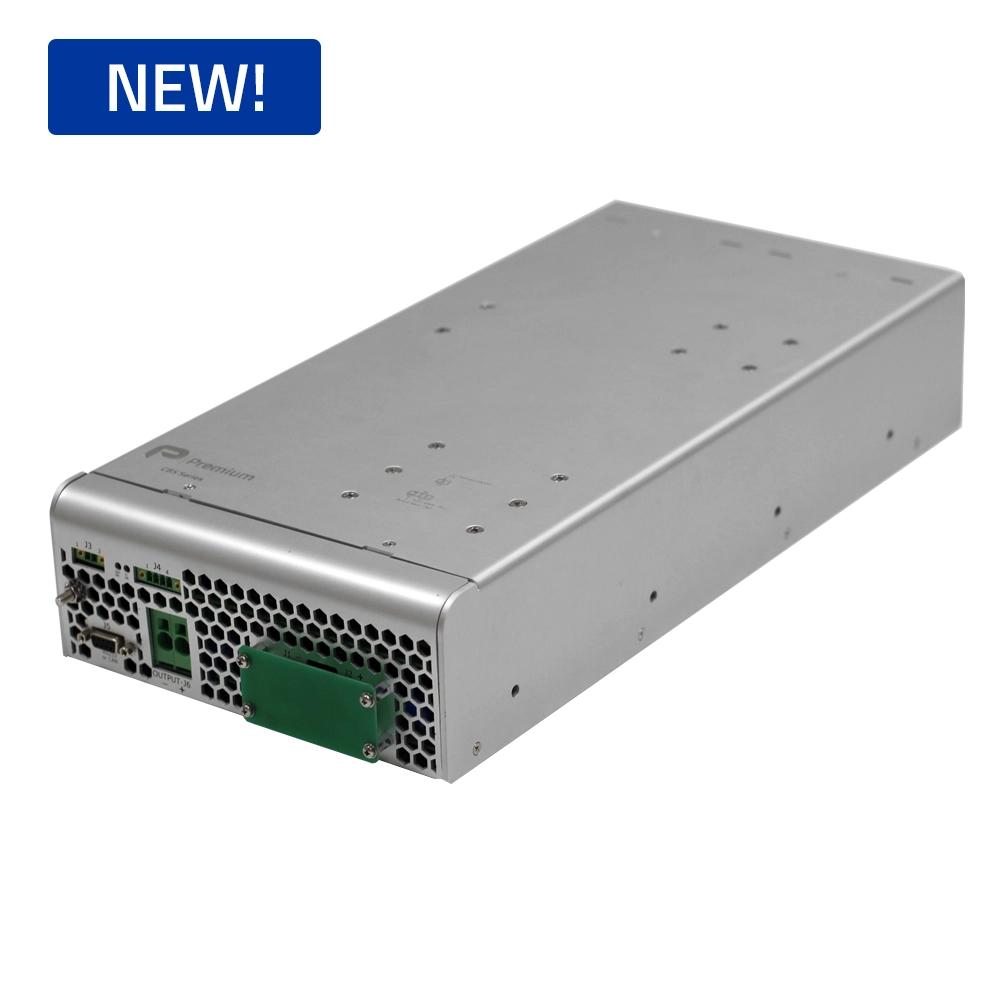
High Frequency AC/DC Grid Rectifier System
AC/DC Modular Systems

High-Frequency Grid Rectifier Systems

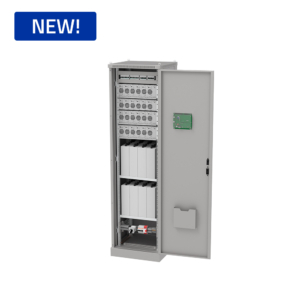
Modular 19-inch rack-mount rectifiers designed for substation auxiliary power, telecom grid nodes, and battery backup. Features N+1 active redundancy, active power factor correction (PFC > 0.99), dynamic current sharing, and remote SNMP/Modbus management.

  • Power Range: 1 kW to 72 kW Modular
  • Efficiency: Up to 96.5%
  • Active Power Factor Correction
Get Catalog →
CBS-10K Railway & Substation DC/DC Converter
Bidirectional DC/DC

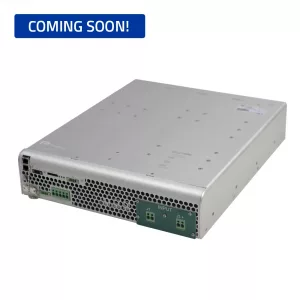
CBS-10K Heavy-Duty DC/DC Converter

Engineered for high-power industrial grids and traction substations. Delivers up to 10 kW continuous power with peak overload handling for heavy inductive loads, battery charging, and catenary voltage stabilization.

  • Wide Input: 24V to 1500V DC options
  • Galvanic Isolation: Up to 4.2 kV RMS
  • Ruggedized: EN 50155 & EN 61373
Get Catalog →
OVX-6400 Railway and Microgrid DC/AC Inverter
DC/AC Sine Wave Inverters

OVX-6400 Grid & Traction Inverter

Three-phase and single-phase pure sine wave DC/AC inverter platform delivering 6400 VA of continuous power for grid-tied sub-systems, HVAC drives, and auxiliary power supplies in extreme thermal environments (-40°C to +85°C).

  • Output: 3-Phase 400V AC or 230V AC
  • THD: < 2% Pure Sine Wave
  • Parallel Operation with Load Balancing
Get Catalog →
Premium Vision IoT Communication Gateway for Grid Monitoring
IoT & Grid Analytics

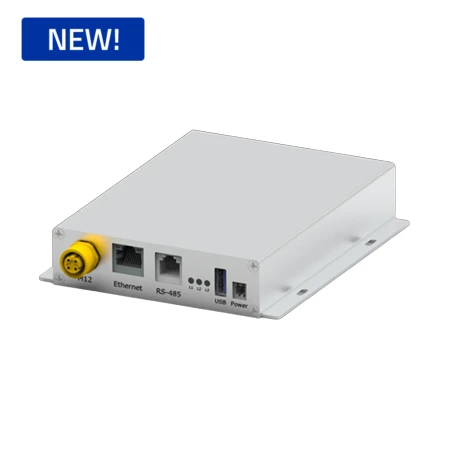
Premium Vision IoT Gateway Module

Intelligent communication gateway for grid-connected converter monitoring. Streams real-time operational telemetry (temperature, ripple voltage, degradation metrics) to secure cloud platforms for predictive maintenance.

  • Protocols: MQTT, Modbus TCP, REST API
  • Cybersecurity: TLS 1.3 Encryption
  • Condition-Based Health Scoring
Get Catalog →
Strategic Procurement Intelligence (2026–2035)

As utility companies, IPPs (Independent Power Producers), microgrid operators, and railway infrastructure authorities modernize their power conversion networks, procurement strategies are pivoting away from first-cost evaluation toward total lifecycle capability. Engineering and purchasing directors must navigate five critical industry shifts:

1. WBG Semiconductors

Silicon Carbide (SiC) & GaN Adoption

The transition from legacy Silicon IGBTs to Wide Bandgap (WBG) Silicon Carbide MOSFETs reduces switching losses by up to 75%. This shift allows operating switching frequencies to increase from 20 kHz to over 100 kHz, drastically shrinking the volume of magnetic components while enabling energy conversion efficiencies above 98.5%. Global buyers are making SiC topology a mandatory tender criterion for high-density substation retrofits.

2. Bidirectional Flexibility

Integration of BESS & DC Microgrids

Grid energy storage integration requires power conversion hardware capable of switching between charging and discharging modes in under 5 milliseconds. Dual Active Bridge (DAB) and bidirectional resonant topologies are rapidly replacing legacy unidirectional converters, allowing utility assets to deliver instantaneous frequency regulation, synthetic inertia, and reactive power compensation to the main grid.

3. Modular Hot-Swappability

Eliminating MTTR in Mission-Critical Nodes

Unscheduled downtime in energy transmission or traction networks results in exorbitant financial penalties. Modern grid procurement specifies modular, N+1 redundant architectures where individual conversion modules can be hot-swapped by field technicians without de-energizing the main system rack, reducing Mean Time to Repair (MTTR) from hours to under 5 minutes.

4. Cyber-Physical Telemetry

Edge Computing & Predictive Maintenance

Energy Grid Power Conversion Systems are no longer passive black boxes. Smart grid standards demand embedded IoT communication gateways running encrypted protocol stacks (IEC 61850, MQTT). Advanced algorithms monitor DC link capacitor equivalent series resistance (ESR) and thermal drift in real time, triggering predictive maintenance alerts months before an actual hardware failure occurs.

5. Decoupled Supply Chain

European Quality & Long-Term Traceability

Global geopolitical disruptions have exposed vulnerabilities in centralized offshore manufacturing. Tier-1 grid operators are prioritizing European engineering partners who guarantee full raw material traceability, localized R&D expertise, ISO 14001 environmental compliance, and long-term obsolescence protection spanning 20+ years.

Ready to De-Risk Your Next Power Tender?

Download our full technical documentation, white papers, and product catalog engineered for high-demand grid environments.

Technical Knowledge & Buyer Intent Mining

Frequently Asked Questions on Energy Grid Power Conversion Systems

Comprehensive technical responses curated by Premium PSU's senior power conversion design engineers to address common global procurement, integration, and compliance questions.

1. What primary technical parameters define an Energy Grid Power Conversion System (PCS)?

An Energy Grid Power Conversion System (PCS) is characterized by several critical engineering performance parameters:

  • Nominal Power Rating & Overload Margin: Ranging from single 50 W auxiliary supplies up to 72 kW modular units, capable of handling 150% to 200% surge currents for 10 seconds during heavy motor or grid transient startup.
  • Input/Output Voltage Flexibility: Support for wide wide-range DC inputs (24V to 3000V DC) and single- or three-phase AC mains (110V to 480V AC).
  • Galvanic Isolation: High impulse withstand voltage (up to 4.2 kV RMS or higher) protecting control circuits from high-power distribution buses.
  • Power Factor & Harmonic Distortion: Active Power Factor Correction (PFC > 0.99) and Total Harmonic Distortion (THD < 2%) to comply with strict IEEE 519 and IEC 61000-3-2 grid standards.
  • Efficiency & Thermal Dissipation: Over 96% to 98.5% efficiency using Zero-Voltage Switching (ZVS) resonant topologies, allowing natural convection or conduction cooling in sealed IP65 enclosures.
2. How do grid-forming (GFM) conversion topologies differ from conventional grid-following (GFL) systems?

Grid-following (GFL) power converters act as controlled current sources. They rely on an established grid voltage and frequency reference provided by the main utility network, using a Phase-Locked Loop (PLL) to inject active and reactive power. If the main grid disconnects, standard GFL converters shut down to prevent islanding hazards.

In contrast, Grid-Forming (GFM) Energy Grid Power Conversion Systems act as voltage sources. They synthesize an AC voltage vector independently, providing virtual inertia and frequency regulation to islanded microgrids, remote renewable stations, or weak distribution networks. Premium PSU integrates advanced digital control algorithms into custom converter platforms to enable smooth transitions between grid-tied GFL and standalone GFM modes.

3. Why are planar transformers and resonant topologies essential for high-density grid applications?

Traditional wire-wound transformers suffer from significant proximity effect losses, poor thermal dissipation, and high parasitic leakage inductance at elevated operating frequencies. Planar transformers utilize multi-layer printed circuit boards (PCBs) and flat ferrite cores, offering a dramatically higher surface-area-to-volume ratio.

When combined with LLC or DAB (Dual Active Bridge) resonant topologies, planar magnetics enable Zero-Voltage Switching (ZVS) and Zero-Current Switching (ZCS). This eliminates semiconductor switching losses, reduces electromagnetic interference (EMI), and cuts total converter footprint by up to 40% compared to conventional wire-wound designs—critical for space-constrained substation cabinets and rolling stock enclosures.

4. What European and international standards apply to railway and energy grid power converters?

Depending on the deployment sector, Premium PSU designs and qualifies power conversion hardware against stringent international standards:

  • Railway & Catenary Sub-Systems: EN 50155 (electronic equipment on rolling stock), EN 50121-3-2 (EMC), EN 45545-2 (fire and smoke safety), EN 61373 (shock and vibration), and EN 50124-1 (insulation coordination).
  • Industrial & Utility Grids: IEC 61000-6-2/4 (industrial EMC immunity and emissions), IEC 62368-1 / IEC 61010-1 (safety requirements for electrical equipment), IEC 61850 (substation automation communication), and IEEE 1547 (grid interconnection).

Detailed type test reports and certificates of compliance are provided with all qualified platforms.

5. How does Premium PSU handle long-term component obsolescence for 20+ year utility infrastructure programs?

Utility energy grids and rail transport infrastructures operate on multidecadal life cycles. Premium PSU enforces a proactive obsolescence management strategy structured around four pillars:

  • 1. Component Lifecycle Monitoring: Active tracking of semiconductor, magnetic, and electrolytic component status with component manufacturers to anticipate end-of-life (EOL) announcements 12 to 24 months in advance.
  • 2. Form-Fit-Function (FFF) Engineering: Design modular PCB architectures that allow pin-compatible drop-in replacements without requiring full system re-certification.
  • 3. Last-Time-Buy (LTB) & Warehousing: Direct procurement and controlled storage of critical components for long-term maintenance contracts.
  • 4. Repair, Overhaul & Retrofit Services: Factory-backed repair lines in Barcelona offering refurbishments and performance upgrades for legacy installations worldwide.
6. Can Premium PSU customize power conversion systems for extreme climatic and altitude environments?

Yes. A substantial portion of our projects are custom-engineered solutions tailored for extreme environments. Our systems can be configured with wide operating temperature ranges (-40°C to +85°C), conformal coating (Type UR/AR) for high-humidity and salt-mist atmosphere protection, altitude derating insulation clearance for deployments above 2,000 meters, and IP65/IP67 ruggedized mechanical enclosures.

Global Trust & Industry Partnerships

Empowering Tier-1 Grid, Energy & Transportation Leaders

Our power conversion systems are deployed in mission-critical applications by global market leaders in rail, renewable energy, utilities, and high-tech manufacturing.

  • Alstom
  • ASML
  • Siemens
  • Vestas
  • Iberdrola
  • Endesa
  • CAF
  • Naturgy
Engineering Knowledge Base

Latest Technical Insights & Power Electronics Research

In-depth technical white papers and engineering application notes written by our R&D power specialists in Barcelona.

White paper on power electronics reliability
White Paper

Grid PCS Reliability: Mechanical Design & Thermal Paths

How physical layout, creepage clearance, and planar transformer thermal interfaces govern real MTBF in heavy grid environments.

Published Technical Guide
Railway power electronics technology vectors and standards
Application Note

Catenary Transient Protection & EN 50155 Compliance

Strategies for handling extreme input voltage fluctuations, overvoltage spikes, and isolation requirements in rail grid interfaces.

Published Technical Guide
Three-phase resonant converters and planar magnetic integration
Application Note

Three-Phase Resonant Topologies & Planar Magnetics

Maximizing power density and efficiency in continuous 72 kW grid rectifiers via zero-voltage switching topologies.

Published Technical Guide
Design, calculation and simulation of planar transformers
Application Note

Planar Transformer Winding Layout & EMI Minimization

A analytical framework for controlling inter-winding capacitance and leakage inductance in high-frequency energy converters.

Published Technical Guide

Consult directly with a Senior Power Conversion Engineer

Submit your electrical specification—voltage ranges, isolation parameters, thermal constraints, and compliance requirements—and our engineering team in Barcelona will evaluate the optimal standard platform or custom development path within 24 hours.