
South Africa’s electrical landscape presents a double technical challenge: severe grid instability caused by recurrent Eskom Load Shedding switching transients, and one of the highest lightning flash densities globally across the Highveld region (Gauteng, Mpumalanga, and Free State).
When utility substations repeatedly cycle power to industrial and residential sectors during Stage 1–6 Load Shedding, heavy inductive loads (such as mining pumps, municipal water networks, and commercial HVAC systems) disconnect and reconnect simultaneously. This produces destructive inrush spikes exceeding 6kV to 10kV on standard 230V/400V distribution lines.
Eskom grid energization events trigger steep $\text{dV}/\text{dt}$ voltage spikes. Standard consumer surge plugs fail rapidly under repetitive thermal stress without heavy-duty Metal Oxide Varistors (MOVs) paired with thermal disconnect mechanisms.
Highveld storms produce ground flash densities exceeding 15–20 strikes/km²/year. Class I / Type 1 Spark Gap and heavy-duty Gas Discharge Tubes (GDT) are essential to clamp fast 10/350µs impulse waveforms.
Floating neutrals during generator or battery inverter switchovers cause phase-to-earth overvoltages. Specialized Type 2 N-PE isolation surge modules maintain equipment safety.
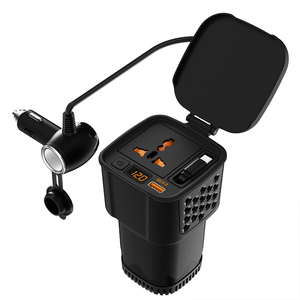
From solar microgrids in the Western Cape to heavy mining operations in Rustenburg, our wholesale surge suppression devices and industrial power converters are deployed in critical infrastructure.
Johannesburg and Midrand data infrastructure require uninterrupted operations. Cascaded Type 1+2 surge protective devices protect server racks and sensitive AC/DC board-mount power modules against cumulative grid switching noise.
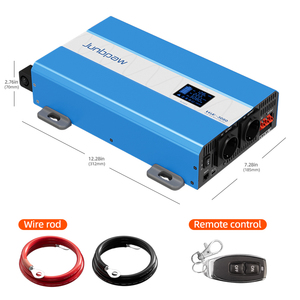
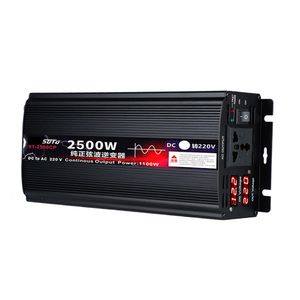
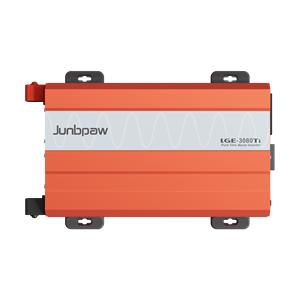
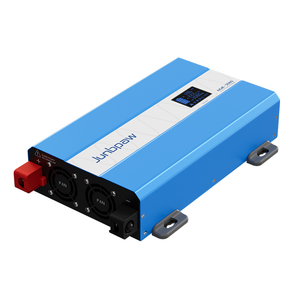
Commercial rooftop solar installations in Cape Town and Winelands mandate DC side surge protection up to 1000V/1500V DC. Our off-grid 3kW–5kW pure sine inverters seamlessly pair with high-voltage DC SPDs.
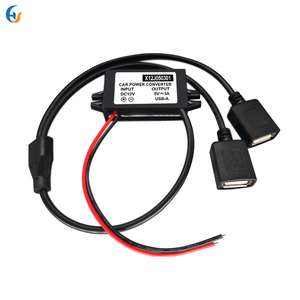
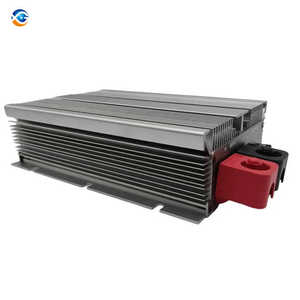
Heavy extraction machinery in Rustenburg’s platinum belt operates in dusty, high-vibration, and broad ambient temperature conditions. Ruggedized 40A DC/DC converters with aluminum heat dissipation provide reliable power.
As South African businesses and households rapidly decentralize from Eskom towards self-generation, wholesale demand for hybrid protection and conversion hardware is accelerating.
Insurance companies across South Africa now strictly enforce compliance with SANS / IEC 61643-11 standards for commercial property payouts following lightning damage. Importers and wholesalers in Durban and Johannesburg require verified test reports and thermal protection certificates from direct Chinese manufacturers.
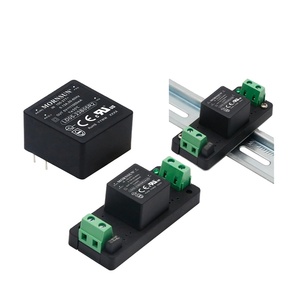
The market is shifting from standalone surge plugs to holistic distribution board protection. Integrators demand compact AC/DC DIN-rail power modules and surge suppressors that integrate directly into smart inverter control cabinets for residential microgrids in Durban and Port Elizabeth.
Modern electrical contractors prioritize compact power conversion hardware. By leveraging planar transformers and resonant LLC topologies, our OEM factory reduces module sizes by 40% while raising energy efficiency to 95%+, ideal for space-constrained vehicle and telecommunications enclosures.
Off-grid cellular towers across Eastern Cape and KwaZulu-Natal rely on wide input DC/DC step-down converters (12V/24V/48V) combined with Class I surge arresters to resist direct atmospheric lightning and extreme coastal moisture corrosion.
Backed by over 40 years of power electronics expertise, 1,000+ custom engineered platforms, and rigorous testing from 50W to 72kW power systems, we are the trusted supply chain partner for South African distributors.
Every single surge protector module, pure sine wave inverter, and DC converter undergoes rigorous high-temperature full-load burn-in tests, transient voltage stress analysis, and thermal imaging prior to export packaging.
Custom voltage thresholds (110V DC, 220V AC, 750V DC catenary ranges), branding, packaging, custom mounting brackets, and tailored MOV/GDT arrays engineered directly to your specification within 16 to 28 weeks.
Direct ocean freight shipping lines from Ningbo/Shenzhen ports to Durban (Transnet terminal) and Cape Town harbor. Full assistance with SARS tariff classification and NRCS Letter of Authority compliance documentation.
Answers to key questions regarding customs regulations, technical certifications, minimum order quantities (MOQ), and grid compatibility for South African buyers.