The Electric Mobility Power Infrastructure Landscape in Ghana
The Republic of Ghana is undergoing a monumental energy and transportation transformation. Driven by the Ghana Energy Transition and Investment Plan (ETIP) and the Ministry of Transport’s national policy framework, the West African nation is accelerating its transition away from internal combustion engine (ICE) vehicles toward electric mobility (e-Mobility). From the bustling urban corridors of Accra and Kumasi to regional transport hubs in Takoradi and Tamale, electric two-wheelers, three-wheelers (local 'Pragya' and e-rickshaws), commercial e-buses, and electrified 'Tro-Tros' are rapidly proliferating.
However, scaling electric mobility in Ghana poses distinct power electronics engineering challenges. Power supply systems must operate under severe grid fluctuations, extended harmonic distortion, high ambient temperatures exceeding 40°C, high relative humidity, and dust-heavy tropical environments. Standard commercial-grade power converters frequently fail under these conditions due to thermal throttling, dielectric breakdown, or failure to isolate against grid voltage sags and spikes.
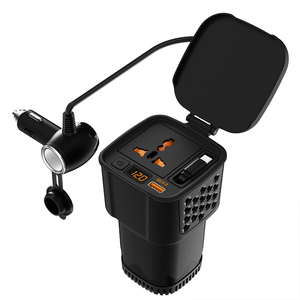
As a premier European-engineered power electronics exporter with over 40 years of power conversion mastery, our platform delivers industrial-grade, galvanically isolated DC/DC converters, high-efficiency DC/AC inverters, and heavy-duty AC/DC battery chargers specifically optimized for Ghana’s climate and grid reality. Built upon high-frequency planar magnetics and resonant power topologies, our architectures guarantee reliable, continuous operation across municipal fleet stations, solar-powered microgrid swapping hubs, and on-board auxiliary vehicle networks.
Localized Application Scenarios
Tailored Power Supply Applications Across Ghana's E-Mobility Ecosystem
Deployment of electric vehicles across West Africa demands power conversion equipment engineered for specific duty cycles and localized operating conditions. Below are four primary deployment vectors where our power supply units provide unmatched operational continuity.
1. E-TroTro & Municipal Bus Fleet Fast-Charging Depots
Commuter minibuses (Tro-Tros) form the backbone of Ghana’s public transit. Transitioning Tro-Tros to electric drive requires heavy-duty DC fast-charging infrastructure capable of delivering steady power despite severe 230V grid voltage sags. Our high-power modular AC/DC rectifiers and bidirectional DC/DC converters (scalable from 3kW to 72kW) utilize Silicon Carbide (SiC) switches to deliver up to 96% efficiency, minimizing heat load in enclosed Ghanaian charging stations.
Last-mile delivery networks and commercial passenger tricycles ('Pragya') rely on decentralized battery-swapping stations across Accra. These hubs demand robust multichannel AC/DC battery chargers with intelligent CC/CV charging profiles. Featuring IP67 dustproof and waterproof aluminum enclosures, our power supplies prevent thermal runaway caused by humidity condensation and tropical heat during continuous 24/7 charging operations.
3. Solar-Microgrid Integrated Off-Grid EV Charging
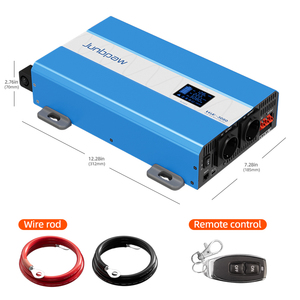
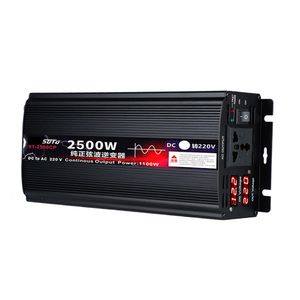
In rural and peri-urban regions where grid power from the Electricity Company of Ghana (ECG) is intermittent, solar microgrids are essential. Our pure sine wave off-grid DC/AC inverters (1kW to 60kW) and MPPT-compatible power conversion systems seamlessly bridge solar PV arrays, stationary LiFePO4 battery banks, and EV charging points with wide input voltage windows (18V to 160V DC).
4. Heavy-Duty Mining & Port Logistics Electric Vehicles
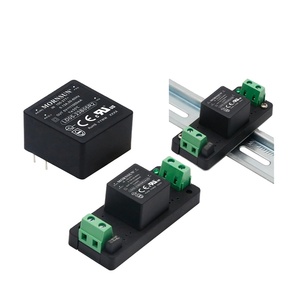
Ghana’s industrial, gold mining, and port logistics sectors (e.g., Tema Port) are electrifying heavy forklifts, haul trucks, and utility vehicles. These platforms require extreme-duty step-down buck DC/DC converters (12V/24V/48V step-down) to power sensitive internal telemetry, display screens, and emergency braking systems from traction battery packs ranging from 300V to 800V DC.
The push toward electric mobility in Ghana is sustained by a combination of policy directives, foreign direct investment (FDI), and escalating fossil fuel costs. Understanding these market dynamics is vital for B2B procurement managers, system integrators, and automotive fleet operators when selecting power supply equipment.
National Regulatory Incentives
The Ghanaian Ministry of Transport, under the National Electric Mobility Policy Framework, has initiated duty waivers and tariff reductions on imported Electric Vehicles and EV charging components. Importing certified high-efficiency power supplies ensures full compliance with Ghana Standards Authority (GSA) guidelines.
Grid Volatility Mitigation
Commercial operators face grid fluctuations (dumsor) and voltage sags. Power conversion infrastructure must incorporate wide AC input tolerance (160V-280V AC), active Power Factor Correction (PFC >0.99), and total harmonic distortion (THD <3%) to protect upstream transformers and internal batteries.
Thermal & Humidity Immunity
Ghana’s tropical climate features relative humidity levels reaching up to 90% during monsoon seasons. Premium power modules with conformal coating, potted magnetics, and IP67 aluminum chassis prevent moisture ingress and short-circuit risks in outdoor installations.
With a heritage rooted in 40+ years of European power electronics design (headquartered in Barcelona, Spain), our organization stands as an authoritative force in critical power supplies. Having engineered over 1,000 custom platforms and holding rigorous certifications across railway (EN 50155, EN 45545-2), industrial (IEC 61010, IEC 62368), and energy sectors, we provide Ghanaian importers with unmatched technical rigors.
Planar Transformer & Resonant Topologies: By utilizing custom planar magnetics, our power conversion stages reduce internal thermal resistance, decrease component profile, and push energy density limits up to 96% efficiency.
Wide Input Voltage Capabilities: Designed to handle wide input variations (2:1 and 4:1 input windows for DC-DC, and wide AC ranges for chargers), ensuring operational immunity against grid sags common in West Africa.
In-House Climatic & EMC Testing Labs: Every platform family undergoes rigorous internal testing for shock, vibration, thermal cycling (-40°C to +85°C), and electromagnetic compatibility before shipment.
Long-Term Obsolescence Management: We guarantee product life-cycles exceeding 15 to 20 years with full spare parts availability, engineering change notifications, and technical retrofitting support.
Technical Benchmark Summary
Comparison of Industrial-Grade vs. Standard Commercial Power Modules in Ghana's Environment:
Efficiency IndexUp to 96.5%
Ingress ProtectionIP65 / IP67 Sealed Options
MTBF (Mean Time Between Failures)> 500,000 Hours
Grid Sag ToleranceDown to 160V AC Continuous
Procurement & Technical Guidance
Frequently Asked Questions by Buyers in Ghana
Addressing key technical, logistical, and operational inquiries for engineering leads, system integrators, and distributors importing power hardware into Ghana.
How do your power supplies handle voltage instability and 'dumsor' grid conditions in Ghana?
Our industrial power supplies, inverters, and battery chargers are specifically engineered with ultra-wide input voltage tolerance windows (e.g., 160V to 280V AC for single-phase systems) and advanced active Power Factor Correction (PFC). This prevents the power module from shutting down or overheating during brownouts and sudden voltage dips common in Ghanaian municipal grids. Furthermore, integrated surge suppression protection shields sensitive output loads from high-voltage spikes during power restoration.
Can these converters be integrated directly into solar-powered battery swapping stations in Accra?
Yes. Our bidirectional DC/DC converters and AC/DC chargers seamlessly interface with solar PV systems, hybrid microgrid controllers, and stationary energy storage systems (LiFePO4, Lead-Acid). Featuring programmable constant-current/constant-voltage (CC/CV) profiles and MODBUS/CAN bus communication protocols, they allow central swapping hub software to monitor state-of-charge (SoC), cell temperature, and charge rates in real time.
What thermal protection mechanisms are built-in for operation in 40°C+ ambient temperatures?
Our power converters utilize planar magnetic transformers and topology-optimized Silicon Carbide (SiC) power switches that drastically cut internal switching losses. The units are mounted within heavy-duty extruded aluminum heat-sink enclosures utilizing natural convection or temperature-controlled forced-air cooling. Integrated thermal sensor circuits automatically execute intelligent linear derating rather than sudden thermal shutdown, maintaining power delivery even at extreme ambient temperatures.
What are the lead times, shipping options, and customs compliance docs for export to Ghana?
Standard catalogue products are held in stock for rapid dispatch, while customized solutions typically require 12 to 20 weeks from engineering sign-off to qualified sample delivery. We export directly to Ghana via air freight (Kotoka International Airport, Accra) or sea freight (Tema Port). We supply complete documentation packages including Certificates of Origin, CE/UL conformity reports, ISO 9001 quality certificates, and test evidence required by the Ghana Standards Authority (GSA) and FDA/Customs clearance.
Can you supply customized DC-DC step-down converters for electric bus and heavy equipment auxiliary systems?
Absolutely. Over our 40-year history, we have designed over 1,000 custom platforms. We frequently engineering customized high-voltage input (300V-800V DC traction pack) to low-voltage output (12V/24V DC auxiliary) converters for electric buses, electric forklifts, and mining equipment. These units offer high galvanic isolation, IP67 ingress protection, and shock/vibration resistance certified to international standards.
Accelerate Your E-Mobility Project in Ghana Today
Whether you require standard off-the-shelf power converters or a fully custom-engineered power system tailored to Ghanaian environmental conditions, our senior engineering team is ready to consult on your exact specifications.