
As Greater Boston accelerates toward aggressive regional decarbonization targets under the Massachusetts Clean Energy Standard and ISO New England (ISO-NE) market initiatives, the imperative for resilient, high-density Battery Energy Storage Systems (BESS) has shifted from alternative energy option to core utility-grade infrastructure. Operating directly within the Boston industrial quadrant, our advanced manufacturing facility provides turnkey OEM/ODM energy storage solutions designed specifically to withstand harsh North Atlantic coastal climates, rigorous urban building codes (NFPA 855), and demanding peak-shaving operations for regional tech hubs, commercial real estate, and municipal power authorities.
Integrating automated cell-matching technologies, advanced active thermal management, and multi-tier Battery Management Systems (BMS), our Boston engineering center delivers factory-direct energy storage equipment tailored for peak demand shaving, microgrid islanding, and renewable solar integration across New England.
Explore our UL-certified and field-proven energy storage systems engineered for immediate deployment across Boston commercial and residential applications.
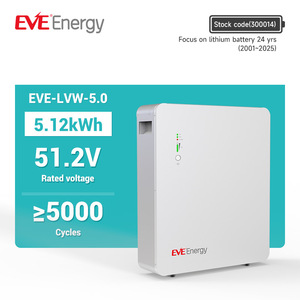
Compact modular residential system equipped with Grade-A LiFePO4 cells, integrated inverter compatibility, and rapid off-grid backup switching.
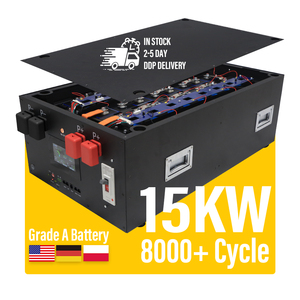
Scalable 14kWh to 16kWh LiFePO4 rack-mounted energy storage module featuring high volumetric density and intelligent CAN/RS485 BMS communication.
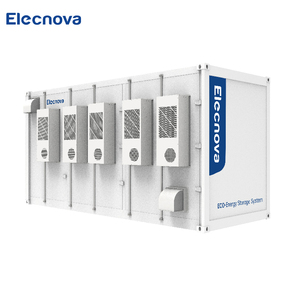
Turnkey liquid-cooled utility and C&I containerized storage system built for ISO-NE frequency regulation and grid-scale energy arbitrage.
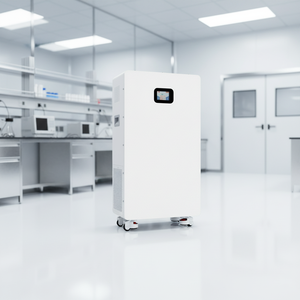
Heavy-duty wheeled mobile storage system housing 314Ah cells, designed for flexible commercial site deployment and rapid maintenance turnaround.
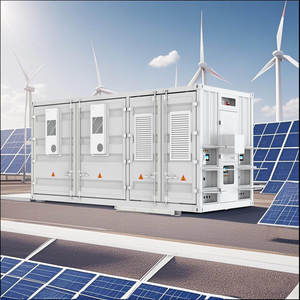
High-voltage industrial energy storage cabinet with embedded fire suppression, active liquid cooling, and bi-directional PCS for facility load shifting.
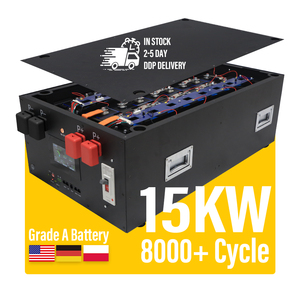
Precision-engineered lithium battery pack utilizing 280Ah/314Ah cells, Bluetooth active cell balancing, and deep cycle endurance (6000+ cycles).
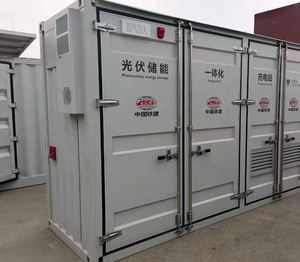
Ultra-high-density power plant scale battery storage container tailored for regional utility grid stabilization, capacity reserve, and black-start capability.
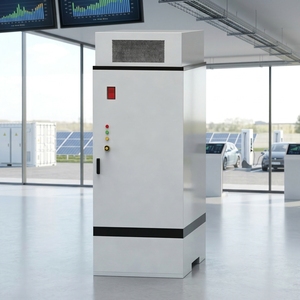
All-in-one outdoor IP55 storage cabinet engineered for manufacturing plants, microgrid EV charging hubs, and peak demand shaving.
Selecting the correct electrochemical architecture is vital for long-term operational ROI, battery cycle life, and thermal safety under New England’s drastic ambient temperature swings (-20°C winter to +35°C summer).
Unlike NMC (Nickel Manganese Cobalt) chemistries prone to thermal runaway under structural compromise, LFP possesses a robust olivine crystal structure. This delivers intrinsic thermal stability up to 500°C and eliminates oxygen release during overcharge conditions.
Our Boston storage systems feature proprietary HVAC-integrated liquid cooling loops. Maintaining cell-to-cell thermal variance within ≤2°C dramatically extends pack longevity and prevents micro-climatic capacity degradation.
Equipped with military-grade microcontrollers, our multi-tiered Battery Management Systems offer real-time cell voltage balancing, SOC/SOH state estimation, and automated galvanic isolation protection within milliseconds.
Deploying energy storage in New England requires navigating localized economic incentives, utility rate structures (such as Eversource and National Grid demand charges), and regional environmental factors.

When evaluating Battery Energy Storage Systems, standard promotional literature frequently oversimplifies Round-Trip Efficiency (RTE). In operational reality, RTE is heavily dependent on parasitic auxiliary loads—specifically thermal cooling pumps, BMS power consumption, and Power Conversion System (PCS) switching losses.
Our factory-engineered container systems achieve a industry-leading ≥89.5% System-Level RTE (AC-to-AC) by employing planar transformer topologies, silicon-carbide (SiC) semiconductor switches in the PCS, and adaptive speed variable pumps for liquid cooling loops. This technical optimization saves mid-size commercial operators up to $45,000 annually in uncaptured energy losses.
As an established energy storage manufacturer, we bridge the gap between global supply chain efficiencies and localized New England engineering support. Every system produced undergoes stringent automated end-of-line (EOL) testing prior to site dispatch.

The New England energy matrix is undergoing a seismic transition. With the retirement of legacy fossil-fuel generation plants and the rapid onboarding of offshore wind farms off the coast of Massachusetts and Rhode Island, grid volatility has increased significantly.
Grid-connected battery systems are now crucial for frequency regulation, responding within milliseconds to grid deviations. Commercial energy storage owners in Boston can monetize their assets by participating in ISO New England’s Forward Capacity Market (FCM) and ancillary service programs.
Deploying energy storage in dense urban centers like Boston, Cambridge, and Quincy requires strict adherence to NFPA 855. Our factory-integrated gas detection, deflagration venting, and Novec 1230 fire suppression systems ensure streamlined local permitting approval.
Common technical and commercial questions answered by our Boston BESS engineering team.
Our Boston engineering and manufacturing facility provides direct local support, eliminating international shipping delays and offering immediate field service engineering. Furthermore, our systems are tailored specifically for New England’s environmental conditions—featuring low-temperature heating elements for sub-zero winter charging, C5-M anti-corrosion coatings for coastal salt air, and pre-configured firmware compatible with ISO-NE grid interconnection standards.
Our complete range of residential, commercial, and containerized utility BESS products complies with key North American safety codes. This includes UL 1973 (battery modules), UL 9540 (complete system safety), UL 9540A (thermal runaway propagation test documentation), and NFPA 855 installation standards. We supply comprehensive engineering documentation packages required by local Boston Authorities Having Jurisdiction (AHJ) and fire departments.
Lithium Iron Phosphate cells cannot be charged below 0°C (32°F) without risking irreversible lithium plating and cell damage. Our energy storage cabinets feature intelligent internal thermal management systems with PTC heating pads or liquid-circuit heat exchangers. When ambient temperatures drop, auxiliary heating automatically conditions the cells to optimal operating temperatures (15°C to 25°C) before initiating charge cycles.
Yes. Our energy storage solutions support both AC-coupled and DC-coupled architectures. Our multi-protocol BMS natively supports RS485, CAN-bus, and Modbus TCP/IP communication protocols, allowing plug-and-play integration with major industrial power conversion systems (PCS) and hybrid inverters including SMA, Sol-Ark, Schneider Electric, Sungrow, and Dynapower.
Our Grade-A 314Ah prismatic LiFePO4 cells are rated for ≥6,000 continuous deep discharge cycles at 80% Depth of Discharge (DoD) under standard 0.5C charge/discharge rates at 25°C. This translates to an operational service life of 15 to 20 years under typical daily peak-shaving usage before reaching End-of-Life (EOL capacity threshold of 70%).
Standard modular rack battery units (48V/51.2V) and pre-assembled outdoor cabinets (150kWh-313kWh) are stocked at our local Boston warehouse for immediate delivery within 1 to 2 weeks. Custom containerized projects (1MW/2MWh+) typically require 8 to 14 weeks from engineering specification approval to factory acceptance testing (FAT).
Consult with our senior energy storage engineers to request custom technical sizing, single-line diagrams (SLD), and factory-direct pricing for your project.