
Fully compliant with IEEE 519-2022 standards, KEPCO grid safety codes, and harsh industrial harmonic environments across Greater Seoul.
The Seoul Metropolitan Area represents one of the world's highest-density electrical energy consumers, characterized by a complex grid infrastructure governed by the Korea Electric Power Corporation (KEPCO). As Seoul aggressively expands its high-tech economy—ranging from the Pangyo Techno Valley data infrastructure and Seongsu smart factories to high-speed metro transit lines and hyperscale commercial complexes like Lotte World Tower—the proliferation of non-linear electrical loads has reached unprecedented levels.
Non-linear loads such as Variable Frequency Drives (VFDs), Uninterruptible Power Supplies (UPSs), switch-mode power supplies (SMPS), and high-capacity EV fast-charging hubs draw current in non-sinusoidal abrupt pulses. These current pulses generate harmonic currents that circulate through the distribution network, distorting the voltage waveform and triggering severe power quality degradation.
Information Gain Insight: Harmonic distortion (THDi) exceeding KEPCO limits can lead to massive power factor surcharges, catastrophic transformer overheating, severe neutral conductor overload in 3-phase 4-wire systems, and unplanned downtime in automated assembly lines.
Harmonics are sinusoidal voltages or currents having frequencies that are integer multiples of the fundamental power frequency (60 Hz in South Korea). For instance, the 5th harmonic corresponds to 300 Hz, while the 7th harmonic corresponds to 420 Hz. When high-capacity 6-pulse or 12-pulse rectifiers operate without adequate harmonic suppression, current total harmonic distortion ($THD_i$) frequently surges past 35% to 50%.
The total harmonic distortion formula mathematically demonstrates the cumulative degradation caused by these higher frequency vectors:
THD_i = √( ∑_{h=2}^{n} I_h^2 ) / I_1 × 100%
Left unmitigated, these harmonic components travel backward toward the distribution transformer, causing additional core hysteresis losses ($I^2R$ skin effect losses), nuisance tripping of sensitive molded case circuit breakers (MCCBs), harmonic resonance in local power factor correction capacitor banks, and severe electromagnetic interference (EMI) on telemetry lines.
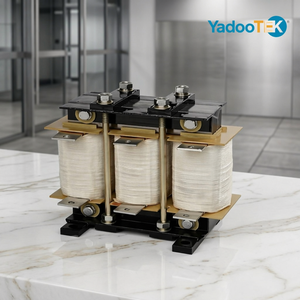
While traditional passive tuned L-C filters provide a cost-effective solution for fixed-frequency harmonic mitigation (e.g., trapping specific 5th or 7th harmonics), they exhibit major engineering limitations in dynamic urban industrial environments. Passive filters can suffer from parallel resonance with grid impedance, risk overload when system background harmonics shift, and cannot provide dynamic reactive power compensation.
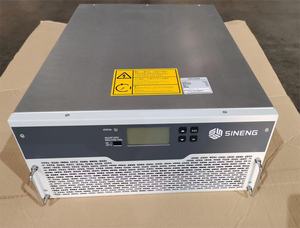
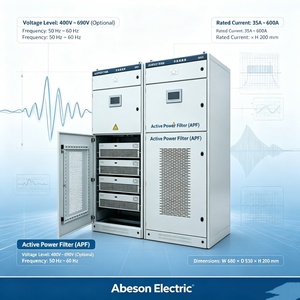
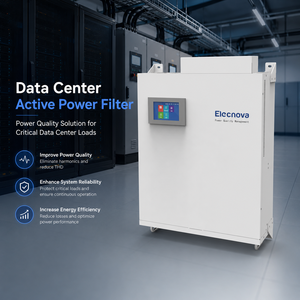
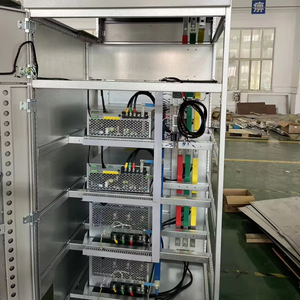
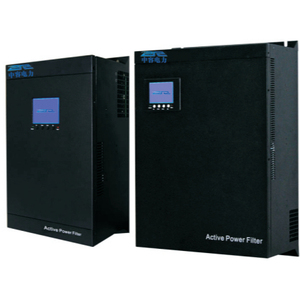
In contrast, our Active Power Filters (APF / AHF) utilize state-of-the-art 3-level Neutral Point Clamped (NPC) IGBT inverter topologies paired with Digital Signal Processor (DSP) and Field Programmable Gate Array (FPGA) logic controllers. The APF continuously monitors line current in real-time via high-precision Current Transformers (CTs), isolates harmonic vectors through Fast Fourier Transform (FFT) and Instantaneous Reactive Power Theory (p-q theory), and injects a 180° phase-opposed counter-harmonic current in under 5 milliseconds. This active cancellation dynamically reduces output $THD_i$ to below 3% or 5%, complying effortlessly with strict IEEE 519-2022 standards.
Tailored harmonic suppression solutions designed for Seoul's specialized industrial clusters and urban infrastructure.
Eliminating 3rd-order triplen harmonics and phase imbalance in hyperscale UPS systems to guarantee 99.999% uptime for AI server racks.
Providing clean sine-wave power quality (THDi < 3%) to protect sensitive automated lithography, robotic SMT lines, and semiconductor test equipment.
Dampening rapid harmonic spikes and voltage sag caused by regenerative braking transients and heavy 750V/1500V DC traction rectifier substations.
Mitigating high-order harmonics from hundreds of variable frequency drives in modern commercial towers, preventing neutral burnout.
Dynamic reactive power compensation (SVG/APF) for ultra-fast EV charger parks, stabilizing local medium-voltage power grids.
Retrofitting legacy industrial estates with wall-mounted modular active harmonic filters to ensure instant compliance with KEPCO penalization codes.
The South Korean government, alongside the Ministry of Trade, Industry and Energy (MOTIE), has established rigorous green grid initiatives and carbon neutrality targets under the national K-RE100 initiative. Energy efficiency is no longer measured solely by total kilowatt-hour consumption, but by the overall purity and power factor of consumed electricity.
KEPCO enforces stringent billing surcharges for industrial and commercial power consumers operating at low power factors or injecting harmonic distortion into the grid. Facilities operating with an average lagging power factor below 90% face severe monthly utility price penalties. By integrating active power filtering with stepless Static Var Generation (SVG), industrial facilities in Seoul can lock in power factor levels at >0.99, achieving complete penalty immunity and lowering operational overhead ($OPEX$).
As solar PV installations and battery energy storage systems (BESS) proliferate across Seoul’s public and private infrastructure, bidirectional grid tie-in inverters have become ubiquitous. These power conversion interfaces introduce complex high-frequency switching noise. Modern modular active power filters equipped with wide-bandgap silicon carbide (SiC) devices are becoming mandatory to filter out 2nd through 5th harmonic currents at distribution nodes.
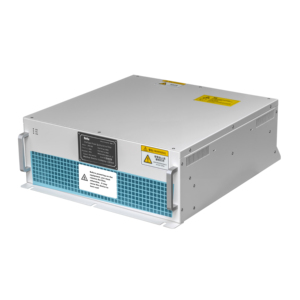
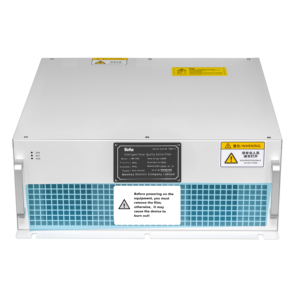
Seoul’s status as Asia’s leading data center hub has driven massive investment in transformerless IGBT-based UPS topologies. While offering higher operating efficiency, these UPS systems produce high harmonic distortion under partial load conditions. Modular, hot-swappable active harmonic filters designed for 19-inch rack enclosures are now standard spec for data center engineers across Pangyo and Digital Media City (DMC).
Proven European engineering rigor combined with agile global logistics and local support serving Seoul’s industrial leaders.
Every filter architecture undergoes comprehensive internal testing including EMC compliance, thermal endurance cycling, high-vibration stress, and full burn-in prior to dispatch.
Leveraging planar magnetics, multi-level NPC converter topologies, and DSP control algorithms to maximize energy density while keeping cabinet footprints remarkably compact.
ISO 9001 certified manufacturing, conforming to EN 50155, EN 61373, IEC 61000, and IEEE 519 standards. Engineered to deliver 20+ years of uninterrupted field service.
Trusted by Global Industry Leaders & Infrastructure Integrators





Addressing common regulatory, voltage compatibility, and procurement inquiries for South Korean deployments.
Require a customized harmonic calculation, a grid site audit for your facility in Seoul, or technical datasheets? Send us your system single-line diagram (SLD) and target requirements.