
Engineered for high reliability, extreme thermal tolerance, and compliance with global and New Zealand power quality standards.
Strategic Insights for Kiwi OEMs, Energy Integrators, Infrastructure Developers, and Automation Engineers
New Zealand's industrial landscape is undergoing a swift transformation driven by carbon-neutral mandates, electrification of heavy transport, and the expansion of smart agricultural technology. From the agricultural tech hubs of Waikato and Canterbury to the clean-energy and grid-modernization projects across the North and South Islands, engineering teams demand robust, efficient, and localized power supply architecture. Navigating this environment requires power modules capable of managing unstable rural utility feeds, extreme coastal environmental conditions, and rigorous regulatory standards.
New Zealand's commitment to achieving 100% renewable electricity generation by 2030 has accelerated the deployment of localized microgrids, commercial solar farms, and wind energy plants. Power conversion equipment installed in these facilities faces volatile input dynamics caused by erratic environmental conditions and long power line drops in remote regions like Southland or the West Coast. Industrial power modules featuring wide-input AC/DC topologies, active Power Factor Correction (PFC), and high surge tolerances are essential for ensuring uninterrupted operation of monitoring equipment, SCADA units, and localized battery energy storage systems (BESS).
Port companies across Auckland, Tauranga, and Lyttelton are electrifying berth-side shore power, automated straddle carriers, and crane systems. Simultaneously, Kiwirail and regional passenger networks require rolling-stock compliant power systems capable of withstanding constant vibration, mechanical shock, and thermal cycling. Power modules built in accordance with international transport standards (such as EN 50155, EN 61373, and EN 45545-2) provide the mechanical ruggedness and electrical isolation necessary for long-term deployment across New Zealand's rugged transport corridors.
New Zealand’s primary sector relies heavily on automated dairy processing plants, high-precision sorting machinery, and autonomous field robotics. Electronic control enclosures deployed in these environments are routinely subjected to washdown procedures, high ambient humidity, dust ingress, and wide temperature swings. Open-frame power supplies and custom PCBA power modules deployed in these applications require industrial-grade conformal coatings, high-grade electrolytic capacitors, heavy copper PCBs, and planar transformer configurations to ensure optimal thermal dissipations and maximum Mean Time Between Failures (MTBF).
Tailored Power Conversion Architectures Deployed Across Key Regional Sectors
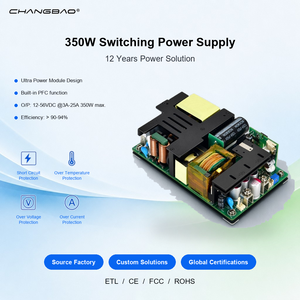
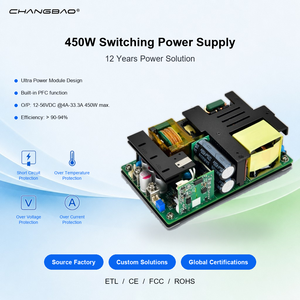
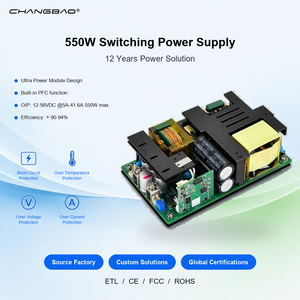
Operational in processing hubs across Waikato and Canterbury. Our 350W–550W PFC AC/DC open-frame modules supply regulated DC power to automated milk-processing lines, fruit packaging automation, and optical sorters. Built with conformal coating options to resist moisture, organic vapors, and washdown chemicals.
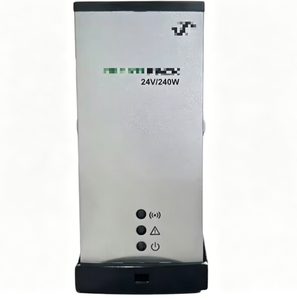
Deployed in sub-station control buildings across Transpower and regional lines networks (Vector, Orion, Unison). High-frequency AC/DC rectifiers and DIN-rail power modules deliver uncompromised reliability, wide operating temperature envelopes (-40°C to +70°C), and low electromagnetic noise profiles.
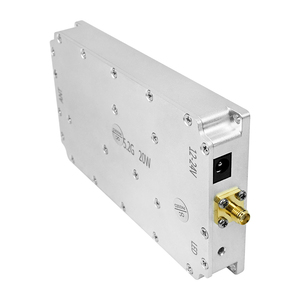
Utilized in maritime port radar installations and offshore RF communication relays across Hauraki Gulf and Cook Strait. Linear power amplifier modules (20W 2.4G/5.2GHz) provide clean signal amplification under marine atmospheric conditions with extreme salt-fog isolation capabilities.
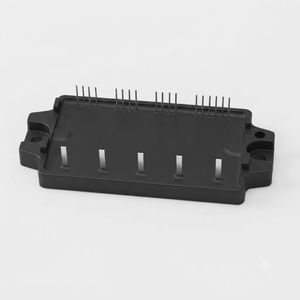
Integrated directly into OEM high-tech machinery, robotics, and industrial motion controllers. Modules compatible with PM25RHB120 standards offer low switching losses, exceptional thermal management, and rapid transient response for fast-moving industrial actuators.
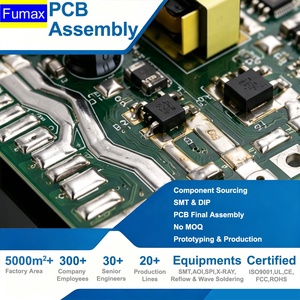
Designed specifically for kiwi technology innovators who require custom layout geometry, heavy-copper layers for high-current routing, integrated battery charging circuits, and localized certification testing from initial prototype stage through to series production.
Combining 40 Years of Power Conversion Experience with In-House R&D, Testing, and Lifetime Support
Our R&D engineering team leverages planar transformers and three-phase resonant power stages to maximize power density while drastically reducing switching losses. This enables compact, open-frame footprints (such as our 350W–550W platforms) to deliver efficiency ratings up to 94%+ with minimal thermal dissipation.
Reliability is engineered into our products from inception. Every power module undergoes rigorous design verification in our internal testing facility—including EMC emissions/immunity (IEC 61000), climatic stress chambers (-40°C to +85°C bake/freeze), shock/vibration tables (EN 61373), and extended full-load burn-in sequences.
By utilizing our library of pre-qualified functional building blocks—including isolated DC/DC stages, active PFC fronts, and standardized control interfaces—we accelerate custom engineering schedules from specification to qualified prototype in as little as 16 to 28 weeks.
We service long-term infrastructure and industrial sectors that demand decade-plus operational lifespans. Our proactive component obsolescence monitoring, last-time-buy guarantees, form-fit-function redesign service, and repair infrastructure protect Kiwi procurement teams against unexpected end-of-life risks.
Direct Technical Answers to Clarify Specification, Compliance, Delivery, and Customization Requirements