
Tested against extreme vibrations, high barometric pressure derating, and wide voltage surges. Engineered for Metro de Bogotá, RegioTram del Occidente, and Metro de Medellín.
We supply specialized railway power supplies and custom traction inverter modules designed to withstand the world’s most demanding transit environments.
Colombia is currently executing one of the most ambitious transport infrastructure modernizations in Latin America. Key flagship projects such as the Metro de Bogotá Line 1 and Line 2, the RegioTram del Occidente (Tram-Train), the ongoing fleet modernizations of the Metro de Medellín (Lines A & B), and the revival of freight corridors like La Dorada - Chiriguaná and Ferrocarril del Pacífico represent a profound shift toward electric rail mobility. However, Colombia’s unique geographical and climatic conditions pose harsh operational challenges for electronic equipment and railway inverter modules.
Operating railway power supplies across Colombian territory requires engineering adaptation for two distinct extremes: high-altitude barometric pressure and humid tropical environments. In Bogotá, situated at approximately 2,600 meters above sea level, the reduced atmospheric density significantly impairs conventional heat dissipation and decreases dielectric air breakdown voltage. Electronic power converters non-optimized for high altitude face premature dielectric breakdown, tracking arcing, and accelerated thermal fatigue.
Technical Insight for Colombian Procurement Engineers: Standard EN 50155 equipment specified for sea-level conditions must undergo insulation creepage distance scaling (according to EN 50124-1) and thermal derating of approximately 1% per 100 meters above 1,000m. Our custom railway inverters for Colombia feature extended clearance gaps and forced heat-pipe cooling structures specifically engineered for Bogotá’s 2,600m elevation profile.
Conversely, regional freight lines operating along the Caribbean coast (Barranquilla, Santa Marta) or the Pacific humidity corridors experience continuous ambient relative humidity exceeding 90% alongside saline air exposure. To mitigate moisture ingress and chemical oxidation, our railway inverters, PCBA modules, and DIN-rail variable frequency drives (VFDs) incorporate IPC-CC-830 Class 3 premium conformal coating, tropicalized hermetic magnetics, and stainless-steel/anodized aluminum mechanical chassis rated up to IP65.
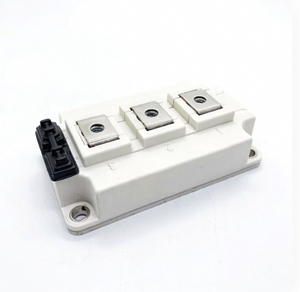
Railway inverters serve as the vital power conversion link between overhead catenary lines (or third rail systems), backup battery systems, and primary/auxiliary loads. Whether converting continuous DC voltages (48VDC, 750VDC, or 1500VDC) into sinusoidal 3-phase AC power for HVAC systems, doors, air compressors, and signaling gear, or driving main traction motors via high-power IGBT modules (e.g., EconoDUAL3 650V/750A architectures), operational efficiency and low total harmonic distortion (THD) are paramount.
Our industrial and railway inverter platforms utilize advanced 3-phase resonant inverter topologies coupled with integrated planar magnetics. By replacing discrete wire-wound transformers with multi-layer printed circuit board (PCB) planar transformers, leakage inductance is tightly controlled, power density is doubled, and thermal resistance is drastically reduced. Soft-switching (Zero-Voltage Switching / Zero-Current Switching) reduces IGBT switching losses by up to 40%, ensuring nominal operational efficiencies exceeding 98.4%.
Catenary voltage stability across Latin American transit lines often experiences violent voltage dips and inductive voltage spikes caused by dynamic braking, substation switching, and lightning discharges. Our specialized railway load inverters incorporate wide 2:1 and 4:1 input windows. For standard 750V DC catenary networks (common in urban metro networks), our systems comfortably sustain continuous fluctuations from 500V DC up to 1000V DC without degradation, fully meeting EN 50155 class S2 and C1 drop-out and surge compliance.
| Product Topology | Nominal Input | Output Specs | Altitude Rating | Normative Standard | Primary Application |
|---|---|---|---|---|---|
| FF750R650MB3 Traction Inverter | 650V DC Substation | 750A Phase Output | Derated to 3,000m | EN 50155 / EN 61373 | Metro Traction Auxiliaries & Main Drives |
| Specialized Rail Load Inverter | 750V / 1500V DC | 220V / 380V AC 3-Phase | Full rating at 2,600m | EN 50155 / RETIE | On-board HVAC, Compressor & Auxiliary Power |
| 8KW Pure Sine Telecom Inverter | 48V DC Battery | 110V / 220V AC Sine | Up to 3,500m | IEC 62368 / IEC 61000 | Trackside Signaling & Communications UPS |
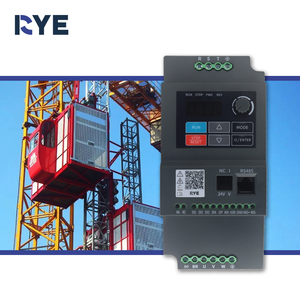
| RYE DIN Rail VFD Module | 220V AC / 48V DC | 0.4kW - 1.5kW 3-Phase | Up to 2,000m | EN 61800-5-1 / IP20 | Door Actuators, Ventilation & Small Motors |
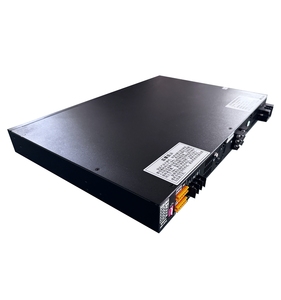
| 2KVA CFCX Embedded Module | 48V DC Nominal | 220V AC Single Phase | Up to 3,000m | EN 45545-2 HL3 | Substation Power Control Cabinets |
Every transit infrastructure project in Colombia has specific technical operational profiles. Below are the key localized integration scenarios where our high-reliability railway inverters, traction power modules, and programmable signal power sources are deployed:
High-altitude urban heavy rail operating under constant acceleration/deceleration cycles. Requires custom-housed EconoDUAL3 inverter traction modules and EN 45545-2 HL3 fire-safe auxiliary inverters for passenger comfort and emergency ventilation.
Inter-city Tram-Train network transitioning between suburban high-speed sections and urban streets. Requires compact, ultra-lightweight DIN-rail and embedded inverter units capable of handling frequent catenary-to-battery power switching.
Mid-altitude tropical valley environment with steep railway gradients. Demands high-overload auxiliary load inverters with robust regenerative braking energy management and high MTBF (>500,000 hours).
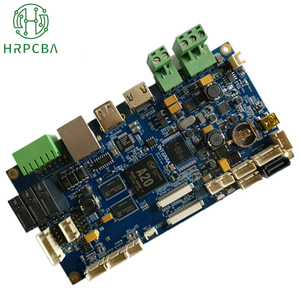
Heavy freight locomotives operating across humid coastal plains. Demands ruggedized 48V pure sine wave line frequency inverters and HRPCBA OEM safety boards resistant to continuous mechanical shock and salt spray.
In addition to strict European railway standards (EN 50155, EN 50121-3-2 for Electromagnetic Compatibility, EN 61373 for Shock & Vibration, and EN 45545-2 for Fire Safety), power equipment imported and installed in Colombia must align with the national technical framework: RETIE (Reglamento Técnico de Instalaciones Eléctricas).
Our manufacturing facilities operate under ISO 9001 and ISO 14001 certification, incorporating full component-level traceability, automated 3D optical inspection (AOI), and in-house environmental test chambers. Every single production unit undergoes full-load burn-in testing and environmental stress screening (ESS) prior to dispatch. Furthermore, our engineering team provides complete technical dossiers—including dielectric withstand test records, insulation resistance documentation, thermal modeling data, and MTBF calculation reports based on MIL-HDBK-217F—ensuring seamless RETIE certification by local inspection bodies in Colombia.
Obsolescence Management Commitment: Railway projects in Colombia are designed for 25 to 30-year operational lifespans. We guarantee long-term component availability, form-fit-function replacement drop-in modules, and direct engineering support to prevent fleet grounding due to component phase-out.
Answers to critical questions asked by railway OEMs, procurement agencies (ANI, IDU), metro operators, and system integrators in Colombia.
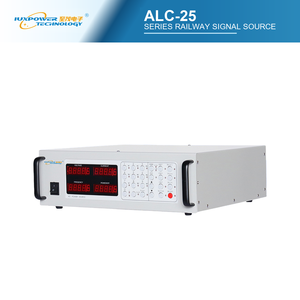
Speak directly with our senior power conversion engineering team. Send us your input range, altitude envelope, mechanical constraints, and duty cycle requirements for a complete technical evaluation.
Get a Quote