
Field-proven power electronics designed for high MTBF, low total harmonic distortion (THD), and seamless integration into 600V/750V DC third-rail and high-voltage catenary rail transit networks.
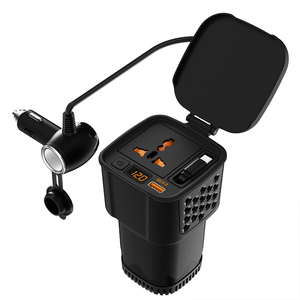
Galvanically isolated 12V DC to 220V AC continuous power unit with cup-holder form factor, engineered for railway maintenance vehicles and cab crew electronics.
Inquire Now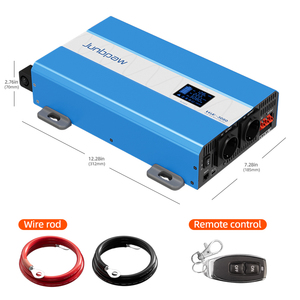
Rugged single-output 50Hz/60Hz frequency inverter designed for remote railway signaling stations, perimeter safety backup, and off-grid rail maintenance infrastructure.
Inquire Now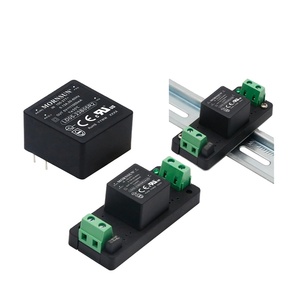
High-density PCB-mount power supply modules compliant with railway signaling voltage requirements, featuring ultra-wide thermal operating thresholds and reinforced isolation.
Inquire Now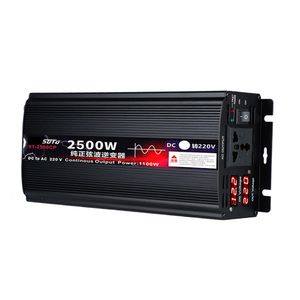
High-surge pure sine wave DC/AC power converter supporting 12V/24V/48V/60V inputs. Ideal for rolling stock auxiliary lighting, brake air compressor controls, and cab amenities.
Inquire Now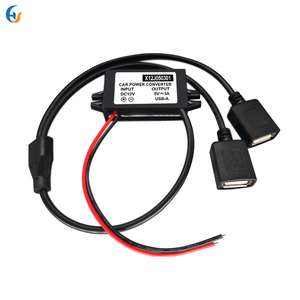
Encapsulated 3A buck converter module providing stabilized step-down power for sub-system sensors, telemetry nodes, and passenger USB charging ports in rail cars.
Inquire Now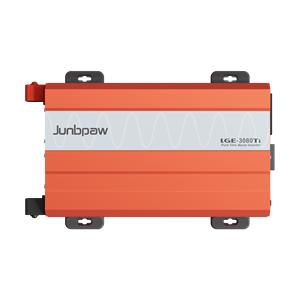
Remote-monitored DC to AC conversion system featuring wide input tolerance (DC 12V/24V/48V to AC 110V/120V) designed for passenger car HVAC blowers and door actuators.
Inquire Now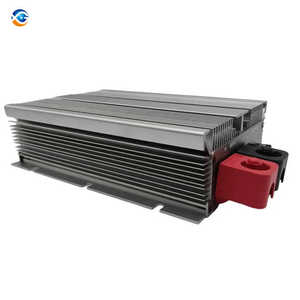
Extremely rugged step-voltage power module designed for severe shock, vibration, and washdown conditions in under-car rail bogies and electric yard locomotives.
Inquire Now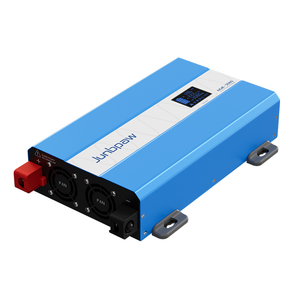
Heavy-duty power conversion platform with real-time digital LCD telemetry, providing reliable AC power for line-side equipment shelters and signal control centers.
Inquire NowThe Metropolitan Transportation Authority (MTA) operating the New York City Subway, Long Island Rail Road (LIRR), and Metro-North Railroad constitutes the most demanding rail transit complex in North America. Navigating New York’s dense underground tunnels, elevated trackways, and severe seasonal climate variations requires railway power conversion equipment engineered to unyielding reliability parameters. As global factories and exporters supplying New York’s transit eco-system, leading variable frequency drive (VFD) and power converter manufacturers must address three core engineering imperatives: stringent harmonic control, thermal resilience under high-duty cycles, and adherence to strict fire/smoke standards like EN 45545-2 and IEEE 1478.
Variable Frequency Drives (VFDs) serve as the muscular core of modern rail transportation, controlling traction motor acceleration, regenerative braking feedback, and auxiliary motor loads including HVAC blowers, brake air compressors, and engine cooling pumps. In New York's 600V to 750V DC third-rail network and 12.5kV/25kV AC overhead catenary systems, power converters are constantly exposed to third-rail gap voltage spikes, line harmonics, electromagnetic interference (EMI), and extreme mechanical shock. Procuring industrial-grade VFDs engineered by specialized manufacturing facilities ensures rail car builders and transit overhaul authorities achieve seamless fleet integration with minimal lifecycle downtime.
New York subway cars experience frequent third-rail gap jumps over turnouts and cross-overs, generating transient dV/dt voltage spikes exceeding 2,500V. Our modern Railway Variable Frequency Drives integrate active front-end (AFE) topologies paired with Silicon Carbide (SiC) MOSFET switching stages to absorb energy surges, eliminate voltage sagging, and maintain continuous sinusoidal drive output to traction and auxiliary motors.
Deploying specialized power electronics across passenger passenger cars, work locomotives, trackside substations, and maintenance depots.
Underground Subway operations during Manhattan summers generate extreme heat within tunnel shafts. Auxiliary VFDs convert variable DC line voltages into stable 3-phase AC output, driving dual HVAC compressors and forced-air fans to maintain cabin comfort despite extreme thermal stress.
Commuter trains transitioning between third-rail DC power in East River Tunnels and diesel-electric/overhead AC power on suburban branches require multi-resonant variable frequency converters capable of smooth input voltage auto-switching without traction interruption.
Wayside substations across Brooklyn, Queens, and Upstate NY utilize large-scale grid-tied regenerative VFD systems. During train deceleration, kinetic braking energy is inverted into ultra-clean 60Hz AC power and fed back directly into the local utility grid (Con Edison / PSEG).
Overview of key standards governing railway power electronics procurement in New York State and North America.
| Standard / Regulation | Technical Mandate Scope | Engineering Implementation in Our VFDs |
|---|---|---|
| EN 50155 / IEEE 1478 | Electronic equipment used on rolling stock (rail vehicles) | Guarantees electrical stability, input isolation up to 3kV AC, wide operating temperature (-40°C to +85°C Class TX). |
| EN 45545-2 (HL3 Rating) | Fire testing for materials & components on railway vehicles | Zero-halogen conformal coating, fire-retardant structural polymers, self-extinguishing potting materials mandatory for NYC tunnel safety. |
| EN 61373 (Category 1 Class B) | Rolling stock equipment - Shock and vibration testing | Heavy-duty potted magnetics, vibration-damped aluminum enclosures engineered to withstand severe under-car bogie vibrations. |
| IEEE 519-2022 Compliance | Harmonic control in electric power systems | Multi-level Active Front End (AFE) filtering reduces Total Harmonic Distortion (THD) below 3%, preventing line distortion on signal tracks. |
| AREMA Manual Standards | American Railway Engineering & Maintenance-of-Way Assoc. | Tailored mechanical footprints, terminal barrier blocks, and surge protection compliant with North American freight and transit yards. |
Over four decades of dedicated power electronics design and export manufacturing have established our facilities as the trusted OEM standard for railway operators, car builders, and overhaul contractors globally. Operating out of state-of-the-art European engineering facilities, our power division bridges advanced research and development with large-scale industrial output.
When off-the-shelf power converters fail to satisfy stringent under-car or roof-mounted dimensional limits, our design engineering team develops bespoke topological solutions. By integrating planar transformers and three-phase resonant power stages, we increase volumetric power density by over 40% while slashing overall weight—a vital factor for modern energy-efficient rolling stock.
Every Variable Frequency Drive and power converter leaving our export production lines undergoes rigorous internal testing. Our in-house testing complex includes full EMC/EMI compliance chambers, climate-controlled environmental soak rooms (-50°C to +100°C), electro-dynamic shock/vibration tables, and Automated Burn-In test rigs running under continuous full-load duty cycles.
Key technical and commercial considerations for purchasing railway variable frequency drives and converters.
Whether you are designing a new rolling stock platform, planning a subway car overhaul, or sourcing ruggedized trackside inverters, our engineering group provides direct technical support and customized unit pricing.
Inquire Now