
Engineered for high-frequency switching, superior thermal conductivity, and extreme power density in industrial applications across the Netherlands and Europe.
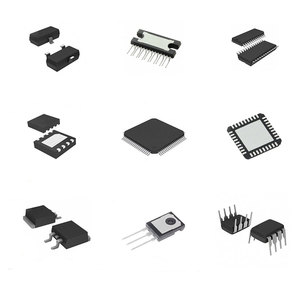
Why Dutch OEMs, energy integrators, and semiconductor equipment manufacturers are replacing traditional silicon IGBTs with wide-bandgap Silicon Carbide (SiC) modules.
The global shift toward high-frequency, ultra-high-efficiency power electronics has placed Silicon Carbide (SiC) modules at the very center of industrial design strategy. Across the Netherlands—from the tech innovation hub of Brainport Eindhoven to the heavy maritime and energy sectors in Rotterdam and Amsterdam—engineering teams face strict regulatory demands, grid congestion challenges, and aggressive energy transition goals. Replacing legacy Silicon (Si) Insulated Gate Bipolar Transistors (IGBTs) with advanced SiC MOSFET modules provides an unmatched competitive edge: reduced switching losses, higher thermal limits, and drastic downsizing of passive components.
Silicon Carbide is a wide-bandgap (WBG) semiconductor material with physical properties fundamentally superior to standard silicon for high-power and high-voltage applications. With a bandgap energy of 3.26 eV (compared to 1.12 eV for Si), SiC withstands electric field breakdown strengths nearly ten times higher than traditional silicon (3.0 MV/cm vs 0.3 MV/cm). This breakdown field strength enables thinner drift layers with much higher doping concentrations, resulting in dramatically lower specific on-resistance ($R_{DS(on)}$).
| Material Property | Silicon (Si) | Silicon Carbide (4H-SiC) | Engineering Advantage for Dutch Manufacturers |
|---|---|---|---|
| Bandgap Energy (eV) | 1.12 | 3.26 | Enables high junction temp operation (>200°C) with negligible leakage current. |
| Critical Breakdown Field (MV/cm) | 0.3 | 3.0 | Allows 1200V+ blocking in much thinner dies, reducing conduction loss. |
| Thermal Conductivity (W/m·K) | 1.5 | 4.9 | 3.2x faster heat dissipation; reduces heatsink weight & cooling footprint. |
| Electron Saturation Velocity ($10^7$ cm/s) | 1.0 | 2.0 | Supports ultra-fast switching frequencies (100kHz+), minimizing inductor size. |
| Switching Losses ($E_{off} / E_{on}$) | Baseline (100%) | Reduced by up to 75% | Eliminates tail current during turn-off; slashes total system heat dissipation. |
By drastically reducing switching losses, SiC modules enable power converters to operate at switching frequencies 3x to 5x higher than conventional silicon solutions. Consequently, magnetic components (transformers, inductors) and capacitive filters can be scaled down in physical size by up to 60%, offering dramatic volumetric power density improvements for space-constrained Dutch OEM systems.
How our factory-supplied SiC modules, ceramic membranes, and power conversion platforms drive key Dutch industrial sectors.
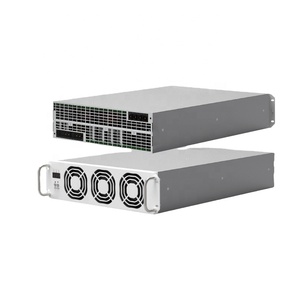
The Netherlands leads Europe in EV adoption per capita. Our 40kW Fast EV Charging Modules and 1200V SiC Schottky Diodes power High-Power Charging (HPC) plazas, maintaining >97.5% efficiency across wide output voltage windows (200V-1000V DC) to minimize cooling costs and grid load.
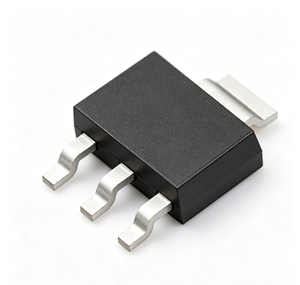
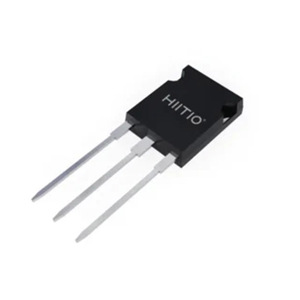
In the Brainport Eindhoven lithography and semiconductor cluster, low-noise, sub-millisecond dynamic response is non-negotiable. Our ultra-fast switching discrete SiC MOSFETs and custom planar-transformer modules provide clean ripple-free power to EUV auxiliary drives and positioning stages.
TenneT and regional Dutch grid operators face heavy net congestion (netconservatie). Our 1200V 900A IGBT/SiC hybrid and half-bridge modules are ideal for bidirectional AC/DC storage inverters, allowing solar farms and industrial facilities to buffer energy without tripping local transformers.
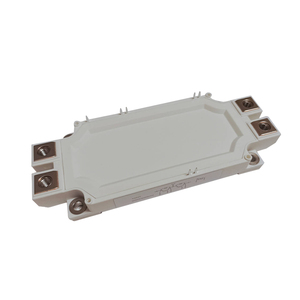
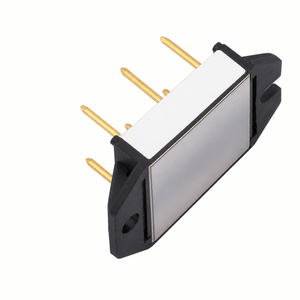
Decarbonizing inland navigation between Rotterdam, Amsterdam, and Antwerp requires compact marine battery drives. Ruggedized 62mm SiC modules (such as CAS530M12BM3T) deliver continuous high currents under harsh vibration, saltwater mist, and tight engine room envelopes.
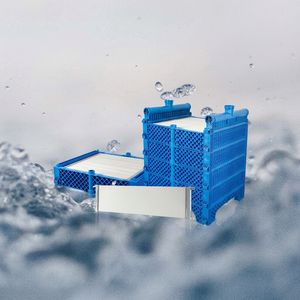
Beyond electronics, Silicon Carbide ceramic technology plays a critical role in chemical processing. Our SiC Flat Sheet Membrane Modules offer mechanical toughness, extreme pH endurance (0-14), and high flux for heavy chemical effluent filtration in Dutch process plants.
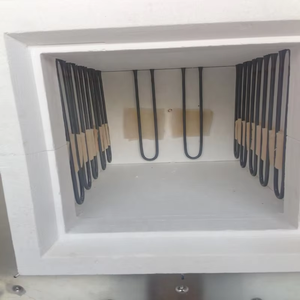
For specialized glass, ceramic, and metal processing facilities in Limburg, our Silicon Carbide Embedded Ceramic Fiber Heating Modules guarantee thermal shock resistance up to 1600°C while achieving uniform heating profiles with zero structural sag.
Strategic information gain for procurement officers and system integrators operating within the EU regulatory framework.
Combining four decades of power electronics expertise with agile custom engineering for Dutch and European buyers.
Over four decades of continuous innovation in high-reliability power conversion systems, standard catalogue modules, and specialized industrial platforms.
From custom magnetic winding layouts to tailored heat-pipe cold plates, our engineering team converts complex customer specifications into qualified series products.
Internal pre-compliance testing capabilities ensure faster iteration loops, de-risking CE, IEC, and EN certification prior to volume production shipping.
Integration of three-phase resonant power stages with planar transformers maximizes efficiency while eliminating bulky wire-wound components.
We provide long-term component lifecycle monitoring, last-time-buy guarantees, and form-fit-function redesign support for multi-decade infrastructure assets.
Streamlined export clearance, customs compliance, and buffer stocking capabilities to ensure prompt delivery to Rotterdam, Amsterdam, and Eindhoven hubs.
Direct answers to technical, logistical, and compliance questions common in Dutch B2B procurement.
Silicon Carbide (SiC) MOSFET modules offer up to 75% lower switching losses, zero reverse-recovery time, and superior thermal conductivity compared to standard silicon IGBTs. This allows system designers to raise switching frequencies significantly, which drastically reduces the size and weight of filter inductors, capacitors, and cooling heatsinks. The result is a higher system efficiency (often exceeding 98%), lower operating temperatures, and a much smaller physical footprint.
Standard catalog modules (such as standard 62mm packages, 1200V discrete SiC MOSFETs, or 40kW fast-charging modules) are typically dispatched within 3 to 7 business days from warehouse inventory. For fully customized power modules or tailored thermal baseplates, our engineering prototyping cycle typically ranges from 4 to 8 weeks, including complete in-house static and dynamic testing.
Our manufacturing facilities operate under strict ISO 9001 quality management systems. Individual power semiconductor modules adhere to international standards including IEC 60747-9, UL 94V-0 flame retardancy, RoHS, and REACH directives. Systems designed for rail or industrial energy infrastructure follow EN 50155, EN 45545-2 (fire and smoke), EN 61373 (shock/vibration), and IEC 61000 EMC standards.
Yes. We offer standard industry package footprints (such as 62mm housings, SP6-Li packages, and 34mm topologies) designed as pin-for-pin direct replacements for traditional IGBT modules. Models like our CAS530M12BM3T and WAB300M12BM3 allow system integrators to upgrade existing inverter platforms to Silicon Carbide technology without redesigning the entire mechanical busbar structure.
Silicon Carbide (SiC) ceramic membranes exhibit extreme chemical inertia (operating seamlessly across pH 0 to 14), immunity to solvent corrosion, and high thermal resistance up to several hundred degrees Celsius. Unlike polymeric membranes, SiC flat sheets possess extremely high water flux rates, high mechanical strength preventing fiber breakage, and long service lifetimes, making them ideal for heavy industrial effluent treatment in Dutch chemical complexes.
Due to the high heat flux density of SiC dies, proper thermal interface materials (TIM) and heat sink selection are essential. We offer customized modules with integrated Pin-Fin baseplates for direct liquid cooling, as well as Aluminum Nitride (AlN) or Silicon Nitride ($\text{Si}_3\text{N}_4$) ceramic substrates that optimize junction-to-case thermal resistance ($R_{th(j-c)}$). Our application engineers can provide thermal simulation models to assist your design team.
Consult with our engineering team today to review your electrical specifications, request sample units, or optimize your next-generation power platform for the Netherlands market.
Contact Us