
Navigating the Critical Engineering Requirements of Modern Railway Power Electronics
In contemporary rail transit—spanning high-speed trains, electric multiple units (EMUs), metros, light rail transit (LRT), and locomotive systems—Railway Power Electronics forms the backbone of operational reliability, energy efficiency, and passenger safety. Global railway procurement managers and electrical engineering leads face complex challenges when specifying power conversion equipment. From severe catenary voltage surges and continuous mechanical vibrations to strict space constraints and 25-year operational lifespans, choosing the right power converter is a safety-critical decision.
Why Generic Industrial Power Supplies Fail in Rolling Stock
Standard commercial or industrial power supplies are fundamentally incapable of surviving the rigorous operational profile of rolling stock assets. Railway power conversion systems must maintain stable output despite broad input voltage fluctuations mandated by EN 50155. Input lines can swing from 0.7 to 1.25 of the nominal supply voltage (Un), with transient dips down to 0.6 Un and voltage surges up to 1.4 Un lasting up to one second.
Furthermore, rolling stock electronics are subjected to constant shock and vibration profiles defined by EN 61373. Unreinforced power components, non-potted magnetics, and standard solder joints quickly suffer from mechanical fatigue and physical failure under these conditions. Premium PSU solves these structural vulnerabilities through conformal coating, full encapsulation, ruggedized planar magnetics, and optimized thermal conduction plates.

Comprehensive Product Recommendations for Railway Power Electronics
Whether de-risking a new train architecture with modular off-the-shelf platforms or developing a bespoke multi-output auxiliary converter, Premium PSU provides proven building blocks certified against all European and international rail standards. Below are our flagship product platforms recommended for global rail procurement programs:
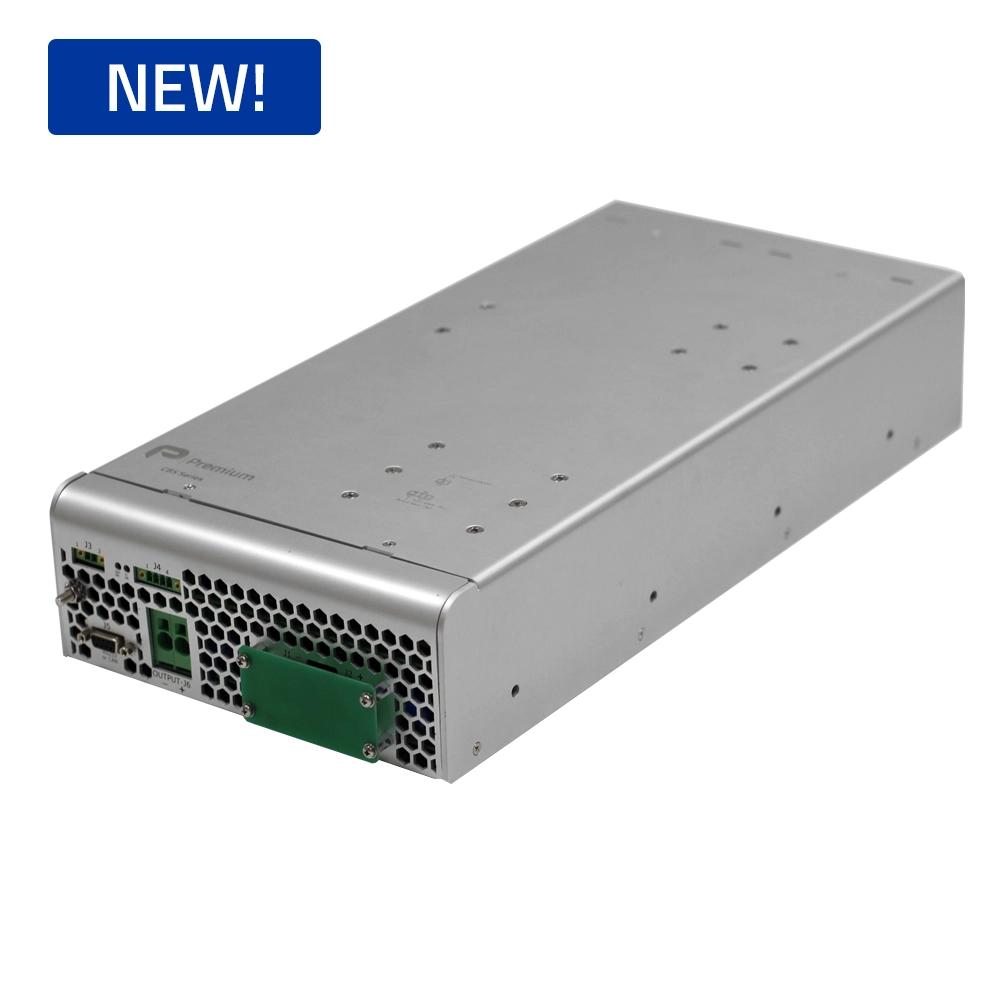
CBS-10K High Power DC/DC Converter
Delivering up to 10 kW peak power with ultra-wide input voltage ranges (24V, 72V, 110V DC). Engineered specifically for high-load railway sub-systems including hydraulic pumps, door actuators, and emergency braking systems. Integrated planar magnetics deliver unmatched power density.
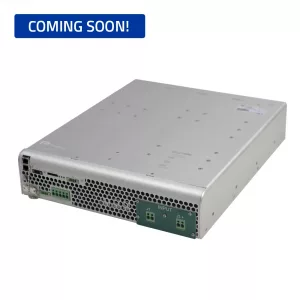
OVX-6400 3-Phase Catenary Inverter
A 6.4 kVA three-phase sine-wave inverter converting DC line voltages directly to stable 400Vac/50Hz output for train auxiliary loads, HVAC compressor drives, and passenger power outlets. Features low total harmonic distortion (THD < 2%) and active parallel synchronization.
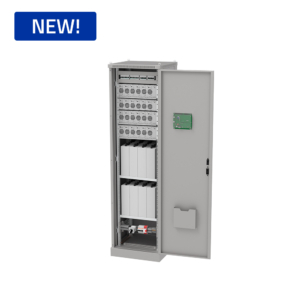
Modular Smart Railway Battery Chargers
High-frequency AC/DC rectifier systems designed for train battery charging (Lead-Acid, Ni-Cd, Lithium-Ion). Supports dynamic temperature compensation, active CANbus communication, N+1 parallel redundancy, and low ripple output to maximize battery life.
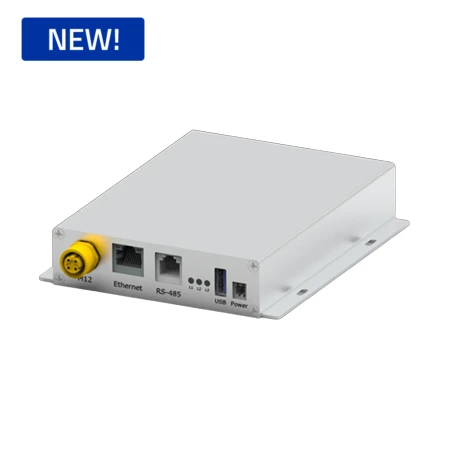
Premium Vision Communication Gateway
Intelligent IoT gateway module integrated directly into power converter cabinets. Enables real-time condition monitoring, thermal logging, predictive failure analytics, and cloud telemetry transmission over secure rail Ethernet backbones.
Standard Platforms vs. Fully Custom Railway Engineering
Procurement leads frequently evaluate whether to source standard off-the-shelf power supplies or invest in a customized converter development. At Premium PSU, we bridge this gap by offering modular, pre-qualified design blocks that allow rapid custom tailoring with minimal Non-Recurring Engineering (NRE) expense.
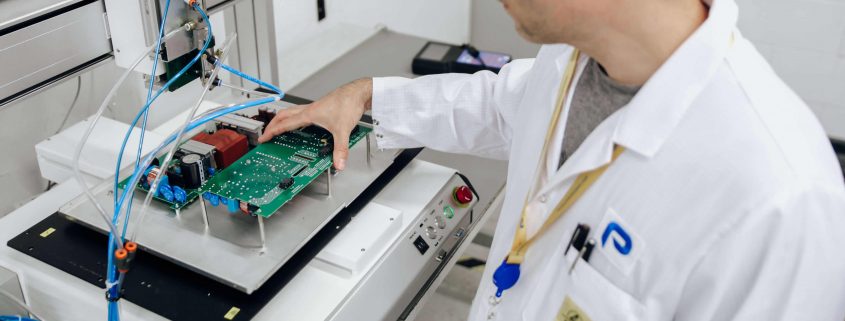
Platforms
Over 260 standard power conversion products engineered to EN 50155. Ideal for rapid prototyping, fleet refurbishments, and tight project schedules where immediate compliance proof is mandatory.
- Input Voltages: 24 V, 36 V, 72 V, 110 V DC nominal
- Output Powers: 50 W up to 15 kW in single chassis
- Conduction cooled, zero-fan enclosed chassis
- Available with full EN 50155 qualification reports
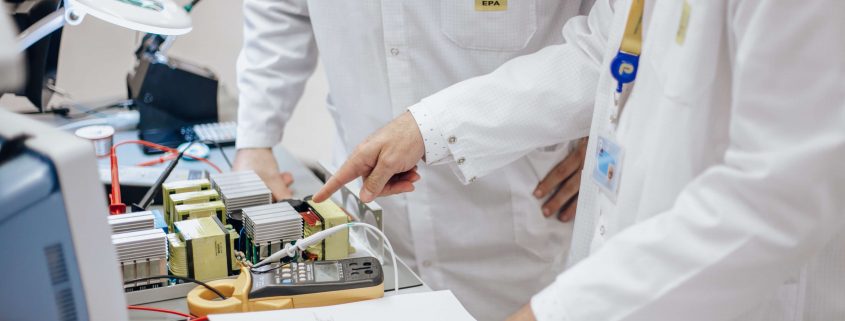
Solutions
Backed by 40+ years of R&D experience and 1,000+ custom designs. We engineer custom power systems designed around your precise mechanical footprint, thermal envelope, electrical pinout, and functional safety requirements.
- Multi-output auxiliary power conversion (DC/DC + DC/AC)
- Silicon Carbide (SiC) resonant switching topologies
- Custom IP65 / IP67 ruggedized under-floor enclosures
- 16 to 28-week development to qualified sample delivery
Key Technological Trends Reshaping Railway Power Electronics
The global railway industry is undergoing a profound transformation driven by decarbonization, electrification of non-electrified routes, digital telemetry, and higher passenger comfort demands. Sourcing teams must align with power electronics partners capable of integrating next-generation technologies:
1. Adoption of Silicon Carbide (SiC) and Gallium Nitride (GaN) Wide-Bandgap Semiconductor Topologies
Traditional IGBT and Silicon MOSFET converters suffer from significant switching losses at high operational frequencies. Silicon Carbide (SiC) power devices enable switching frequencies up to 5 times higher with negligible dynamic losses. This high-frequency operation yields four major advantages for rolling stock integration:
- Mass and Volume Reduction: High switching frequencies drastically decrease the physical size of inductors and planar transformers, reducing converter volume by up to 40%.
- Elevated System Efficiency: Full-load efficiencies consistently exceeding 95-97%, minimizing internal heat dissipation.
- Acoustic Noise Elimination: Switching frequencies above 20 kHz remove audible electromagnetic hum from passenger compartments.
- Extended Thermal Margins: SiC devices operate reliably at higher junction temperatures, ensuring stable power delivery in fan-less conduction-cooled enclosures.
2. Digital Twin Integration & Predictive IoT Telemetry
Modern rail maintenance is shifting from reactive or scheduled servicing to continuous condition-based monitoring. Advanced railway power electronics now incorporate digital signal processors (DSPs) and IoT communication gateways—such as the Premium Vision module. By capturing operating parameters (input voltage transients, internal thermal gradients, output current ripples, and switching cycle counters), fleet engineers can predict capacitor aging or thermal stress prior to component failure, avoiding costly unscheduled downtime on mainline rail networks.
3. Decarbonization & Hybrid Propulsion Integration (Hydrogen & Battery Trains)
As operators deploy Battery Electric Multiple Units (BEMUs) and Hydrogen Fuel Cell trains on non-electrified regional lines, railway power electronics must adapt. Bidirectional DC/DC converters and high-power battery chargers play a pivotal role in transferring energy between high-voltage fuel cell stacks, lithium traction batteries, and low-voltage onboard control grids (24V/110V DC). Premium PSU designs bidirectional topologies capable of seamless power flow reversal in microseconds.
Future Procurement Trends in Global Railway Power Electronics
Procurement departments within tier-1 railway manufacturers (such as Alstom, Siemens, CAF, and Stadler) are adjusting their vendor evaluation criteria. When sourcing railway power electronics over the next decade, global procurement strategies will pivot around four key vectors:
Enterprise Advantages & E-E-A-T Credentials of Premium PSU
With over 40 years of engineering expertise since our founding in 1984 in Barcelona, Spain, Premium PSU has established itself as an authoritative global leader in custom and standard power conversion systems. Our commitment to Google's E-E-A-T (Experience, Expertise, Authoritativeness, and Trustworthiness) standards is reflected across our design and manufacturing operations: